
Preheating in PCB Assembly: A Comprehensive Guide
Introduction
Printed Circuit Board (PCB) assembly is a complex and intricate process that involves multiple stages, each critical to the final performance and reliability of the electronic device. One of the most important, yet often overlooked, steps in this process is preheating. Preheating PCBs before soldering or reflow processes can significantly impact the quality of the solder joints, the longevity of the components, and the overall reliability of the PCB. This article delves into the importance of preheating, the methods used, the benefits it offers, and the potential challenges associated with it.
What is Preheating?
Preheating is the process of gradually raising the temperature of the PCB and its components to a specific level before subjecting it to the soldering or reflow process. This step is crucial in ensuring that the PCB and its components are uniformly heated, which helps in minimizing thermal shock, reducing soldering defects, and improving the overall quality of the assembly.
Why is Preheating Important?
- Thermal Shock Prevention: One of the primary reasons for preheating is to prevent thermal shock. Thermal shock occurs when there is a rapid change in temperature, which can cause stress on the PCB and its components. This stress can lead to cracks in the PCB, delamination, or even component failure. By gradually increasing the temperature, preheating minimizes the risk of thermal shock.
- Moisture Removal: PCBs and components can absorb moisture from the environment, especially if they have been stored for a long time. When exposed to high temperatures during soldering, this moisture can turn into steam, causing defects like solder splatter, voids, or even popcorning in plastic-encapsulated components. Preheating helps in evaporating this moisture, thereby reducing the risk of such defects.
- Improved Solder Joint Quality: Preheating ensures that the PCB and components reach a uniform temperature before soldering. This uniformity is crucial for achieving good wetting and proper solder joint formation. Without preheating, cold spots on the PCB can lead to poor solder joints, which can affect the electrical connectivity and mechanical strength of the assembly.
- Reduced Thermal Stress on Components: Some components, especially those with large thermal mass or those made of materials with different coefficients of thermal expansion, are more susceptible to thermal stress. Preheating helps in reducing this stress by allowing the components to expand gradually, thereby minimizing the risk of cracking or other forms of damage.
Methods of Preheating
There are several methods used for preheating PCBs, each with its own advantages and limitations. The choice of method depends on factors such as the type of PCB, the components used, the soldering process, and the production volume.
- Convection Preheating: Convection preheating involves using hot air to heat the PCB and its components. This method is widely used because it provides uniform heating and is suitable for a wide range of PCB sizes and shapes. Convection preheating can be done using batch ovens or inline conveyor systems, depending on the production requirements.
- Infrared (IR) Preheating: Infrared preheating uses IR radiation to heat the PCB and components. This method is faster than convection preheating and is particularly effective for heating specific areas of the PCB. However, IR preheating can lead to uneven heating if not properly controlled, as different materials absorb IR radiation at different rates.
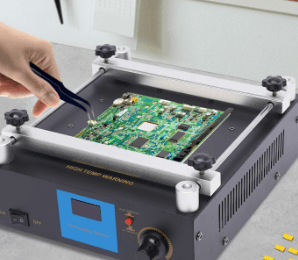
- Hot Plate Preheating: In this method, the PCB is placed on a hot plate, which heats it from below. Hot plate preheating is simple and cost-effective, but it is less uniform compared to convection or IR preheating. It is typically used for small-scale production or prototyping.
- Vapor Phase Preheating: Vapor phase preheating involves heating the PCB using a vaporized heat transfer fluid. This method provides very uniform heating and is particularly useful for high-density PCBs with complex geometries. However, vapor phase preheating is more expensive and complex to set up compared to other methods.
Benefits of Preheating
- Improved Solder Joint Reliability: By ensuring uniform heating and reducing thermal shock, preheating leads to more reliable solder joints. This is particularly important for high-reliability applications such as aerospace, automotive, and medical devices.
- Reduced Defects: Preheating helps in reducing common soldering defects such as solder balls, voids, and tombstoning. This leads to higher yields and lower rework costs.
- Extended Component Life: By minimizing thermal stress, preheating helps in extending the life of sensitive components, thereby improving the overall reliability of the electronic device.
- Better Wetting and Solder Flow: Preheating ensures that the solder paste reaches its optimal temperature for wetting and flow, leading to better solder joint formation and improved electrical connectivity.
Challenges and Considerations
While preheating offers numerous benefits, it is not without its challenges. Some of the key considerations include:
- Temperature Control: Achieving and maintaining the correct preheating temperature is crucial. Overheating can damage components or the PCB, while insufficient heating can lead to poor solder joints. Accurate temperature control is therefore essential.
- Uniform Heating: Ensuring uniform heating across the entire PCB can be challenging, especially for large or complex boards. Non-uniform heating can lead to localized thermal stress or poor solder joint formation.
- Moisture Sensitivity: Some components are highly sensitive to moisture and require careful handling during preheating. Proper storage and handling procedures must be followed to prevent moisture absorption before preheating.
- Process Integration: Preheating must be seamlessly integrated into the overall PCB assembly process. This requires careful planning and coordination to ensure that the preheating step does not become a bottleneck in the production line.
Conclusion
Preheating is a critical step in the PCB assembly process that offers numerous benefits, including improved solder joint reliability, reduced defects, and extended component life. However, it also presents challenges that must be carefully managed to ensure optimal results. By understanding the importance of preheating, selecting the appropriate method, and addressing the associated challenges, manufacturers can significantly enhance the quality and reliability of their PCB assemblies. As electronic devices continue to become more complex and demanding, the role of preheating in ensuring their performance and longevity will only become more important.