
Aluminum PCB Manufacturing
Thermal conductivity from 1.0 W/m·k up to 12.0 W/m·k. Also called Aluminium PCB, MCPCB, IMS (Insulated Metal Substrate).
Types of Aluminum PCB
amain aluminum-core constructions we build — from standard 3-layer stack-ups to direct thermal path and multilayer boards.
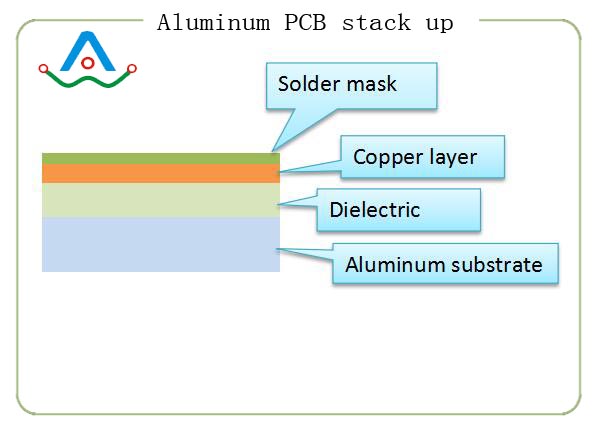
Normal Aluminum PCB
3 layers: copper circuit (1.0–12 oz, 35–420 µm), dielectric, aluminum substrate (1001/3001/5052/6063), thickness 0.4–7.0 mm.
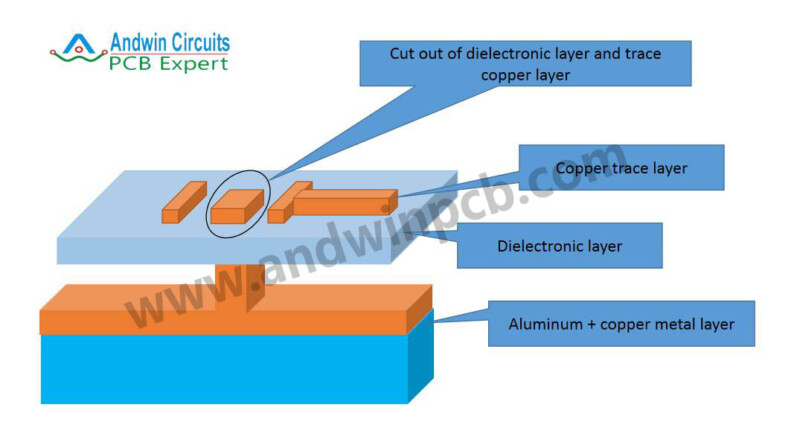
Direct Thermal Path Aluminum PCB
No dielectric under the thermal pad; 1–2 copper layers (1.0–2 oz), dielectric FR4/BT 0.1–0.2 mm, substrate 1.0–2.0 mm.
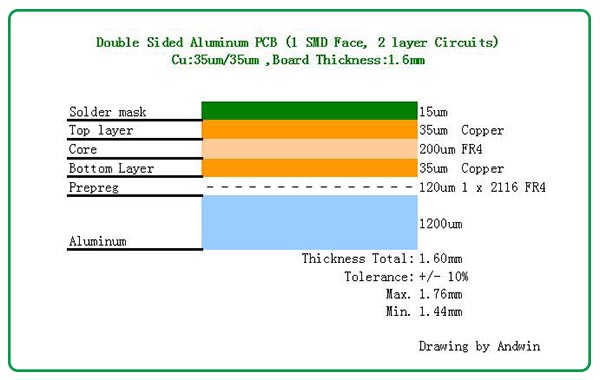
Multilayer Aluminum PCB
2–8 copper layers (0.5–10 oz, 17.5–350 µm), dielectric FR4/BT 0.1–0.2 mm, aluminum substrate 1.0–9.0 mm.
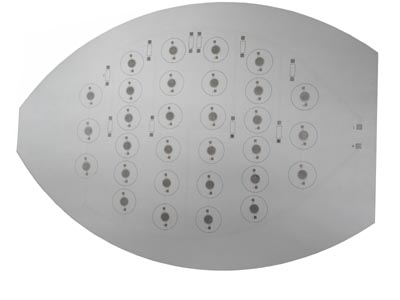
Aluminum Clad PCB
Available as single-sided (non-plated through hole) or 2+ layer plated through hole; ideal for LED lighting and power supplies.
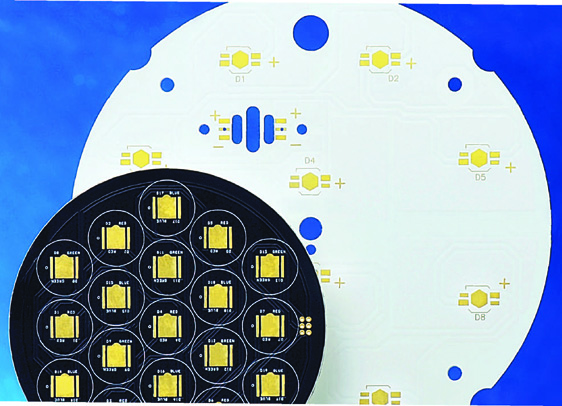
Bergquist MP-06503 ALPCB
Built on Bergquist Thermal-Clad material (also Laird Tlam available), strictly meeting customer dielectric requirements.
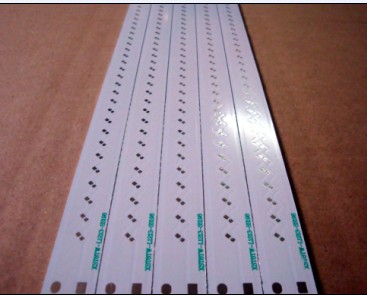
LED Aluminum PCB
Aluminum boards dedicated to LED tube lighting and LED street lighting — the most common MCPCB application.
How Aluminum PCB Works
A normal aluminum PCB has three parts. The aluminum substrate sits under an insulated dielectric layer and a copper circuit layer, carrying heat away from components.
Circuit Layer (Copper)
Printed copper foil from 1.0 oz up to 12 oz (35–420 µm); min trace/space 5/5 mil (0.127/0.127 mm).
Dielectric Layer
Insulated layer; China/Taiwan material for best price & lead time, or Bergquist Thermal-Clad / Laird Tlam on request.
Substrate Layer (Aluminum)
Aluminum 1001 / 3001 / 5052 / 6063; AL1001/AL3001 for 1.0–1.5 W/m·k, 5052 for 2.0–12 W/m·k.
Direct Thermal Path
DTP removes the dielectric under the thermal pad so heat goes straight to aluminum — up to 175.0 W/m·k.
Why Choose Us?
Wide thermal range — Normal aluminum PCB 1.0–12.0 W/m·k; Direct Thermal Path up to 175.0 W/m·k.
Multiple names, one board — Also called Aluminium PCB, metal core PCB, MCPCB, IMS (Insulated Metal Substrate).
Flexible material — Bergquist Thermal-Clad, Laird Tlam, or cost-effective China/Taiwan dielectric per your requirement.
Alloy options — 1001 / 3001 / 5052 / 6063 aluminum chosen to match the target thermal conductivity.
One-stop PCB + assembly — Send Gerber + BOM to sales@andwinpcb.com for fabrication and PCBA from one source.
One-stop PCB + assembly — Send Gerber + BOM to sales@andwinpcb.com for fabrication and PCBA from one source.
Applications
Aluminum MCPCB is widely used in LED lighting, automotive and power electronics.
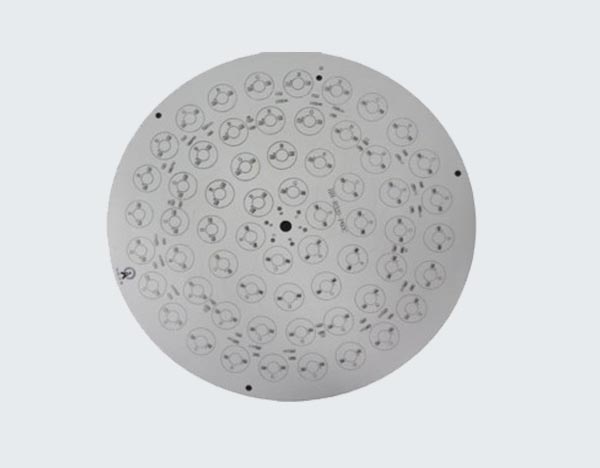
LED Street Lighting
High-power street and tube LED fixtures on aluminum substrate for stable cooling.

AAutomotive LED Lighting
Automotive LED lighting where reliable thermal management is critical.

LED Stage Lighting
Stage and architectural LED lighting requiring dense, cool-running boards.

LED Flash Lighting
High-intensity LED flash modules built on aluminum MCPCB.
Frequently Asked Questions
1. What is an aluminum PCB?
An aluminum PCB (also called aluminium PCB, MCPCB or IMS) is a metal-core board built as a copper circuit layer + insulated dielectric layer + aluminum substrate layer, used where heat must be removed efficiently.
2. Why use an aluminum PCB instead of FR4?
FR4 traps heat in copper traces. An aluminum substrate conducts heat directly to the metal base, keeping components cooler, improving reliability and enabling higher-power designs at lower cost than copper core.
3. What is the difference between normal and Direct Thermal Path (DTP)?
A normal aluminum PCB keeps a dielectric layer everywhere. A DTP board removes the dielectric directly under the thermal pad, so heat travels straight to the aluminum — thermal conductivity up to 175.0 W/m·k versus 1.0–12.0 W/m·k for standard types.
4. What thermal conductivity and thickness can be made?
Standard aluminum PCB runs 1.0–12.0 W/m·k with substrate thickness 0.4–7.0 mm; DTP boards use 1.0–2.0 mm substrate; multilayer aluminum reaches up to 9.0 mm. Exact values depend on alloy and dielectric.
5. Can aluminum PCB be single-sided or multilayer?
Yes. Aluminum clad boards are available as single-sided (non-plated through hole) or 2+ layer plated through hole, and multilayer aluminum PCBs go up to 8 copper layers.
Other PCB Products, You May Interest

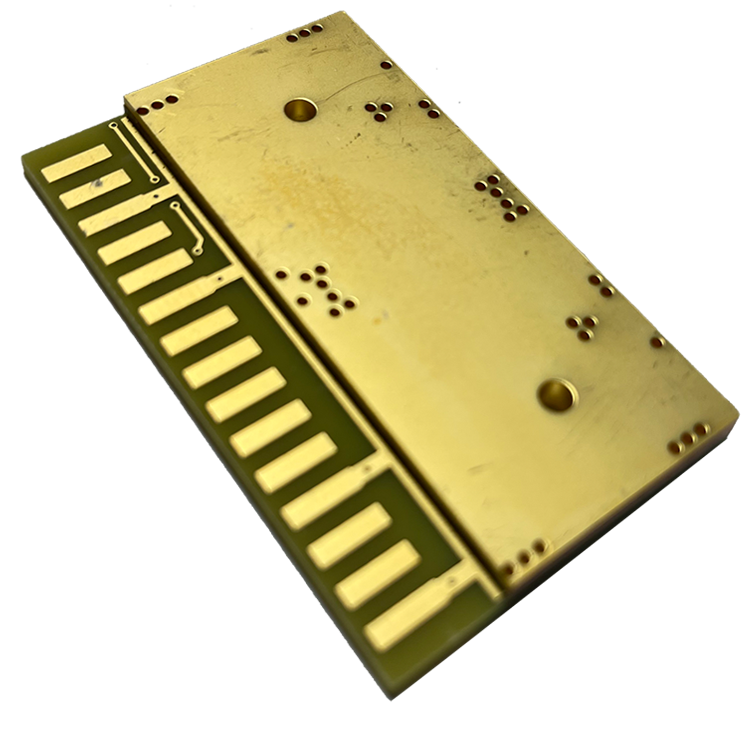

Get professional one stop PCB solution from us!
Our engineering team provides free DFM analysis and design support.