
Copper Core PCB Manufacturing
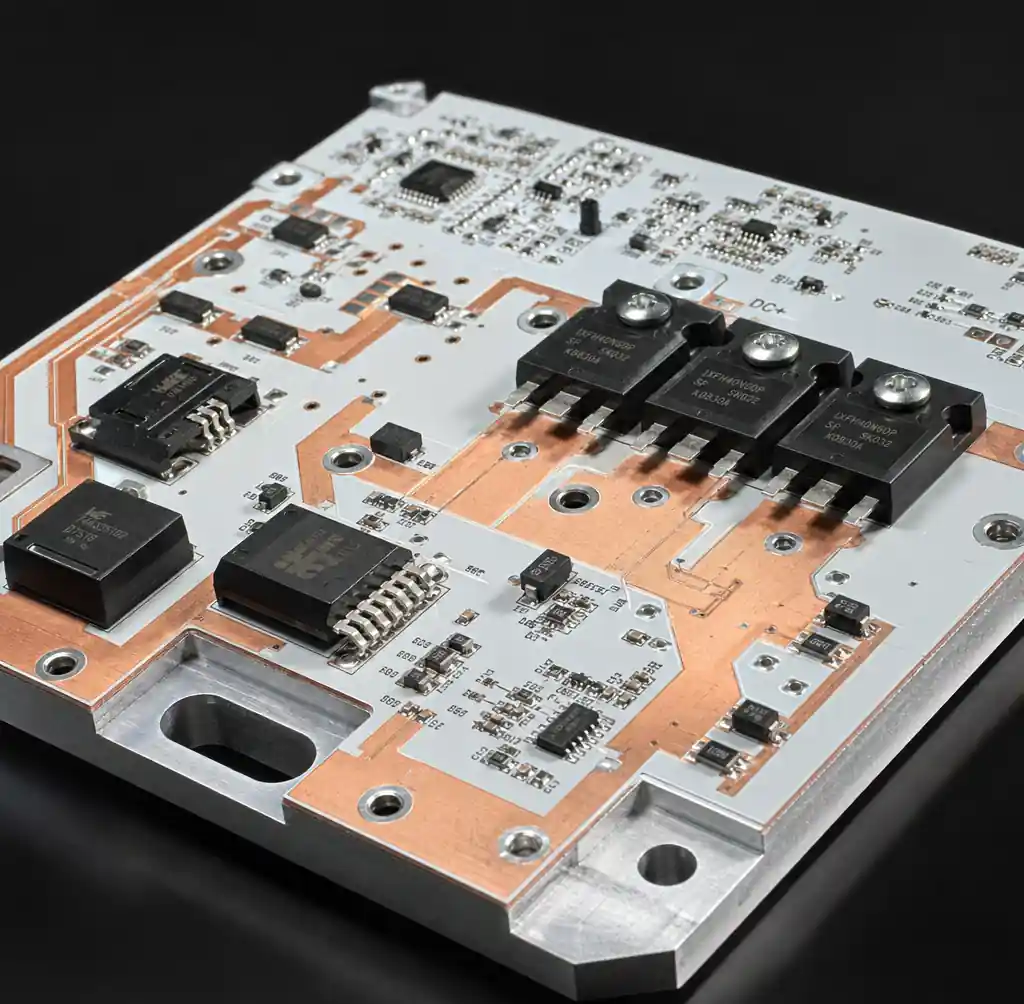
Copper core PCB is a copper substrate + Insulated layer + copper circuits layer PCB
Types of Copper Core PCB
from standard stack-ups to embedded and hybrid laminates.
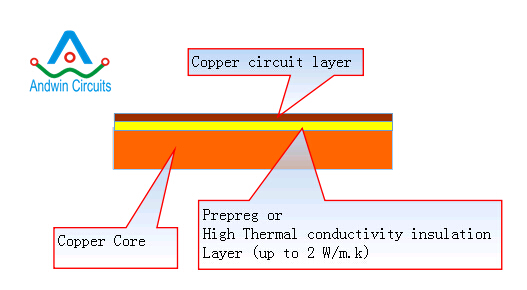
Normal Stack-up Copper Core PCB
Copper substrate + insulated layer + copper circuit layer; the baseline copper-core construction.
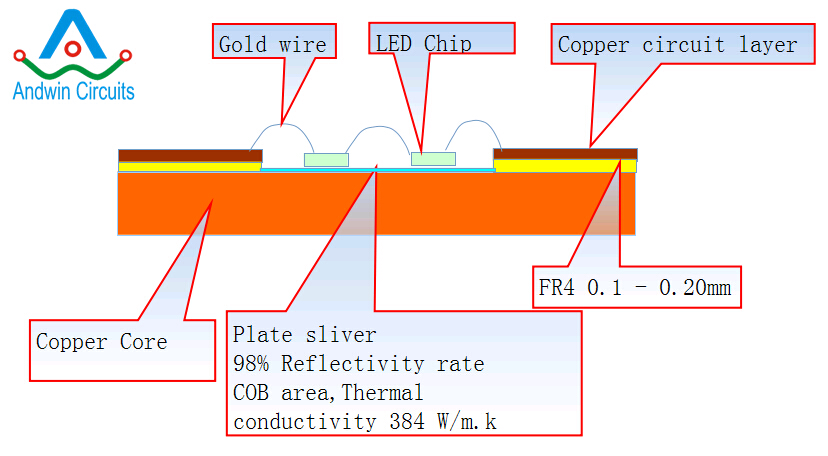
COB Copper PCB (Chip on Board)
The LED chip sits directly on the copper substrate for the shortest thermal path.

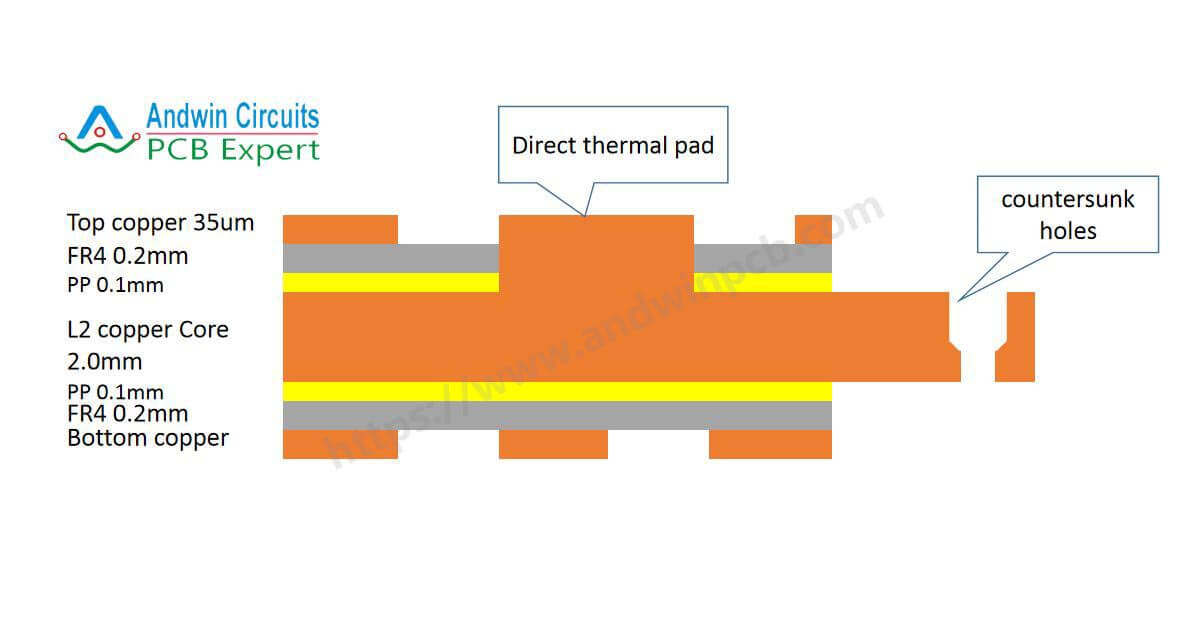
Direct Thermal Path
No dielectric layer under the thermal-path pad, so heat goes straight to the copper core.
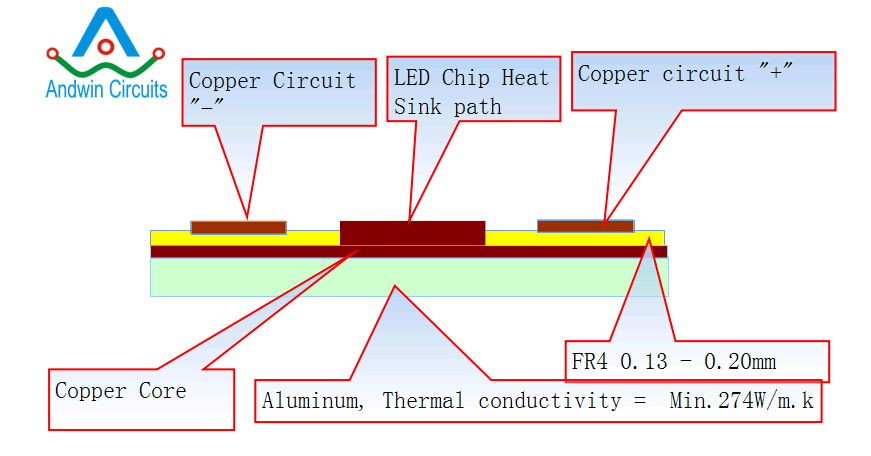
Aluminum-Copper PCB
Direct thermal path with no dielectric layer, combining aluminum and copper in the core.
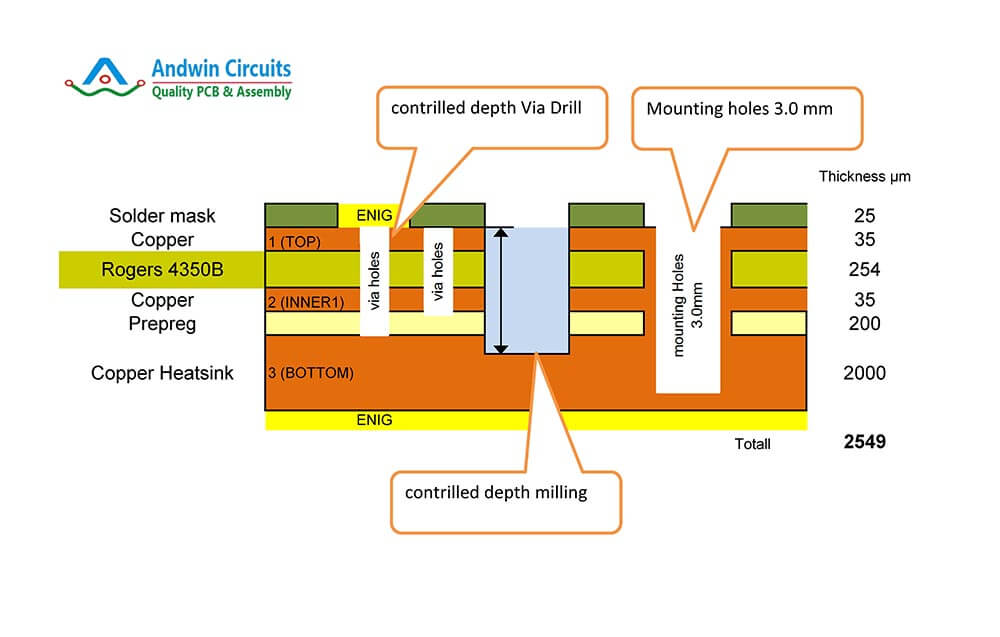
Copper Core + 2L Rogers 4350B
Copper core with 2 layers of Rogers RO4350B, plus controlled-depth milling and drilling.
Embed Copper Core PCB
The copper core is embedded / inlaid into the board for localized, high-efficiency dissipation.
How Copper Core PCB Works
A copper core PCB uses copper as the substrate material. The copper is in the core — not just the circuit layers — giving it superior heat conduction.
Copper substrate core
The solid copper base carries heat away from components far better than FR4 traces alone.
Insulated layer
A dielectric layer separates the copper core from the circuit layer while transferring heat.
Copper circuit layer
The top copper traces and pads carry current; the core below handles the thermal load.
Direct thermal path
With no dielectric under the thermal pad, heat sinks straight to the copper core (DTP type).
Why Choose Us?
Reliability & longer life — Using a copper core PCB increases reliability and extends device life for high-power use.
Reliability & longer life — Using a copper core PCB increases reliability and extends device life for high-power use.
High-power ready — Supports applications where traditional PCBs would fail, thanks to the copper substrate.
Higher conductivity than aluminum — Copper conducts heat several times faster than aluminum, preventing hotspots.
Durable & compact — Copper core PCBs are durable, reliable and suitable for compact, dense designs.
One-stop PCB + assembly — PCB fabrication and PCBA from one source; send Gerber + BOM to sales@andwinpcb.com for a quote.
Applications
These boards are widely used in LED lighting, automotive electronics, industrial equipment and power modules.
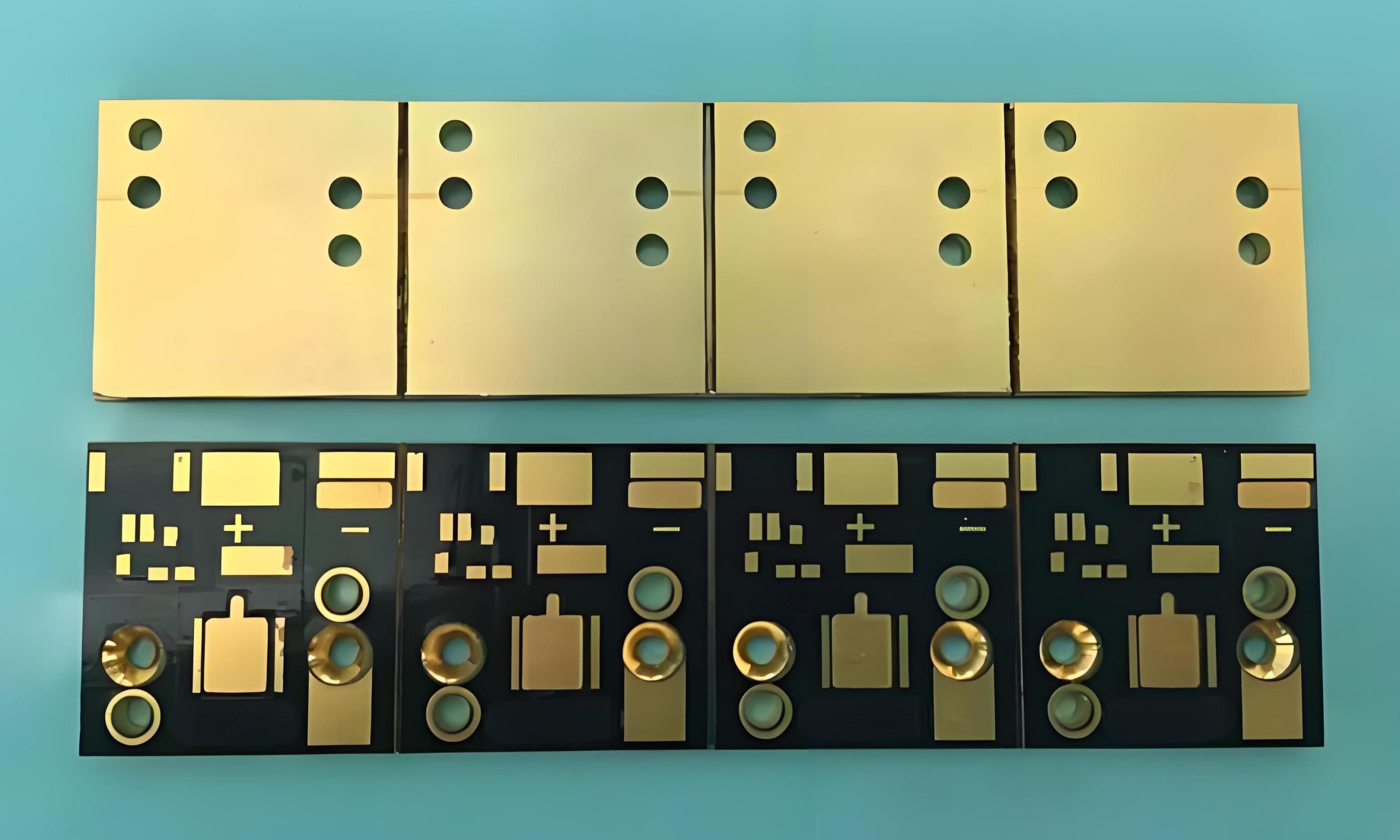
LED Lighting
High-power LED (1000W+) and COB modules with direct thermal sink to copper.
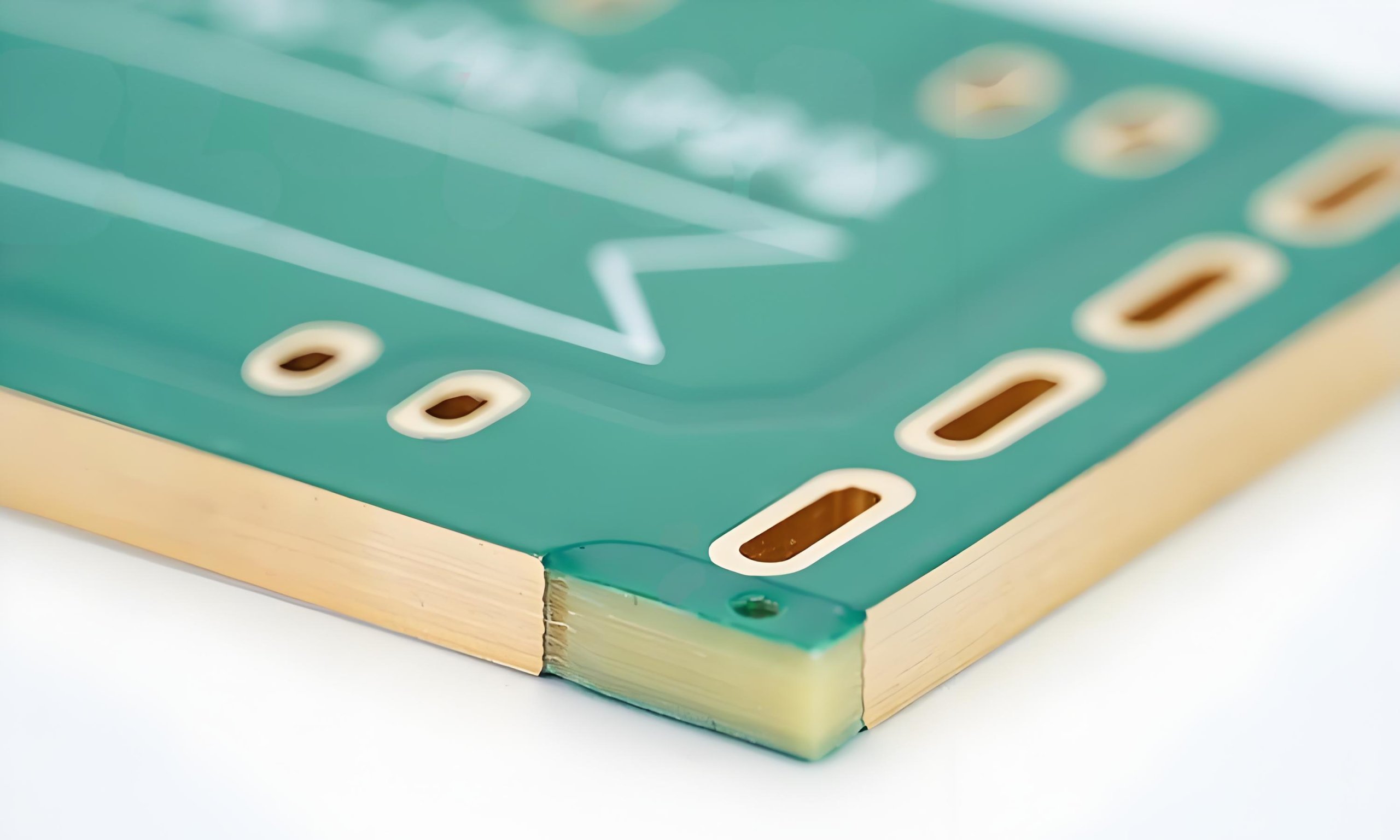
Automotive Electronics
Human-safety, high-reliability automotive electronics under thermal stress.
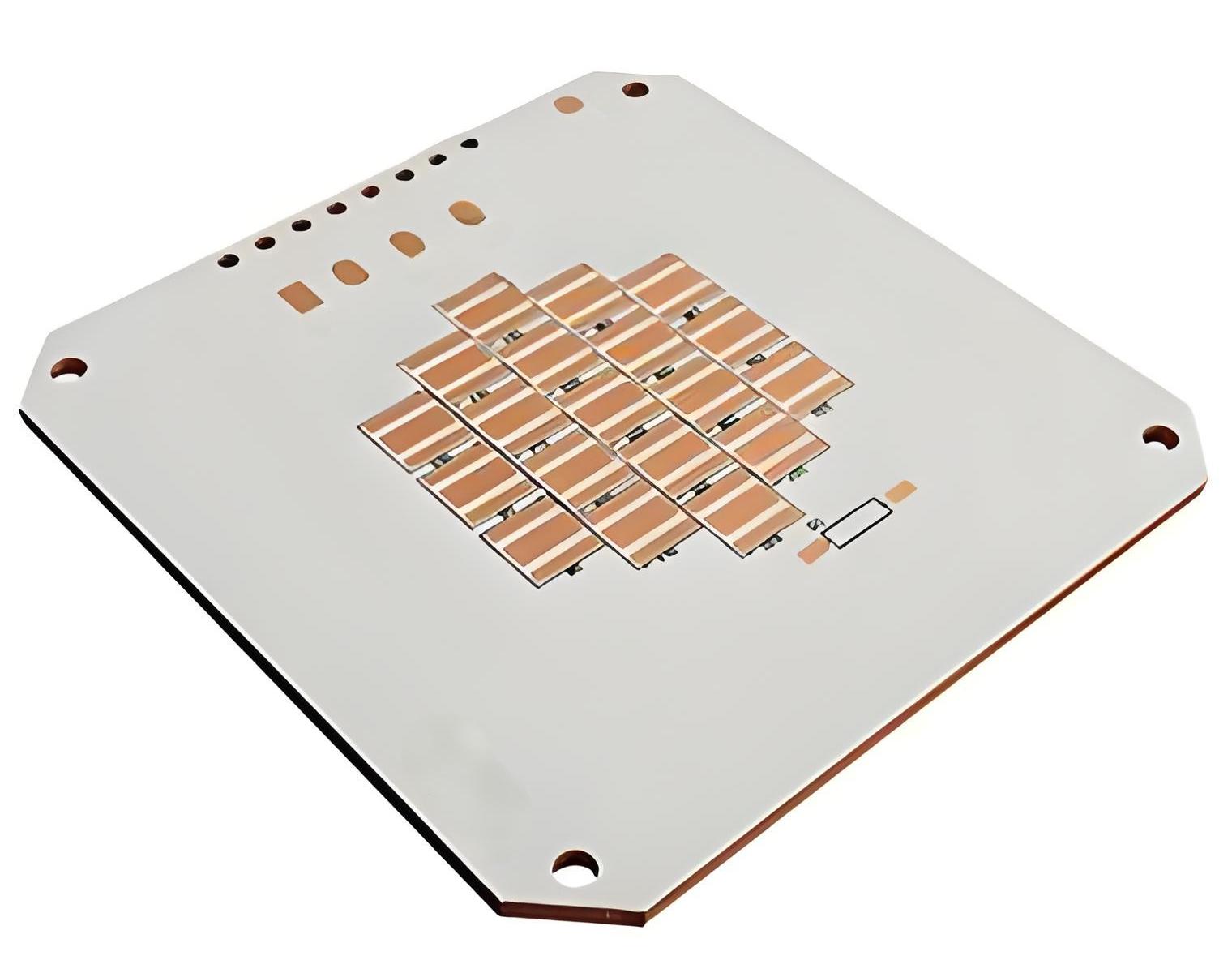
Industrial Equipment
Industrial systems that prefer multilayer copper core PCBs for stable operation.

Power Modules
Power supplies and modules where efficient heat removal protects performance.
Frequently Asked Questions
1. What is a copper core PCB?
A copper core PCB (also called copper-base PCB or copper substrate PCB) is a printed circuit board that uses copper as the substrate material, built as a copper substrate + insulated layer + copper circuit layer.
2. Why use a copper core PCB?
Modern electronics produce significant heat that reduces efficiency and shortens component life. A copper core PCB solves this efficiently: it increases reliability, extends device life and supports high-power applications where traditional PCBs would fail.
3. How is a copper metal core PCB made?
Manufacturing a copper metal core PCB differs from standard PCB production and requires precision and advanced techniques. This process ensures the board performs well under high thermal and electrical stress.
4. Do PCBs have copper?
Yes. Copper is a standard material in all PCBs and forms the conductive pathways that carry electricity. Standard FR4 PCBs use copper only in traces and pads, while copper core PCBs put the copper in the core for superior heat conduction.
5. Copper core or aluminum core — which is better?
Both manage heat efficiently, but copper offers several advantages: it conducts heat several times faster than aluminum, preventing hotspots, and outperforms aluminum in thermal management, reliability and longevity. This makes copper the preferred choice for high-power and high-reliability electronics.
Other PCB products, you may interesting

Get professional one stop PCB solution from us!
Our engineering team provides free DFM analysis and design support.