
Thick Film Ceramic PCB
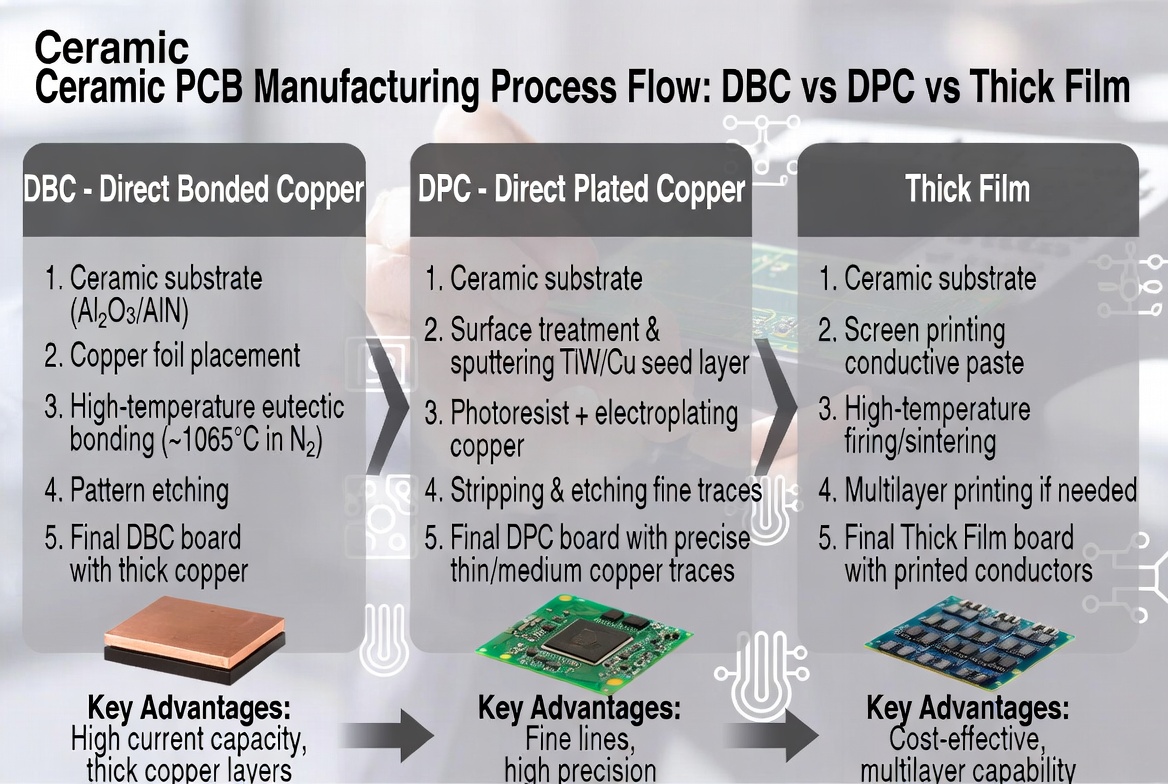
Andwin Circuits builds thick-film ceramic PCBs on Al2O3, AIN or Beryllium Oxide (BeO) substrates — conductors of silver (Ag) or gold (Au) are printed and high-temperature sintered, so resistors, capacitors and active devices can be integrated on a single ceramic board.
Thick Film Ceramic PCB Capability
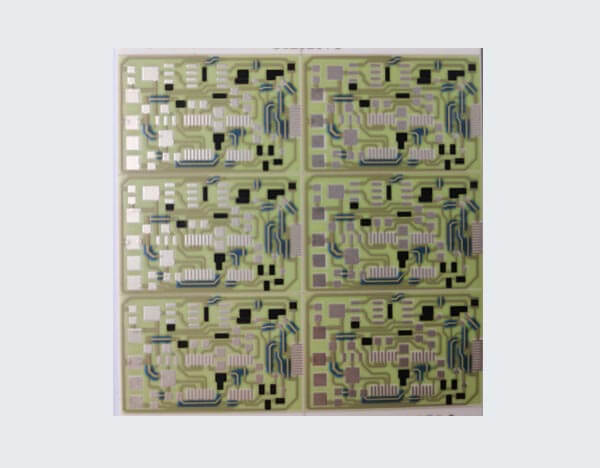
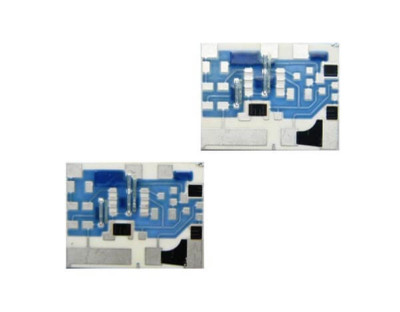
Thick Film Sample c01
Finished board
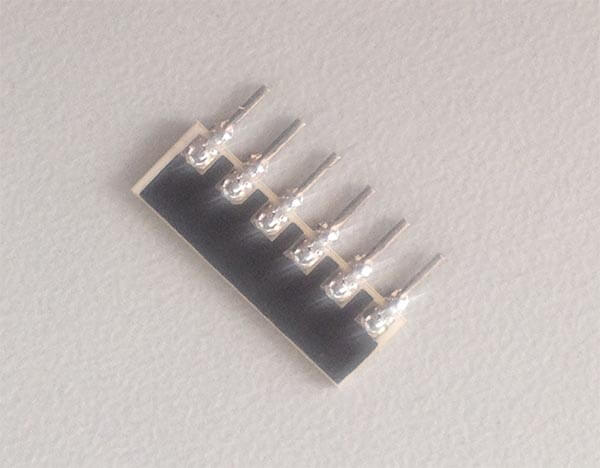
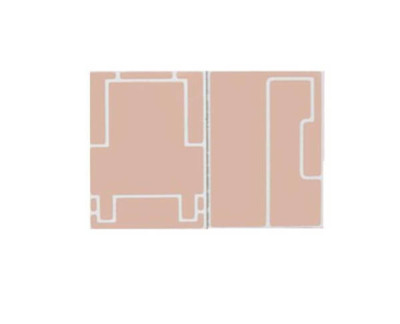
Thick Film Sample c02
Finished board
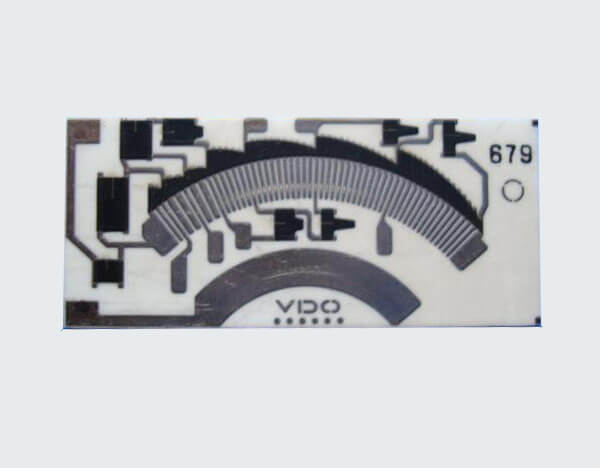
Thick Film Sample c03
Finished board
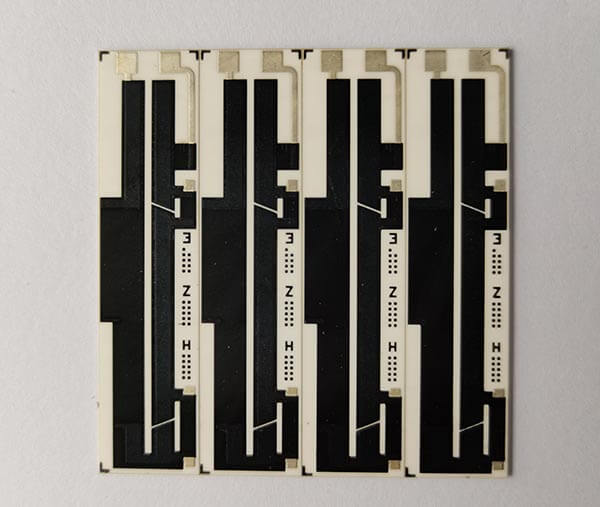
Thick Film Sample c9
Finished board
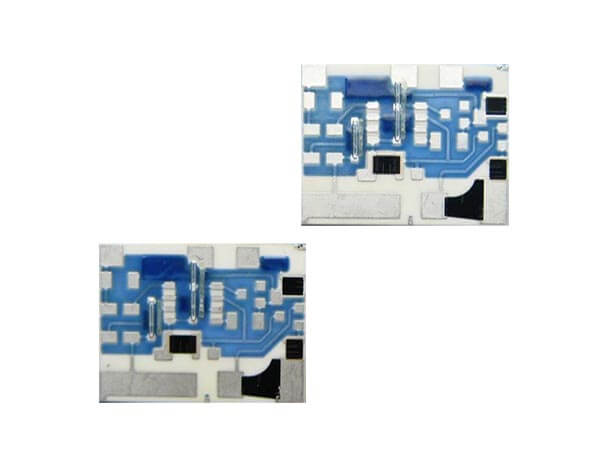
Thick Film Sample c10
Finished board
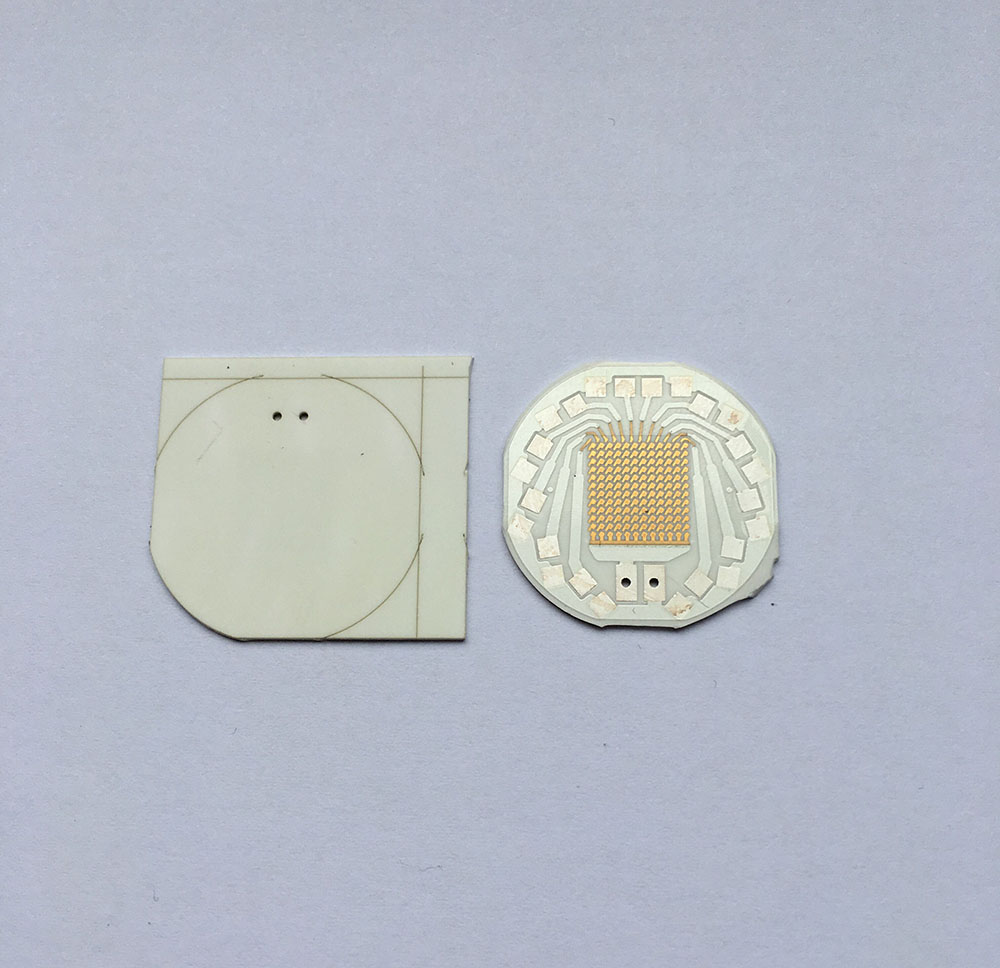
Thick Film Sample 11
Finished board
Which LEDs are suitable for DTP MCPCB?
Substrate material
Aluminum oxide Ceramic (Al2O3) 96% or 98%
Aluminum Nitride Ceramic (AIN)
Beryllium Oxide (BeO)
Conductor material
Silver (Ag) or Gold (Au)
Ceramic thickness
0.25 | 0.38 | 0.50 | 0.635 | 0.76 | 1.0 | 1.5 | 2.0 mm
Conductor thickness
10 µm – 13 µm, Max. 20 µm
Min. trace space/width
0.1 / 0.1 mm ( 4 / 4 mil )
Integrated devices
Resistor, capacitor, conductor, semi-conductor and interchangable conductor on one ceramic board
Why Choose Us?
High-temperature sintering process — conductor layer is printed and sintered onto ceramic, no plating/adhesive step.
Silver / Gold conductors — Ag or Au traces give excellent conductivity and corrosion resistance.
Passive & active integration — resistors, capacitors, conductors and semiconductors can be built on one board.
Flexible resistor values — all resistors same value, or different values per resistor on the same board.
Three ceramic options — Al2O3, AIN and BeO substrates for different thermal / electrical needs.
Fine geometry — min. trace space/width 0.1 / 0.1 mm (4 / 4 mil).
Applications
High-power LED lighting fields where DTP MCPCB’s direct-bond cooling pays off .
Telecome device
Telecom equipment.
Injection System
Fuel / fluid injection control.
Anti-block Braking system
ABS electronics.
High-power LED Chip
High-power LED packages.
Wafter Street light
Street / area lighting.
Frequently Asked Questions
1. What is thick film ceramic PCB?
Thick-film ceramic PCB uses a high-temperature sintering process to form a conductor layer (silver or gold) on a ceramic substrate. Resistors, capacitors, conductors and semiconductors can be integrated on one ceramic board through printing and sintering.
2. Which ceramic substrates are supported?
The source page lists Aluminum oxide Ceramic (Al2O3) 96% or 98%, Aluminum Nitride Ceramic (AIN) and Beryllium Oxide (BeO) as the supported substrates.
3. What conductor and thickness limits apply?
Conductor is Silver (Ag) or Gold (Au); ceramic thickness from 0.25 to 2.0 mm; conductor thickness 10–13 µm, max 20 µm; min. trace space/width 0.1 / 0.1 mm (4/4 mil).
4. Where are thick film ceramic PCBs used?
Per the source page: high power electronic semi-conductor module, injection system, anti-block braking system, high-power LED chip, street light, fuel sensor resistor card, electric power transmitter modules, solar cell, sensor and telecom device.
5. How do I get a quote?
Send your PCB Gerber file and/or BOM to sales@andwinpcb.com (priority). Our team will quote as soon as possible, or you can submit the on-page form and we will contact you.
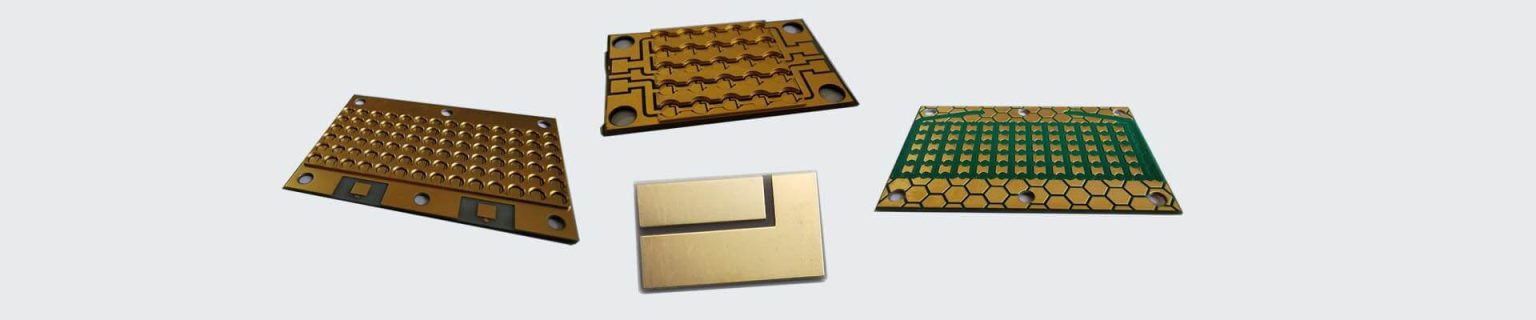
Other PCB Products, You May Interest
Get professional one stop PCB solution from us!
Our engineering team provides free DFM analysis and design support.