
Automotive Electronics PCB: Design, Challenges, and Future Trends
Introduction
The automotive industry has undergone a significant transformation over the past few decades, driven by advancements in electronics. Printed Circuit Boards (PCBs) are at the heart of modern automotive electronics, enabling functionalities such as engine control, infotainment, Advanced Driver-Assistance Systems (ADAS), and electric vehicle (EV) power management. As vehicles become more connected, autonomous, and electrified, the demand for high-performance, reliable automotive PCBs continues to grow.
This article explores the key aspects of automotive electronics PCBs, including design considerations, material selection, manufacturing challenges, and future trends shaping the industry.
1. Importance of PCBs in Automotive Electronics
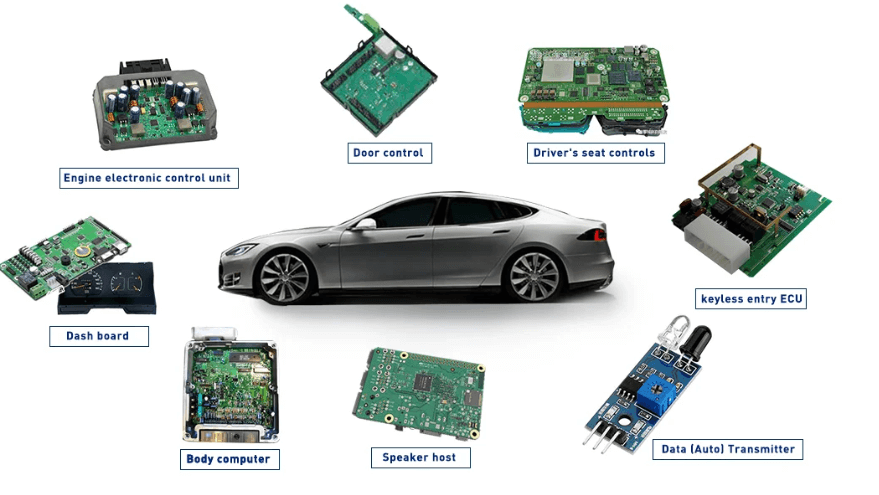
Modern vehicles rely on numerous electronic control units (ECUs) that depend on PCBs for operation. Some critical applications include:
- Engine and Transmission Control: PCBs manage fuel injection, ignition timing, and transmission shifting.
- Safety Systems: Anti-lock Braking Systems (ABS), airbag control, and stability control rely on high-reliability PCBs.
- Infotainment Systems: Touchscreen displays, navigation, and connectivity modules require multilayer PCBs.
- ADAS and Autonomous Driving: Radar, LiDAR, and camera systems depend on high-frequency PCBs.
- Electric Vehicle (EV) Systems: Battery management systems (BMS), inverters, and charging modules use high-power PCBs.
Given the harsh automotive environment—temperature fluctuations, vibrations, and electromagnetic interference (EMI)—automotive PCBs must meet stringent quality and durability standards.
2. Key Design Considerations for Automotive PCBs
Designing PCBs for automotive applications involves unique challenges:
A. Thermal Management
Automotive electronics operate in extreme temperatures (-40°C to 150°C). Effective heat dissipation is crucial, especially for power electronics in EVs. Design strategies include:
- Using thermal vias and heatsinks.
- Selecting high-thermal-conductivity substrates (e.g., metal-core PCBs).
- Implementing proper component spacing to avoid hotspots.
B. Vibration and Mechanical Stress
Vehicles experience constant vibrations and shocks. To enhance durability:
- Use flexible or rigid-flex PCBs in areas prone to movement.
- Secure components with additional mechanical fastening (e.g., conformal coating).
- Optimize board layout to minimize stress on solder joints.
C. EMI and Signal Integrity
High-speed digital and RF circuits (e.g., ADAS sensors) require careful EMI mitigation:
- Shielding sensitive traces.
- Proper grounding techniques (e.g., split ground planes).
- Using impedance-controlled routing for high-frequency signals.
D. Reliability and Longevity
Automotive PCBs must last 10-15 years under harsh conditions. Key strategies include:
- Complying with AEC-Q100 (component reliability) and IPC-6012DA (automotive PCB standards).
- Using high-quality materials (e.g., FR-4 with high Tg, polyimide for flex circuits).
- Implementing robust testing (e.g., thermal cycling, vibration tests).
3. Material Selection for Automotive PCBs
The choice of PCB materials significantly impacts performance:
A. Substrate Materials
- FR-4 (Standard): Cost-effective but limited in high-temperature applications.
- High-Tg FR-4: Better thermal resistance for under-the-hood applications.
- Polyimide: Used in flexible PCBs due to excellent heat and chemical resistance.
- Ceramic and Metal-Core PCBs: Ideal for high-power applications (e.g., LED lighting, EV power modules).
B. Copper Thickness
- Thicker copper (2 oz+) improves current-carrying capacity (important for power electronics).
- High-frequency circuits may use thinner copper for precise impedance control.
C. Surface Finishes
- ENIG (Electroless Nickel Immersion Gold): Good for fine-pitch components.
- HASL (Hot Air Solder Leveling): Cost-effective but less reliable for high-density boards.
- OSP (Organic Solderability Preservative): Used for temporary protection before assembly.
4. Manufacturing Challenges
Automotive PCB manufacturing must adhere to strict quality standards:
A. High-Density Interconnect (HDI) Requirements
- ADAS and infotainment systems demand HDI PCBs with microvias and fine traces.
- Laser drilling and advanced lamination techniques are necessary.
B. Environmental Compliance
- Lead-free soldering (RoHS compliance) is mandatory.
- Conformal coatings protect against moisture and chemicals.
C. Testing and Validation
- Automated Optical Inspection (AOI) detects soldering defects.
- Environmental Stress Testing (EST) ensures reliability under extreme conditions.
- Functional Testing verifies performance in real-world scenarios.
5. Future Trends in Automotive PCBs
The automotive PCB market is evolving with new technologies:
A. Growth of Electric Vehicles (EVs)
- Increased demand for high-voltage PCBs in battery management and power converters.
- Integration of wide-bandgap semiconductors (SiC/GaN) for efficient power handling.
B. Autonomous Driving and ADAS
- High-frequency PCBs for mmWave radar and LiDAR.
- Embedded components to reduce size and improve signal integrity.
C. Flexible and Rigid-Flex PCBs
- Used in curved displays and compact sensor modules.
- Reduces weight and improves space utilization.
D. Smart Manufacturing and AI
- AI-driven PCB design optimization for better thermal and EMI performance.
- Predictive maintenance in manufacturing to reduce defects.
E. Sustainable PCB Manufacturing
- Adoption of recyclable materials and eco-friendly processes.
- Reduced use of hazardous chemicals in production.
Conclusion
Automotive electronics PCBs are critical to the functionality, safety, and performance of modern vehicles. As the industry shifts toward electrification, autonomy, and connectivity, PCB designers and manufacturers must address challenges related to thermal management, reliability, and signal integrity. Innovations in materials, manufacturing techniques, and smart technologies will drive the next generation of automotive PCBs, ensuring they meet the demands of future vehicles.
By adhering to stringent standards and embracing emerging trends, the automotive PCB industry will continue to play a pivotal role in shaping the future of transportation.