
Prepreg PCB: The Backbone of Modern Electronics Manufacturing
Introduction to Prepreg PCB Materials
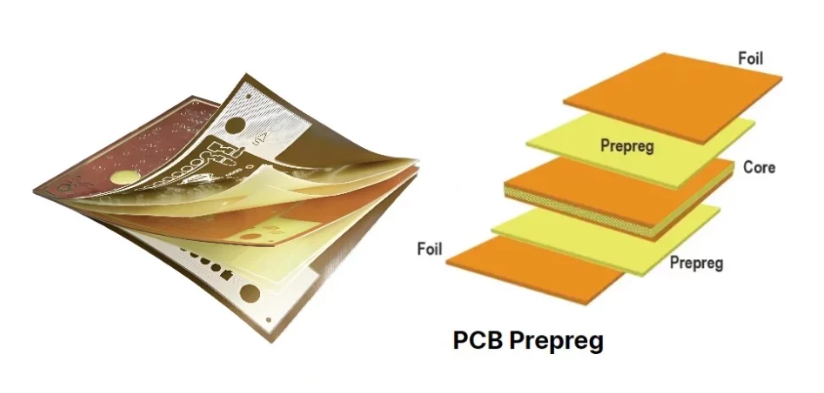
Prepreg, short for “pre-impregnated,” is a fundamental material in the manufacturing of printed circuit boards (PCBs). This composite material consists of a reinforcement fabric (typically glass fiber) pre-impregnated with a resin system (usually epoxy) that is partially cured to an intermediate stage called the B-stage. Prepreg serves as the insulating layer between copper foils in multilayer PCB constructions and plays a critical role in determining the board’s electrical, mechanical, and thermal properties.
The importance of prepreg in modern electronics cannot be overstated. As electronic devices become smaller, faster, and more complex, the demands on PCB materials have increased exponentially. Prepreg offers manufacturers the ability to create high-density interconnects with precise dielectric properties, excellent thermal stability, and reliable mechanical performance. From smartphones to aerospace systems, prepreg PCBs form the foundation of nearly all advanced electronic devices.
Composition and Manufacturing of Prepreg
Base Materials
Prepreg is manufactured by combining two primary components:
- Reinforcement material: Most commonly fiberglass (E-glass), though other materials like aramid or quartz fibers may be used for specialized applications. The fiberglass is woven into various styles (106, 1080, 2116, etc.) that determine thickness and properties.
- Resin system: Typically epoxy resin, though high-performance boards may use polyimide, BT, or other specialty resins. The resin contains additives like flame retardants (usually brominated for FR-4) and other modifiers to achieve desired properties.
Manufacturing Process
The prepreg manufacturing process involves several precise steps:
- Resin formulation: The resin system is prepared with exact ratios of base resin, hardeners, catalysts, and additives.
- Impregnation: The glass fabric is passed through a resin bath, ensuring complete saturation.
- B-staging: The resin-impregnated fabric passes through an oven where it undergoes partial curing (typically 30-50% cured) to achieve a non-tacky but still fusible state.
- Cooling and packaging: The prepreg is cooled and rolled or sheeted with protective films, then stored under controlled conditions to prevent premature curing.
The degree of B-staging is carefully controlled, as it affects the prepreg’s flow characteristics during PCB lamination. Too much cure means insufficient flow and poor bonding; too little can lead to excessive resin bleed.
Types of Prepreg Materials
Standard FR-4 Prepreg
The most common type, FR-4 prepreg, uses brominated epoxy resin with E-glass reinforcement. It offers:
- Good electrical insulation (Dk ~4.3-4.8 at 1 MHz)
- Moderate thermal resistance (Tg typically 130-180°C)
- Flame retardant properties (UL94 V-0)
- Cost-effectiveness for most commercial applications
High-Tg Prepreg
For applications requiring better thermal performance:
- Tg ranges from 170°C to over 200°C
- Improved thermal stability for lead-free soldering processes
- Better resistance to thermal cycling stress
- Common in automotive, aerospace, and high-power applications
Low-Dk/Df Prepreg
Designed for high-frequency applications:
- Dielectric constant (Dk) as low as 3.0-3.5
- Dissipation factor (Df) below 0.004 at high frequencies
- Uses specialized resin systems or fillers
- Essential for 5G, millimeter-wave, and RF applications
Halogen-Free Prepreg
Environmentally friendly alternative:
- Replaces brominated flame retardants with phosphorus or nitrogen-based systems
- Meets RoHS and other environmental regulations
- Slightly different processing characteristics than standard FR-4
Specialty Prepregs
Including:
- Flexible prepregs for rigid-flex applications
- High-CTI (Comparative Tracking Index) materials for high-voltage applications
- High-speed digital materials with tightly controlled dielectric properties
Prepreg Properties and Characteristics
Electrical Properties
Key electrical parameters include:
- Dielectric constant (Dk): Affects signal propagation speed and impedance
- Dissipation factor (Df): Determines signal loss at high frequencies
- Insulation resistance: Critical for high-reliability applications
- Surface and volume resistivity
These properties vary with frequency, temperature, and humidity, making material selection crucial for specific applications.
Mechanical Properties
Important mechanical characteristics:
- Thickness and thickness tolerance: Affects impedance control in high-speed designs
- Resin content: Typically 40-60% by weight, affects flow and final properties
- Fabric style: Determines surface smoothness and resin distribution
- Peel strength: Adhesion between prepreg and copper
Thermal Properties
Critical thermal parameters:
- Glass transition temperature (Tg): The temperature at which the material changes from glassy to rubbery state
- Decomposition temperature (Td): When chemical decomposition begins
- Coefficient of thermal expansion (CTE): Especially important in the Z-axis to prevent via failure
- Thermal conductivity: Important for heat dissipation
PCB Fabrication Using Prepreg
Multilayer PCB Construction
Prepreg serves as the bonding material in multilayer PCBs:
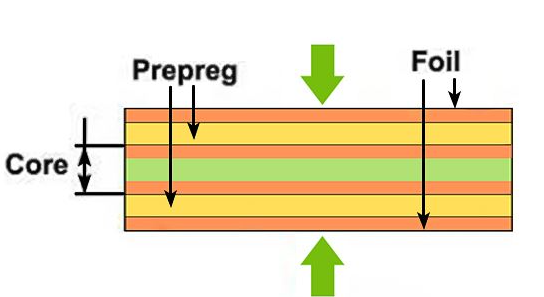
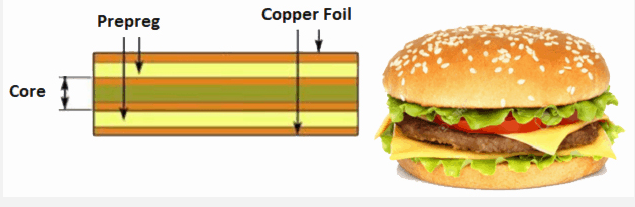
- Core materials (fully cured laminate with copper) form the basic building blocks
- Prepreg layers are placed between cores or between cores and copper foil
- The stack undergoes lamination under heat and pressure, completing the cure
- The prepreg flows to fill gaps and bonds the layers together
Lamination Process
The lamination cycle is critical for quality:
- Layup: Precise alignment of cores, prepreg, and copper foils
- Heating: Typically 175-200°C for standard FR-4
- Pressure: 200-400 psi to ensure proper flow and bonding
- Cooling: Controlled to prevent warpage or stress
Parameters must be optimized for each prepreg type to achieve proper flow without excessive resin bleed.
Design Considerations
Key design factors affecting prepreg performance:
- Layer count and thickness: Determines the number of prepreg layers needed
- Impedance control: Affected by prepreg dielectric properties and thickness
- Via types: Through-hole, blind, or buried vias affect prepreg selection
- Copper weights: Heavier copper requires more resin flow
Advantages of Prepreg in PCB Manufacturing
Process Advantages
- Excellent bond strength: Creates reliable interlayer connections
- Controlled dielectric properties: Enables precise impedance matching
- Void-free construction: Proper lamination minimizes air pockets
- Design flexibility: Allows complex multilayer structures
Performance Benefits
- Signal integrity: Low-loss materials enable high-speed operation
- Thermal management: High-Tg options withstand lead-free soldering
- Mechanical reliability: Good CTE matching reduces stress
- Environmental resistance: Moisture and chemical resistance
Economic Benefits
- Efficient material usage: Minimizes waste compared to alternative methods
- Scalable production: Suitable for both prototype and volume manufacturing
- Proven reliability: Reduces field failures and warranty costs
Challenges and Solutions in Prepreg PCB Manufacturing
Common Processing Challenges
- Resin flow issues: Too much flow can cause resin starvation; too little creates voids
- Solution: Optimize lamination parameters and select appropriate resin content
- Delamination: Poor bonding between layers
- Solution: Ensure proper surface preparation and lamination conditions
- Warpage and twist: Uneven stresses in the finished board
- Solution: Balance materials and layer stackup symmetrically
- Dielectric consistency: Variations in thickness or properties
- Solution: Tight process controls and material handling
Material Handling Considerations
Prepreg is sensitive to:
- Moisture absorption: Must be stored in dry conditions
- Shelf life: Typically 3-6 months at room temperature
- Temperature exposure: Must be handled carefully to prevent premature curing
Proper material management systems are essential for consistent results.
Applications of Prepreg PCBs
Consumer Electronics
- Smartphones and tablets
- Laptops and wearables
- Home entertainment systems
Telecommunications
- 5G infrastructure
- Base stations
- Network equipment
Automotive Electronics
- Engine control units
- ADAS systems
- Electric vehicle components
Aerospace and Defense
- Avionics systems
- Satellite communications
- Military electronics
Industrial Electronics
- Industrial control systems
- Power electronics
- Medical devices
Future Trends in Prepreg PCB Technology
Emerging Materials
- Ultra-low loss materials: For 100+ GHz applications
- Thermally conductive prepregs: For better heat dissipation
- Embedded component technology: Allowing passive components within prepreg layers
Manufacturing Innovations
- Automated layup systems: For higher precision and yield
- Advanced curing monitoring: Real-time process control
- Sustainable materials: Bio-based resins and recyclable reinforcements
Design Trends
- Higher layer counts: 20+ layers becoming more common
- Finer features: 25μm lines/spaces and microvias
- 3D structures: Complex molded interconnect devices
Conclusion
Prepreg PCB materials represent a critical enabling technology for modern electronics. As the intermediary between conductive layers in multilayer boards, prepreg determines not just the board’s physical structure but also its electrical performance, thermal characteristics, and long-term reliability. The continued evolution of prepreg technology—with new materials, improved manufacturing processes, and advanced design techniques—will play a fundamental role in meeting the demands of next-generation electronic devices.
From the ubiquitous FR-4 to specialized high-frequency or high-temperature formulations, prepreg offers designers and manufacturers a versatile toolkit for creating reliable, high-performance PCBs. As electronic systems push toward higher speeds, greater complexity, and more challenging operating environments, the importance of proper prepreg selection and processing will only continue to grow. Understanding these materials and their characteristics remains essential for anyone involved in PCB design, fabrication, or assembly.