
High Current Flex PCB: Design, Materials, and Applications
Introduction to High Current Flex PCBs
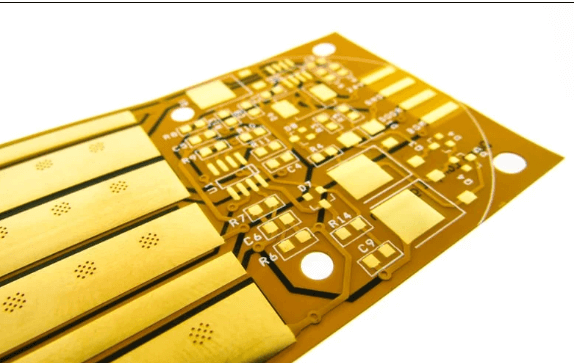
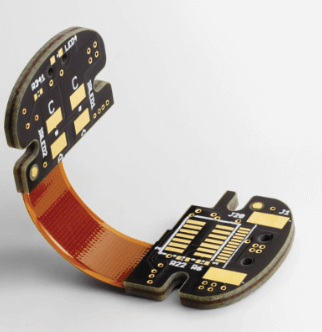
Flexible printed circuit boards (flex PCBs) have revolutionized electronic design by offering unparalleled adaptability in space-constrained applications. When these circuits are engineered to handle high current loads, they become specialized components called high current flex PCBs. These advanced circuits combine the mechanical flexibility of traditional flex circuits with the power handling capabilities typically associated with rigid boards.
High current flex PCBs are defined by their ability to carry substantial electrical currents—often ranging from several amps to over 100 amps in some specialized applications—while maintaining the physical flexibility that makes them valuable in dynamic environments. This unique combination of properties makes them indispensable in modern electronics where both power delivery and mechanical compliance are required.
The development of high current flex technology represents a significant engineering achievement, overcoming the inherent challenges of managing heat dissipation and maintaining electrical integrity in flexible substrates. As electronic devices continue to shrink in size while demanding more power, high current flex PCBs have emerged as critical enablers for innovation across multiple industries.
Key Design Considerations for High Current Flex PCBs
Trace Geometry and Current Capacity
The foundation of high current flex PCB design lies in careful trace geometry planning. Unlike standard flex circuits where signal integrity is the primary concern, high current applications require special attention to cross-sectional area and current density. Designers must calculate the appropriate trace width and thickness based on:
- Expected current load (both continuous and peak)
- Allowable temperature rise
- Copper weight (typically 2 oz/ft² to 4 oz/ft² for high current applications)
- Environmental operating conditions
The IPC-2152 standard provides guidelines for determining current-carrying capacity, but high current flex designs often require additional derating factors due to their unique thermal dissipation characteristics in flexible environments.
Thermal Management Strategies
Effective heat dissipation presents one of the greatest challenges in high current flex PCB design. Traditional cooling methods like heatsinks are often impractical in flexible applications. Instead, designers employ several innovative approaches:
- Thermal relief patterns: Strategic copper pours that distribute heat away from critical components
- Thermal vias: When multilayer designs are possible, these help conduct heat to other layers
- Conductive adhesives: Used to bond flex circuits to metal chassis or other heat-dissipating structures
- Material selection: Choosing substrates with better thermal conductivity properties
Mechanical Stress Considerations
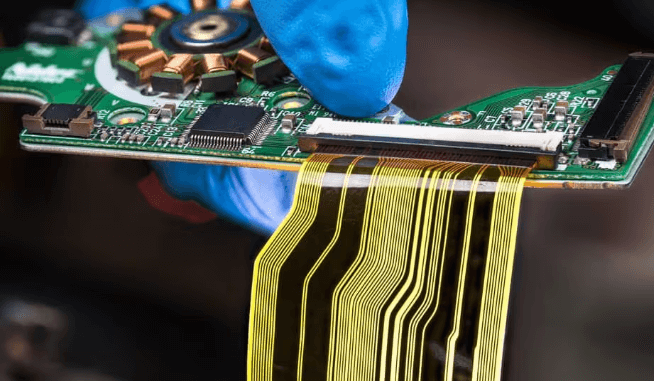
High current traces must maintain electrical continuity even when the flex PCB undergoes repeated bending. Designers address this challenge through:
- Careful routing of high current traces perpendicular to bend lines when possible
- Implementing strain relief features at connection points
- Using graduated trace width transitions to prevent stress concentration
- Considering dynamic flex requirements versus static bend applications
Material Selection for High Current Flex Applications
Conductive Materials
The choice of conductive materials significantly impacts the performance and reliability of high current flex PCBs:
- Copper: The standard choice, with electrodeposited (ED) or rolled annealed (RA) varieties. RA copper generally offers better flexibility for dynamic applications.
- Copper thickness: Ranging from 1 oz (35 μm) to 4 oz (140 μm) or more for extreme current requirements
- Surface finishes: Options like immersion silver, ENIG (Electroless Nickel Immersion Gold), or tin plating affect both current carrying capacity and solderability
Dielectric Materials
The substrate materials must withstand both electrical and mechanical stresses:
- Polyimide: The most common choice (e.g., Kapton), offering excellent thermal stability (up to 400°C) and good dielectric strength
- PET: Less expensive than polyimide but with lower temperature tolerance
- Specialty composites: Some high-performance applications use ceramic-filled polyimide or other advanced materials for enhanced thermal conductivity
Adhesives and Coverlays
The materials that bond layers together and protect conductors must maintain integrity under high current conditions:
- Acrylic adhesives: Common but with limited high-temperature performance
- Epoxy-based systems: Better for high-temperature applications
- Adhesiveless constructions: Increasingly popular for the thinnest, most reliable high current flex circuits
Manufacturing Processes for High Current Flex PCBs
Specialized Fabrication Techniques
Producing reliable high current flex PCBs requires adaptations to standard manufacturing processes:
- Heavy copper plating: Requires modified plating baths and potentially multiple plating steps
- Etch compensation: Accounting for side etching effects when creating thick copper traces
- Laser cutting: Often used for precise profile cutting of thick copper flex circuits
- Controlled impedance: Maintaining consistent characteristics despite thick copper layers
Quality Control Considerations
High current applications demand rigorous quality assurance:
- Microsection analysis: Verifying copper thickness and plating quality
- Current cycling tests: Evaluating performance under repeated high current loads
- Flex endurance testing: Especially critical for dynamic applications
- Thermal imaging: Identifying hot spots under load conditions
Applications of High Current Flex PCBs
Automotive Electronics
Modern vehicles increasingly rely on high current flex PCBs for:
- Battery management systems in electric vehicles
- High-power LED lighting arrays
- Motor control systems
- Power distribution modules
The automotive environment demands both high reliability and compact packaging, making flex solutions ideal.
Aerospace and Defense
Avionics and military systems benefit from high current flex technology:
- Power distribution in confined aircraft spaces
- Ruggedized electronics for harsh environments
- Lightweight power solutions for UAVs and satellites
- High-reliability interconnects in weapon systems
Medical Equipment
Medical applications leverage high current flex PCBs in:
- Portable imaging systems
- Surgical robotics
- High-power medical lasers
- Compact defibrillator circuits
The combination of high reliability and space savings proves critical in medical devices.
Consumer Electronics
Even consumer products increasingly incorporate high current flex solutions:
- High-performance laptop power delivery
- Smartphone fast-charging circuits
- Wearable devices with power-hungry components
- VR/AR headset power distribution
Industrial Applications
Industrial environments utilize high current flex PCBs for:
- Robotics power and signal distribution
- Industrial motor controls
- High-power sensor arrays
- Flexible manufacturing system components
Future Trends in High Current Flex PCB Technology
Advanced Materials Development
Ongoing research promises new materials that will enhance high current flex PCB capabilities:
- Graphene and carbon nanotube composites for improved conductivity and heat dissipation
- Nano-coated copper for reduced oxidation and better high-frequency performance
- Shape-memory substrates that can adapt to changing mechanical requirements
3D Printed Electronics
Additive manufacturing techniques may revolutionize high current flex PCB production:
- Direct printing of conductive traces with embedded components
- Custom dielectric materials printed for specific thermal or mechanical needs
- Rapid prototyping capabilities for complex high current flex designs
Integrated Cooling Solutions
Future high current flex PCBs may incorporate:
- Microfluidic cooling channels within the flex layers
- Phase-change materials for heat absorption
- Thermoelectric cooling elements printed directly on the flex
Smart Flex Circuits
The integration of sensing and adaptive capabilities:
- Embedded temperature sensors for real-time thermal monitoring
- Self-regulating conductors that adjust resistance based on current load
- Predictive maintenance features that detect impending failures
Conclusion
High current flex PCBs represent a critical intersection of power electronics and flexible circuit technology, enabling innovations across numerous industries. Their design requires careful consideration of electrical, thermal, and mechanical factors to ensure reliable operation under demanding conditions. As material science advances and manufacturing techniques improve, these specialized circuits will play an increasingly vital role in powering the next generation of electronic devices—from ultra-compact consumer gadgets to mission-critical aerospace systems.
The future of high current flex PCB technology promises even greater current densities, improved thermal performance, and enhanced reliability, continuing to push the boundaries of what’s possible in flexible electronics. Engineers and designers who master the complexities of high current flex design will be at the forefront of creating the compact, powerful, and adaptable electronic systems that will define tomorrow’s technological landscape.