
Common SMT Process Defects and Solutions
Introduction
Surface Mount Technology (SMT) is a widely used assembly method in modern electronics manufacturing. It offers advantages such as high component density, improved performance, and cost efficiency. However, SMT processes can encounter various defects that affect product quality and reliability. This article discusses the five most common SMT process defects, their causes, and effective solutions to mitigate them.
1. Solder Bridging (Short Circuits)
Description:
Solder bridging occurs when excess solder creates an unintended electrical connection between two adjacent pads or leads, leading to short circuits.
Causes:
- Excessive solder paste deposition (due to incorrect stencil design or printing parameters).
- Insufficient solder mask between pads.
- Incorrect reflow profile (excessive peak temperature or prolonged heating).
- Component misalignment during placement.
Solutions:
- Optimize stencil design (reduce aperture size or adjust thickness).
- Improve solder paste printing (ensure proper squeegee pressure and speed).
- Adjust reflow profile (optimize temperature ramp-up and cooling rates).
- Enhance component placement accuracy (calibrate pick-and-place machines).
- Use solder mask dams between fine-pitch components.
2. Tombstoning (Component Lifting)
Description:
Tombstoning occurs when one end of a passive component (e.g., resistor or capacitor) lifts from the pad during reflow, resembling a tombstone.
Causes:
- Uneven heating (one pad melts before the other, creating imbalance).
- Asymmetric pad design (unequal pad sizes or thermal masses).
- Poor solder paste deposition (uneven paste volume on pads).
- Excessive component placement force.
Solutions:
- Ensure symmetrical pad design (equal size and thermal mass).
- Optimize reflow profile (uniform heating and cooling).
- Improve solder paste application (consistent volume on both pads).
- Use nitrogen atmosphere reflow to reduce oxidation.
- Select components with compatible terminations.
3. Insufficient Solder (Cold Joints or Open Connections)
Description:
Insufficient solder results in weak or incomplete joints, leading to poor electrical conductivity and mechanical strength.
Causes:
- Inadequate solder paste deposition (stencil clogging or poor printing).
- Component warpage (prevents proper wetting).
- Oxidized solder pads or components.
- Incorrect reflow temperature (solder does not fully melt).
Solutions:
- Clean and maintain stencils to prevent clogging.
- Increase solder paste volume (adjust stencil thickness or aperture size).
- Ensure proper pad cleanliness (remove oxidation before assembly).
- Optimize reflow profile (sufficient peak temperature and dwell time).
- Inspect solder paste storage conditions (avoid moisture absorption).

4. Voiding in Solder Joints (BGA/QFN Defects)
Description:
Voids are gas pockets trapped within solder joints, commonly found in Ball Grid Array (BGA) and Quad Flat No-lead (QFN) packages. They reduce thermal and electrical performance.
Causes:
- Outgassing from flux during reflow.
- Poor solder paste quality (high volatile content).
- Insufficient reflow time or temperature.
- Contaminated PCB surfaces (moisture or residues).
Solutions:
- Use low-voiding solder paste (optimized flux chemistry).
- Pre-bake PCBs to remove moisture.
- Optimize reflow profile (longer soak time for flux activation).
- Apply vacuum reflow (for critical applications).
- Improve stencil design (ensure proper paste release).
5. Component Misalignment (Placement Errors)
Description:
Misaligned components result in poor solder joints, electrical failures, or assembly defects.
Causes:
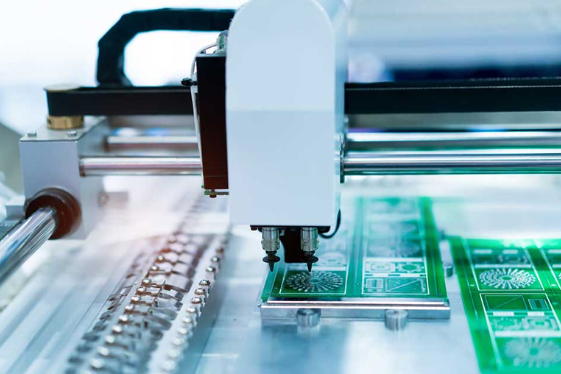
- Incorrect pick-and-place machine calibration.
- PCB fiducial recognition errors.
- Warped PCBs or components.
- Vibration or mechanical instability during placement.
Solutions:
- Regularly calibrate placement machines (vision systems and nozzles).
- Use high-quality fiducial marks for accurate PCB alignment.
- Inspect PCB flatness before assembly.
- Optimize conveyor stability to prevent vibrations.
- Implement automated optical inspection (AOI) for post-placement verification.
Conclusion
SMT manufacturing is prone to defects such as solder bridging, tombstoning, insufficient solder, voiding, and misalignment. These issues can lead to reliability failures, increased rework costs, and reduced product performance. By understanding the root causes and implementing proper process controls, optimized stencil designs, precise reflow profiles, and rigorous inspections, manufacturers can significantly reduce defect rates.
Continuous improvement through process monitoring, operator training, and advanced inspection technologies (SPI, AOI, X-ray) ensures high-quality SMT assembly. Addressing these common defects enhances yield, reduces costs, and improves end-product reliability in electronics manufacturing.