
Skip to content
Andwin Circuits
  • Home
  • ProductsExpand
    • HDI multilayer PCB
    • Rigid Flex PCB
    • Flex pcb
    • Special PCBExpand
      • High Frequency PCBExpand
        • Rogers RO4350B PCB
        • Rogers RO4003 pcb
        • Rogers RO3003 PCB
        • Rogers 5880 PCB
        • DICLAD 527 PCB
        • Taconic TLX series
        • Taconic TLX-8 RF PCB
        • Taconic TLX-9 RF PCB
      • High speed pcbExpand
        • Megtron 6 High Speed PCB
        • TU-872 SLK Sp High Speed
      • High TG PCBExpand
        • SHENGYI SH260 PCB
        • ISOLA 370HR PCB
        • ISOLA IS410 PCB
        • ISOLA IS420 PCB
      • Heavy copper PCB
      • Copper coin pcb
      • Copper inlay PCB
    • Metal Core PCBExpand
      • Copper core pcb
      • Aluminum PCB
      • 2 Layers Aluminum PCB
      • Direct thermal MCPCB
      • 2 Layers Direct Thermal
    • Ceramic PCBExpand
      • DPC ceramic PCB
      • DBC ceramic PCB
      • Thick film Ceramic PCB
      • Al2O3 Alumina PCB
      • AIN ALN ceramic PCB
      • IGBT Ceramic PCB
  • ServiceExpand
    • PCB Assembly
    • Quick turn PCB assembly
    • PCBA conformal coating
  • IndustryExpand
    • Telecommunication
    • IoT and Wireless
    • Industrial Control
    • Thermal management
    • Power and Energy
    • IC test board
    • Automative
    • Medical
  • CapabilityExpand
    • Rigid PCB
    • Rigid flex PCB
    • Metal core PCB
    • PCB Assembly
  • TechnologyExpand
    • Blogs
    • Via in pad
    • PCB E-test
    • PCB stack up
    • MCPCB panelization
    • Controlled impedance PCB
  • AboutExpand
    • About us
    • Certification
    • Factory Tour
  • Contact
Andwin Circuits
Home / How to reduce crosstalk in PCB boards

How to reduce crosstalk in PCB boards

ByGrace June 30, 2025June 30, 2025

With the development of technology and people’s consumption needs, the trend of miniaturization of electronic devices is becoming more and more prominent, and printed circuit boards (PCBs) are getting smaller and smaller. This leads to unintentional coupling between signal traces in PCB boards, which is called crosstalk (as shown in Figure 1).
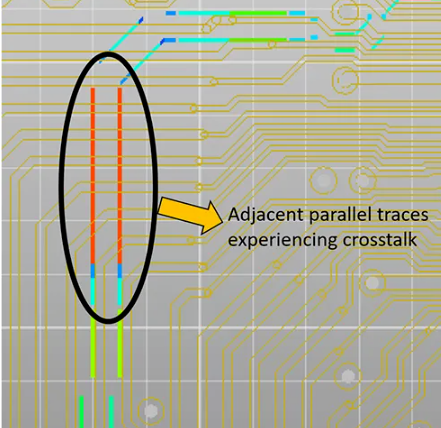
Figure 1. Parallel traces crosstalk

Here are some PCB wiring rules to reduce crosstalk.

Rule 1: Keep key signals away from I/O signals

It is necessary to pay special attention to the key wiring near the I/O connectors, because noise can easily leave or enter the circuit board through these I/O ports in the form of radiation or conduction. If the signal line directly connected to the I/O port is too close to the key signal line, a coupling effect will occur (see Figure 2).
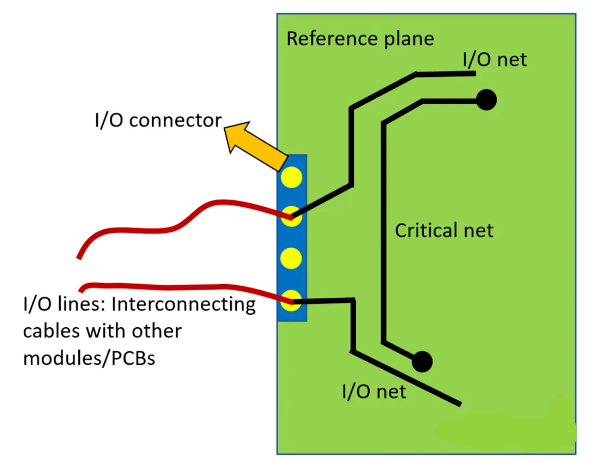
Figure 2. Key signal and I/O port routing diagram

Noise will enter through the I/O connection line and couple to the key signal (clock or sensitive signal) through the I/O connection line inside the PCB, as shown in Figure 3a. Similarly, the key signal (clock or high-speed signal) will couple the noise to the I/O signal routing inside the PCB and radiate outward through the I/O connection line, as shown in Figure 3b:
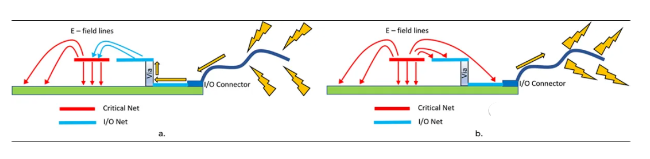
Figure 3. Key signals and I/O signals too close will cause potential EMC problems

Rule 2: High-speed signal routing is as short as possible

On high-speed PCBs (> 100MHz), high-frequency signals have a short wavelength and high radiation efficiency, so that the high-speed signal routing itself forms an antenna effect, especially when the routing is placed on the top or bottom layer. This unwanted radiation can couple to adjacent traces or even nearby interface connections. We recommend drawing high-speed signal traces on the middle layer of the PCB, as shown in Figure 4b. This helps control the electromagnetic field generated by high-speed signals and avoids unexpected coupling in the form of crosstalk or electromagnetic interference. If the high-speed trace is on the surface layer, the trace should be as short as possible. When the trace is smaller than the electrical minimum size (1/10 wavelength), the antenna effect will be greatly reduced. As shown in Figure 4:
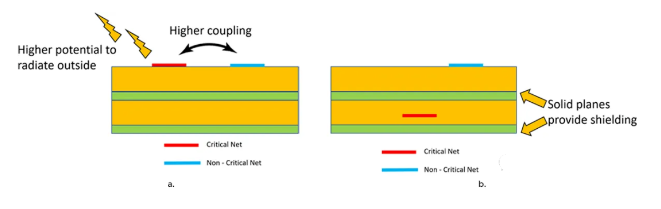
Figure 4. a. Signal on the surface layer b. Signal on the middle layer

Rule 3: Differential network matching

In theory, the signals transmitted by the differential pair are equal in size and opposite in polarity, so the EMI generated by the differential pair will cancel each other or be ignored. However, this is only effective when the differential pair traces are equal in length and as symmetrically close to each other as possible. Figure 5 shows differential pair traces in several different situations.

Figure 5. Comparison of the quality of differential routing

In order to compare the radiation of differential signal routing, the following circuit simulation is performed. Figure 6a and Figure 6b are two sets of symmetrical and asymmetrical routing, respectively. The high-frequency differential signal is input at the left end of the routing, and the load is terminated at the right end.
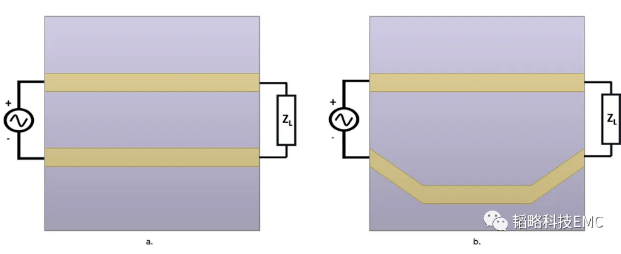
Figure 6. a. Symmetrical routing b. Asymmetric routing

We perform near-field analysis on the above two situations, and the noise simulation is shown in Figure 7:
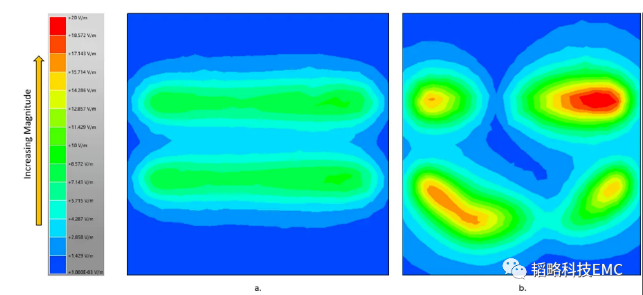
Figure 7. a Symmetrical differential routing simulation b Asymmetric differential routing simulation

At a distance of 1m, the radiation emission is compared and tested. In the frequency band of 30MHz-1GHz, the noise value of symmetrical routing is 8-10db lower than that of asymmetrical routing, as shown in Figure 8.
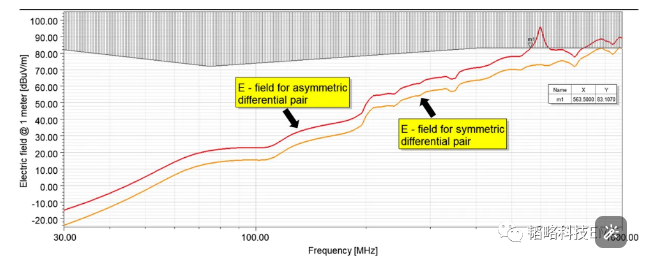
Figure 8. 1m distance radiation comparison data

In general, in the design of electronic equipment, the importance of early circuit design cannot be ignored. Good EMC design can ensure the normal operation of the equipment, avoid the impact of electromagnetic interference on other equipment, and improve the reliability of the product itself.

Contact us for PCB quote now |
Post Tags: #aluminum clad pcb#aluminum core pcb#aluminum pcb#pcb board

Post navigation

Previous Previous
What is the standard for PCB warpage?
NextContinue
7 Tips: How to Avoid PCB Electromagnetic Problems

Search

Search

Products

  • HDI Multilayer PCB
  • Rigid Flex PCB
  • Flex pcb
  • High Frequency PCB
  • High speed pcb
  • Heavy copper PCB
  • Metal Core PCB
  • Ceramic PCB

Address

Andwin Circuits Co.,Limited
Email: sales@andwinpcb.com
Tel: +86 755 2832 9394
Fax:+86 755 2992  6717
ADD:1-2F-1217,HouDeQun Industrial park,
NanTing RD NO.56,ShaJing,BaoAn,Shenzhen 518104,GuangDong,China

Products

  • HDI Multilayer PCB
  • Rigid Flex PCB
  • Flex pcb
  • High Frequency PCB
  • High speed pcb
  • Heavy copper PCB
  • Metal Core PCB
  • Ceramic PCB

Technology

  • Blogs
  • Via in pad
  • PCB E-test
  • PCB stack up
  • Metal core PCB panelization
  • Controlled impedance PCB

CERTIFICATION

Certification >>


Copyright© 2003 - 2026 Andwin | All Rights Reserved | Powered by Andwin

Scroll to top
  • Home
  • Products
    • HDI multilayer PCB
    • Rigid Flex PCB
    • Flex pcb
    • Special PCB
      • High Frequency PCB
        • Rogers RO4350B PCB
        • Rogers RO4003 pcb
        • Rogers RO3003 PCB
        • Rogers 5880 PCB
        • DICLAD 527 PCB
        • Taconic TLX series
        • Taconic TLX-8 RF PCB
        • Taconic TLX-9 RF PCB
      • High speed pcb
        • Megtron 6 High Speed PCB
        • TU-872 SLK Sp High Speed
      • High TG PCB
        • SHENGYI SH260 PCB
        • ISOLA 370HR PCB
        • ISOLA IS410 PCB
        • ISOLA IS420 PCB
      • Heavy copper PCB
      • Copper coin pcb
      • Copper inlay PCB
    • Metal Core PCB
      • Copper core pcb
      • Aluminum PCB
      • 2 Layers Aluminum PCB
      • Direct thermal MCPCB
      • 2 Layers Direct Thermal
    • Ceramic PCB
      • DPC ceramic PCB
      • DBC ceramic PCB
      • Thick film Ceramic PCB
      • Al2O3 Alumina PCB
      • AIN ALN ceramic PCB
      • IGBT Ceramic PCB
  • Service
    • PCB Assembly
    • Quick turn PCB assembly
    • PCBA conformal coating
  • Industry
    • Telecommunication
    • IoT and Wireless
    • Industrial Control
    • Thermal management
    • Power and Energy
    • IC test board
    • Automative
    • Medical
  • Capability
    • Rigid PCB
    • Rigid flex PCB
    • Metal core PCB
    • PCB Assembly
  • Technology
    • Blogs
    • Via in pad
    • PCB E-test
    • PCB stack up
    • MCPCB panelization
    • Controlled impedance PCB
  • About
    • About us
    • Certification
    • Factory Tour
  • Contact
Search