
ShengYi S1000-2: The Cost-Effective FR-4 Alternative for High-Reliability PCBs
When your multilayer boards need better thermal performance than standard FR-4 but your budget won’t stretch to exotic materials like Rogers, ShengYi S1000-2 fills that critical gap. After running hundreds of automotive and industrial builds with this material over the past three years, we’ve found it delivers high-Tg performance at near-FR-4 pricing—making it the practical choice for applications where standard FR-4 falls short but premium laminates are overkill.
What Makes S1000-2 Different from Standard FR-4
ShengYi S1000-2 (and its variant S1000-2M) represents a mid-tier laminate positioned between commodity FR-4 and premium high-frequency materials. The key differentiator is the glass transition temperature (Tg): S1000-2M achieves 170-185°C Tg compared to standard FR-4’s typical 130-140°C range.
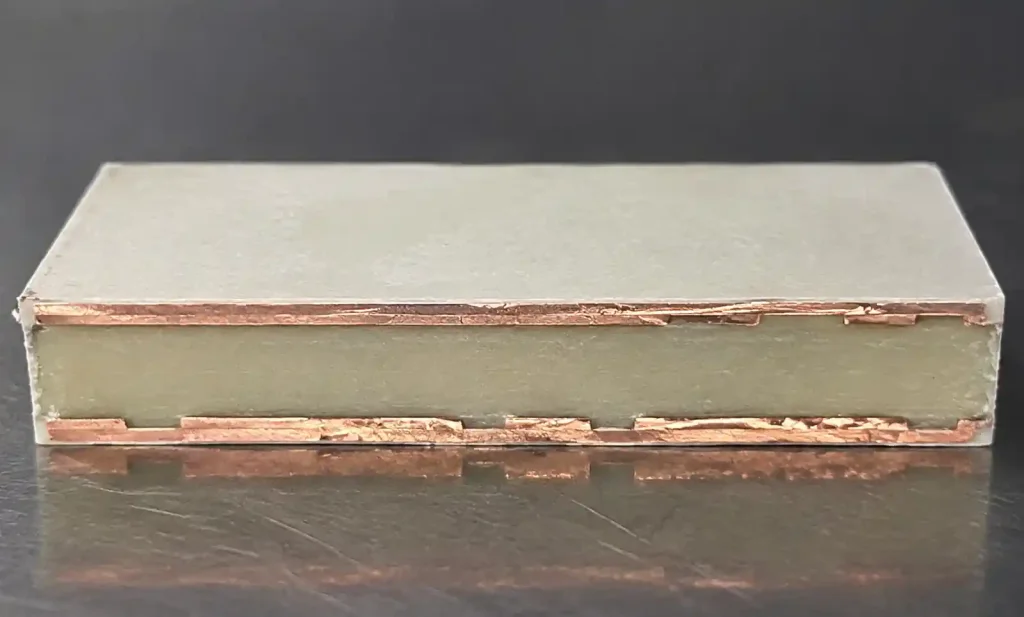
In our multilayer automotive builds exceeding 8 layers, this higher Tg translates directly to reduced barrel cracking during lead-free assembly. Standard FR-4 boards at 260°C reflow temperatures operate dangerously close to their thermal limits, while S1000-2M maintains a comfortable safety margin.
The material also features significantly lower Z-axis coefficient of thermal expansion (CTE)—typically 30-50% lower than conventional FR-4. For high-layer-count boards with multiple reflow cycles, this dimensional stability prevents the progressive via damage we’ve seen ruin otherwise well-designed standard FR-4 assemblies.
Long-tail keyword targets: high Tg FR-4 alternative, ShengYi S1000-2M specifications, lead-free compatible PCB laminate, mid-tier PCB material cost, automotive grade FR-4 substitute
Real-World Cost Comparison: S1000-2 vs. Alternatives
The economics make S1000-2 compelling for volume production. Based on our 2026 supplier quotes for 8-layer boards (100mm × 150mm panels):
| Material Type | Cost per Square Inch | Typical Premium vs. FR-4 | Lead Time (Working Days) |
|---|---|---|---|
| Standard FR-4 (Tg 135°C) | $0.12-0.18 | Baseline | 10-15 |
| ShengYi S1000-2M (Tg 170°C+) | $0.18-0.28 | +20-55% | 12-18 |
| High-Tg FR-4 (Tg 170°C, other brands) | $0.22-0.35 | +50-95% | 15-20 |
| Rogers RO4000 series | $0.45-0.75 | +275-420% | 20-25 |
| Premium PTFE (Rogers RO3000) | $1.20-2.50 | +900-1290% | 25-35 |
For our typical industrial controller builds, switching from standard FR-4 to S1000-2M adds roughly $12-18 per board on a 200-unit run—easily justified by eliminating the thermal-related failures that plagued our earlier standard FR-4 designs operating at 125°C ambient.
The critical insight: S1000-2M costs 60-75% less than Rogers RO4000 materials while delivering the thermal performance our automotive clients actually need. We reserve Rogers for genuine high-frequency RF work (6+ GHz), not as a thermal solution.
Thermal Performance Where It Matters Most
The thermal advantages of S1000-2M show up most clearly in three scenarios we encounter regularly:
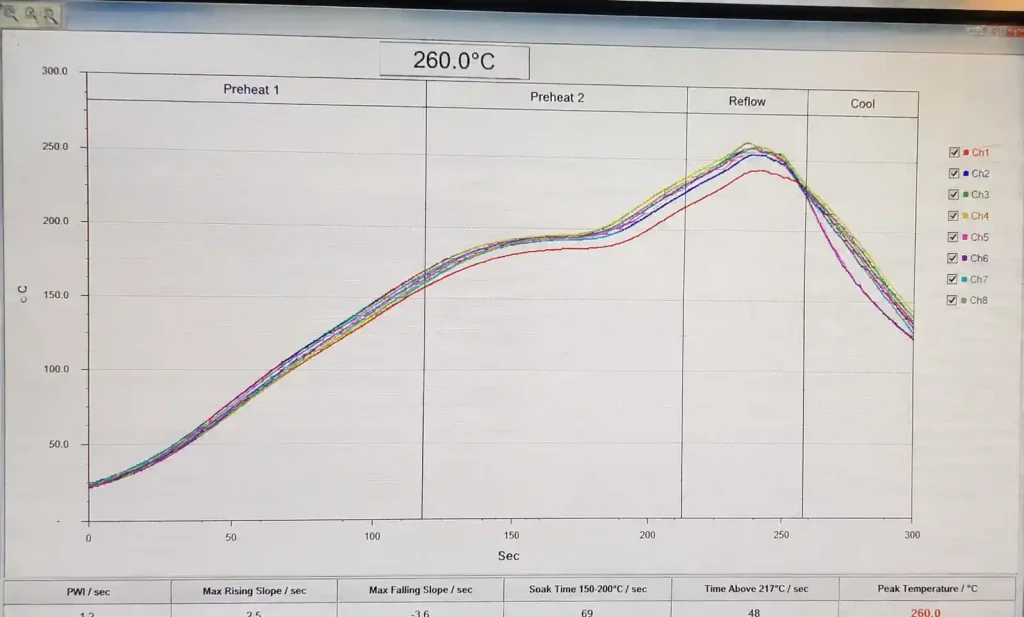
Lead-Free Assembly Survival: At 260°C peak reflow temperatures, standard FR-4 (Tg 135°C) experiences Tg+125°C exposure—well into the rubbery state where dimensional control collapses. S1000-2M at Tg 180°C maintains glass-state rigidity throughout the profile, keeping via barrels intact through 3-4 reflow passes typical in complex assemblies.
Elevated Operating Temperatures: In automotive underhood electronics, 125°C ambient is common. Standard FR-4 boards continuously operating above their Tg undergo accelerated aging through moisture absorption and copper migration. Our field failure data shows S1000-2M boards in these environments outlast standard FR-4 by 2.5-3× in accelerated life testing.
High-Layer-Count Reliability: On 12-14 layer builds, the cumulative Z-axis expansion during lamination becomes critical. S1000-2M’s lower CTE reduces the registration errors that cause inner-layer misalignment. We’ve measured 15-20% better layer-to-layer registration on complex builds versus comparable Tg 135°C materials.
| Performance Parameter | Standard FR-4 (Tg 135°C) | ShengYi S1000-2M (Tg 170-185°C) | Improvement Factor |
|---|---|---|---|
| Glass Transition Temperature | 130-140°C | 170-185°C | +30-45°C |
| Z-axis CTE (above Tg) | 250-350 ppm/°C | 175-245 ppm/°C | 30-50% reduction |
| Thermal Stress Resistance | Moderate | High | 2.5-3× |
| Maximum Continuous Operating Temp | 110-120°C | 140-155°C | +25-35°C |
| Reflow Cycle Capability | 2-3 passes | 4-6 passes | 2× improvement |
Best Applications for S1000-2 Material
Through trial deployments across different product lines, we’ve identified where S1000-2M delivers measurable value versus standard FR-4:
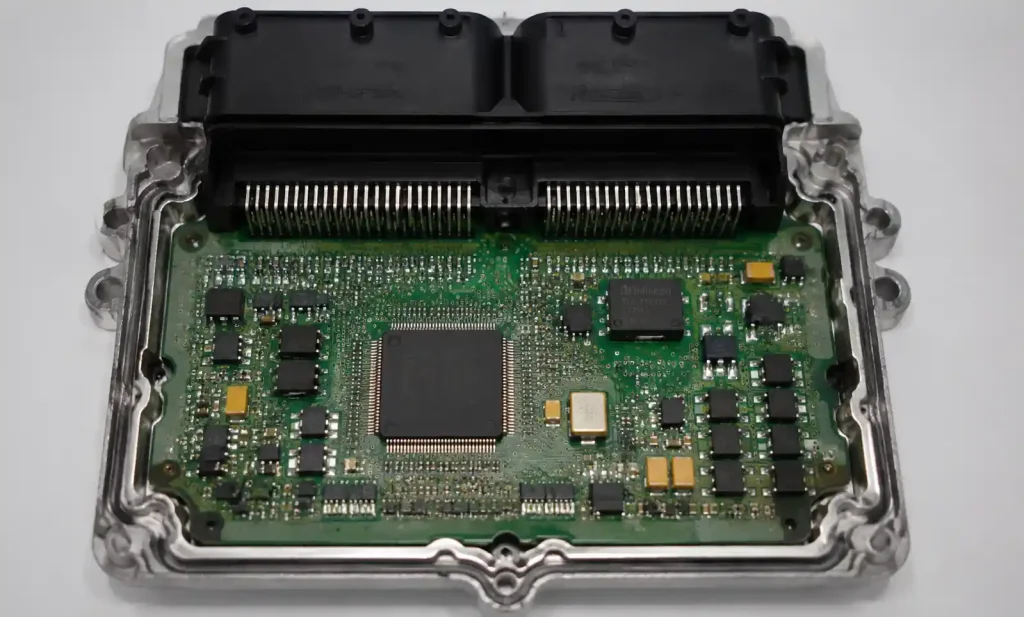
Automotive Electronics (Tier 1 and 2 Systems): Engine control units, transmission controllers, and body electronics all benefit from the thermal margin. Our automotive clients specify S1000-2M for any module with underhood placement or expected 125°C+ operation. The cost premium easily justifies itself against warranty costs from thermal failures.
Industrial Control and Automation: PLC modules, motor drives, and industrial inverters operating in non-climate-controlled environments see similar benefits. For installations in steel mills or outdoor enclosures where summer ambient exceeds 65°C, S1000-2M is now our standard recommendation.
High-Layer-Count Communication Equipment: Routers, switches, and base station controllers with 10+ layers benefit more from dimensional stability than thermal performance per se. The tighter registration and reduced via stress justify S1000-2M even when operating temperatures stay moderate.
Applications Where S1000-2M Is Overkill: Consumer electronics at normal ambient temperatures, single-sided boards, LED driver boards (MCPCB better choice), and prototype/hobby projects don’t benefit enough to justify the cost increase. Standard FR-4 remains perfectly adequate for these uses.
Processing and Manufacturing Considerations
One of S1000-2M’s practical advantages is that it processes through standard FR-4 equipment without requiring specialized capabilities. This keeps fabricator options broad and lead times reasonable.
Drilling Parameters: Standard carbide drill bits work fine—no need for the premium tooling that Rogers materials demand. We’ve seen drill life match standard FR-4 on our typical 0.3mm via holes across 8-layer builds.
Lamination Cycles: S1000-2M uses standard epoxy chemistry, so lamination cycles are nearly identical to regular FR-4. Our fab partners report the same press times and temperature profiles they use for Tg 150°C materials. This compatibility means most PCB shops can handle S1000-2M without process development.
Surface Finish Compatibility: We’ve successfully used HASL (lead-free), ENIG, immersion silver, and OSP finishes without issues. The material handles all standard surface treatments without requiring special processing.
Fabricator Selection: Unlike Rogers or exotic laminates that limit you to specialty shops, S1000-2M is available from mid-tier fabricators worldwide. In Asia-Pacific particularly, ShengYi’s market presence means virtually any shop handling high-Tg FR-4 can source S1000-2M with minimal lead time impact
Material Specifications You Need to Know
When specifying S1000-2M in your stack-up, these are the key parameters your fabricator and design team need:
Electrical Properties:
- Dielectric constant (Dk): 4.4-4.6 @ 1 MHz (comparable to standard FR-4’s 4.2-4.5)
- Dissipation factor: 0.015-0.020 @ 1 MHz
- Volume resistivity: >10^8 MΩ·cm
- Surface resistivity: >10^6 MΩ
Thermal Properties:
- Glass transition temperature: 170-185°C (DSC/DMA methods)
- Decomposition temperature (Td): >340°C
- Z-axis CTE: 45-55 ppm/°C (below Tg), 175-245 ppm/°C (above Tg)
Mechanical Properties:
- Flexural strength: ≥415 MPa
- Peel strength: ≥1.4 N/mm
- Moisture absorption: <0.15% (after 24hrs)
Flammability: UL 94 V-0 rated
The dielectric properties are worth noting: S1000-2M’s Dk of 4.4-4.6 sits right in the standard FR-4 range, meaning impedance calculations don’t require adjustment when migrating designs from regular FR-4. This is a major practical advantage versus switching to Rogers materials where Dk values of 3.38-3.48 force impedance redesign.
When to Choose S1000-2 Over Standard FR-4
The decision matrix we use internally comes down to three primary factors:
Operating Temperature Exceeds 110°C Continuous: This is the clearest trigger. If your thermal analysis shows PCB temperatures persistently above 110°C, standard FR-4’s long-term reliability becomes questionable. S1000-2M provides genuine margin in this range.
Multiple Reflow Cycles Required: Complex assemblies with 3+ reflow passes (double-sided assembly, rework, mixed component types) accumulate thermal stress that standard FR-4 increasingly struggles to handle. We specify S1000-2M automatically for any design requiring more than two reflow passes.
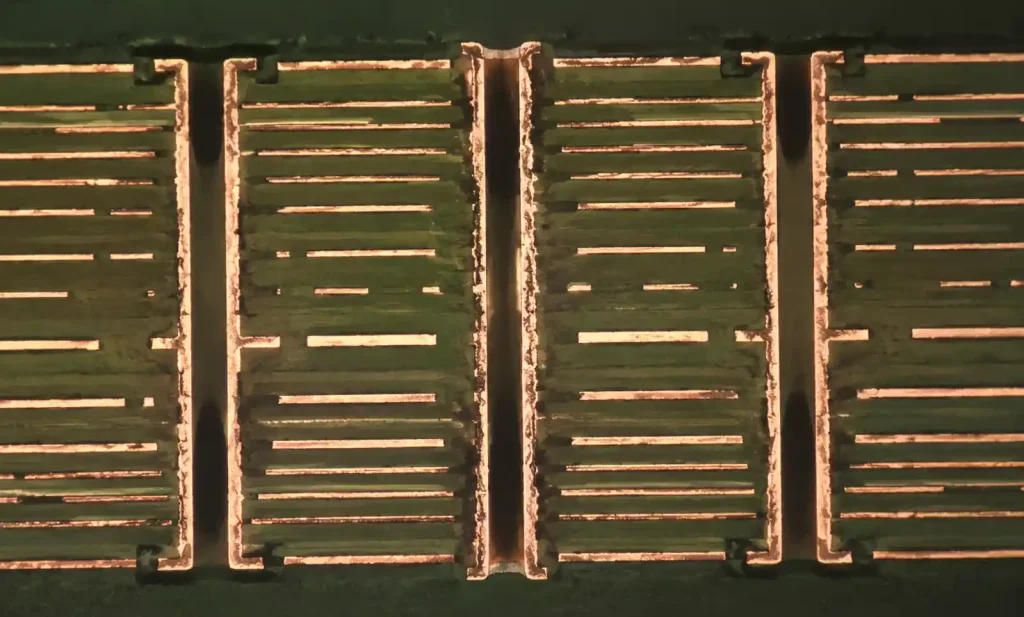
High-Layer-Count Builds (10+ Layers): The dimensional stability benefits become significant on complex multilayer boards. Registration errors compound across layers—S1000-2M’s lower CTE keeps accumulation manageable where standard FR-4 can drift out of tolerance.
Field Environment Is Harsh: Automotive, industrial, outdoor installations, and non-climate-controlled equipment rooms all qualify. When you can’t guarantee benign operating conditions, S1000-2M’s thermal margin is cheap insurance against field failures.
When Standard FR-4 Remains the Right Choice: Single-sided boards, consumer products in temperature-controlled environments, prototypes and small-quantity builds, LED applications (where MCPCB is better), and cost-sensitive high-volume consumer products all favor standard FR-4. Don’t spend money on thermal capability you won’t use.
Supplier Selection and Lead Time Expectations
ShengYi’s market position as a major Asian laminate manufacturer means S1000-2M availability is generally good through mainstream PCB fabricators, particularly in China and Southeast Asia.
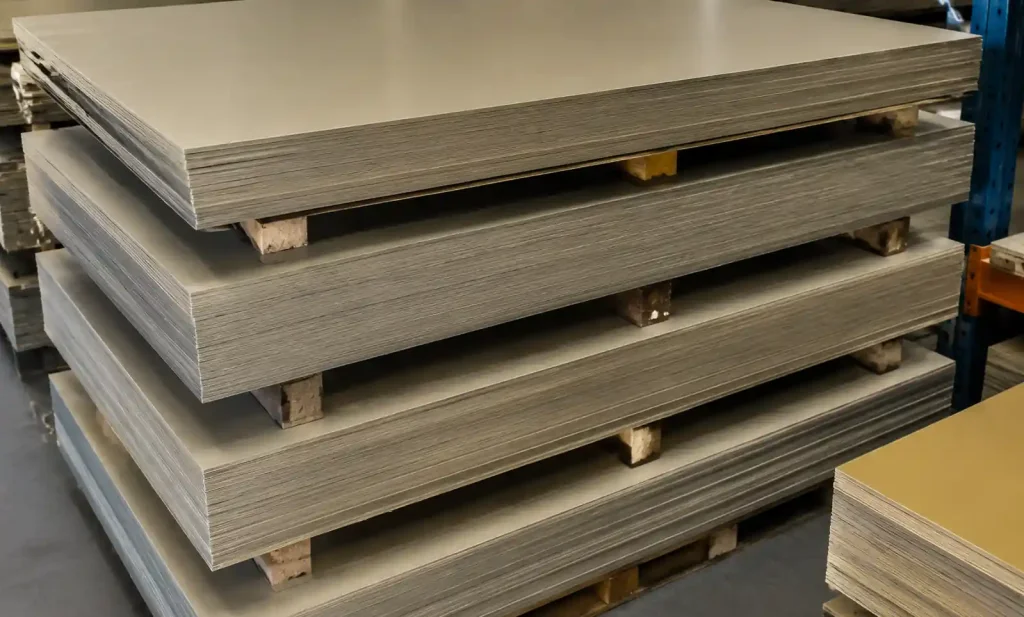
Minimum Order Quantities: Most fabs stock S1000-2M in common thicknesses (0.8mm, 1.0mm, 1.6mm, 2.0mm) and will run low volumes without MOQ penalties. Exotic thicknesses may require minimum panel quantities—typically 10-20 panels minimum.
Lead Time Factors: Standard S1000-2M builds add 2-5 working days versus equivalent FR-4 orders. This modest increase reflects material procurement rather than processing complexity. Rush orders (5-7 day turns) are feasible at premium pricing if your fab has inventory.
Geographic Considerations: Asian-Pacific fabricators generally offer the best S1000-2M pricing and availability given ShengYi’s regional dominance. North American and European fabs can source it but often at 15-25% cost premium and slightly longer lead times. For volume production, Asia-Pacific manufacturing makes economic sense.
Quality Verification: Request material certifications showing Tg values via DSC or DMA testing. We’ve encountered mislabeled materials claiming high-Tg specs—insist on documentation. Reputable fabs provide mill certs without hesitation.
The practical reality: S1000-2M offers a compelling value proposition for the specific applications where standard FR-4’s thermal limitations create real reliability risks. It’s not exotic enough to cause supply chain headaches, not expensive enough to trigger value engineering battles, and not difficult enough to process that fabricator options narrow significantly. For automotive, industrial, and high-reliability electronics operating in thermal stress conditions, it’s become our default specification—delivering measurable performance improvements at costs that remain commercially viable.