
A brief discussion on PCB design elements that affect SMT manufacturing
The development of modern science and technology has led to the miniaturization of electronic components and the extensive application of SMT technology and equipment in electronic products. SMT manufacturing devices are fully automatic, high-precision and high-speed. Due to the increase in automation, higher requirements are placed on PCB design. PCB design must meet SMT equipment requirements, otherwise it will affect production efficiency and quality, and even computer-automated SMT may not be completed.
SMT and its properties
SMT, the abbreviation of surface mount technology, is an advanced electronic manufacturing technology that solders and mounts components in the prescribed positions of PCBs. Compared with traditional THT (through-hole technology), the most notable feature of SMT is the increase in the degree of automated manufacturing, which is suitable for large-scale automated manufacturing.
Introduction to SMT production line
The basic integrated SMT production line should contain a loader, printer, chip mounter, reflow oven and unloader. The PCB starts from the loader, conveys along the path and passes through the equipment until the production is completed. The PCB will then undergo high-temperature soldering through the reflow oven and be conveyed to the unloader after completing the printing, mounting and soldering. This process can be shown in Figure 1 below.

PCB design elements that affect SMT manufacturing
PCB design is a key link in SMT technology, and SMT technology is an important factor in determining the quality of SMT manufacturing. This article will analyze the PCB design elements that affect its quality from the perspective of SMT equipment manufacturing. The design requirements of SMT manufacturing equipment for PCB mainly include: PCB pattern, size, positioning holes, clamping edges, MARK, panel routing, etc.
•PCB pattern
In the automatic SMT production line, PCB production starts with the loader and completes production after printing, chip mounting, and soldering. Finally, it will be generated by the unloader as a finished board. In this process, the PCB is transmitted on the path of the equipment, which requires that the PCB pattern should be consistent with the path transmission between the equipment.
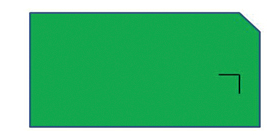
Figure 2 shows a standard rectangular PCB with a channel clamping edge as flat as a line, so this type of PCB is suitable for channel transmission. Sometimes the right angle is designed as a chamfer.
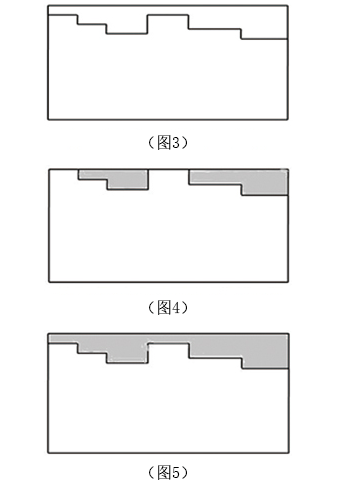
For the PCB design in Figure 3, its path clamping edge is not a straight line, so the position of the PCB and the transmission in the device are affected. The open space in Figure 3 can be supplemented to make its clamping edge a straight line as shown in Figure 4. Another way is to add a crack edge to the PCB, as shown in Figure 5.
•PCB size
The PCB design size must meet the maximum and minimum size requirements of the placement machine. So far, the size of most devices is in the range of 50mmx50mm to 330mmx250mm (or 410mmx360mm).
If the thickness of the PCB is too thin, its design size should not be too large. Otherwise, the reflow temperature will cause the PCB to deform. The ideal aspect ratio is 3:2 or 4:3.
If the PCB size is smaller than the minimum size requirement of the device, it should be panelized. The number of panels depends on the size and thickness of the PCB.
•PCB positioning holes
SMT positioning methods are divided into two types: positioning holes and edge positioning and edge positioning. However, the most commonly used positioning method is Mark point alignment.
•PCB edge clamping
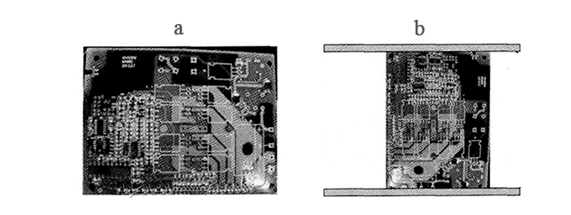
Since the PCB is transmitted on the path of the device, the components must not be placed in the direction of the clamping edge, otherwise the components will be squeezed by the device, affecting the installation of the chip. Taking the PCB in Figure 6 (a) as an example, some components are placed near the lower edge of the PCB, so the upper and lower edges cannot be regarded as clamping edges. However, there are no components near the two side edges, so the two short edges can be used as clamping edges, as shown in Figure 6 (b).
•Marking
PCB marking is the identification point of all fully automatic equipment identification and location, which is used to modify PCB manufacturing errors.
A. Shape: solid circle, square, triangle, diamond, cross, hollow circle, oval, etc. Solid circle is preferred.
- Size: The size must be within the range of 0.5mm to 3mm. A solid circle with a diameter of 1mm is preferred.
- Surface: Its surface is the same as the soldering plane of the PCB pad, the soldering plane is uniform, neither thick nor thin, and the reflection effect is excellent.
A forbidden area should be arranged around the Mark point and other pads, and the silk screen printing and solder mask layer cannot be contained in this area, as shown in Figure 7.
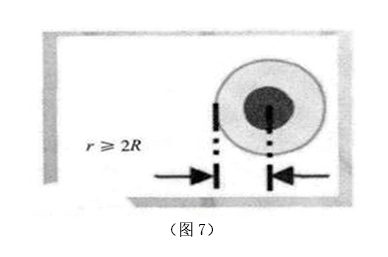
Figure 8 is an excellent MARK design method, while Figure 9 is some unreasonable MARK design.
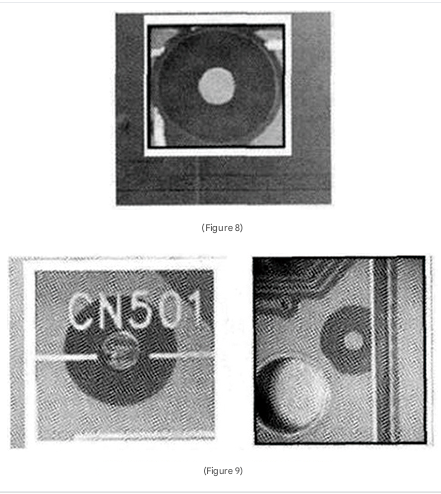
The silkscreen characters and silkscreen lines are arranged around the MARK in Figure 9, which will affect the equipment’s recognition of the MARK point and cause frequent alarms due to MARK recognition, seriously affecting manufacturing efficiency.
- Panelization method
In order to improve manufacturing efficiency, multiple small PCBs with the same or different shapes can be combined to form a panel. For some PCBs with double sides, the top and bottom sides can be designed as one panel, so that the template can be produced, which can reduce costs. This method also helps reduce the shift time of the top and bottom sides, thereby improving manufacturing efficiency and device utilization.
Panel connection methods include punching holes and V-grooves, as shown in Figure 10.
149df3c8-7d88-11ee-939d-92fbcf53809c.png
One requirement of the V-groove connection method is to keep the rest of the board (uncut) equal to one-quarter to one-third of the board thickness. If too much of the board is cut off, the cut groove may break due to the high temperature of the reflow soldering, causing the PCB to fall off, and the PCB will burn in the reflow soldering oven.
PCB design is a complex technology that must consider device requirements and component layout, pad design, and circuit design at the same time. Excellent PCB design is an important factor in ensuring product quality. This article brings some issues that should be considered in PCB design from the perspective of SMT manufacturing. As long as enough attention is paid to these issues, fully automatic SMT manufacturing of SMT devices can be carried out.