
Automotive PCB: Design, Materials, and Future Trends
Introduction
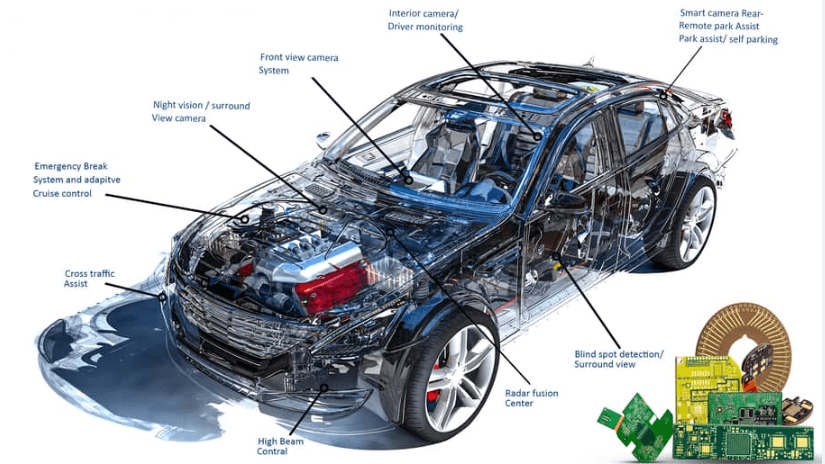
Printed Circuit Boards (PCBs) are essential components in modern automotive electronics, serving as the backbone for various electrical systems. As vehicles become more advanced, incorporating features like Advanced Driver Assistance Systems (ADAS), infotainment, electric powertrains, and autonomous driving, the demand for high-performance automotive PCBs has surged. This article explores the key aspects of automotive PCBs, including design considerations, material selection, manufacturing challenges, and future trends.
1. The Role of PCBs in Automotive Electronics
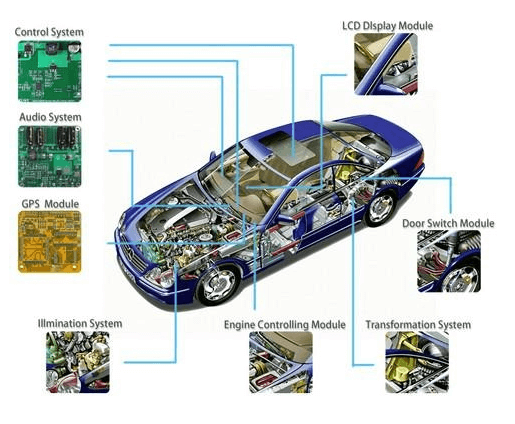
Automotive PCBs are used in a wide range of applications, including:
- Engine Control Units (ECUs) – Manage fuel injection, ignition timing, and emissions.
- Transmission Control Modules (TCMs) – Regulate gear shifting in automatic transmissions.
- Advanced Driver Assistance Systems (ADAS) – Support features like adaptive cruise control, lane-keeping assist, and collision avoidance.
- Infotainment Systems – Power touchscreens, navigation, and connectivity modules.
- Electric Vehicle (EV) Battery Management Systems (BMS) – Monitor and control battery performance and charging.
- Lighting Systems – Control LED headlights and adaptive lighting.
Given the harsh operating conditions in vehicles—such as temperature fluctuations, vibrations, and exposure to moisture—automotive PCBs must meet stringent reliability and durability standards.
2. Key Design Considerations for Automotive PCBs
2.1. High-Temperature Resistance
Automotive PCBs often operate in extreme temperatures, ranging from -40°C to 150°C (especially in engine compartments). Therefore, materials with high thermal stability, such as polyimide or ceramic-based substrates, are preferred.
2.2. Vibration and Shock Resistance
Vehicles experience constant vibrations, requiring PCBs with reinforced mechanical strength. Techniques like:
- Through-hole plating for better structural integrity.
- Flex-rigid PCBs for areas with movement (e.g., steering systems).
2.3. Electromagnetic Compatibility (EMC)
With increasing electronic components, EMI (Electromagnetic Interference) can disrupt signals. Solutions include:
- Proper grounding techniques.
- Shielding with metal enclosures or conductive coatings.
2.4. Miniaturization and High-Density Interconnects (HDI)
Modern vehicles require compact yet powerful PCBs. HDI technology allows for:
- Microvias and fine-pitch components.
- Multilayer PCBs (up to 12+ layers) for complex circuits.
2.5. Reliability and Longevity
Automotive PCBs must last 10-15 years without failure. Key strategies include:
- Automotive-grade components (AEC-Q100 certified).
- Conformal coating to protect against moisture and corrosion.
3. Materials Used in Automotive PCBs
3.1. Substrate Materials
- FR-4 (Flame Retardant-4) – Common but limited to moderate-temperature applications.
- High-Tg FR-4 (Glass Transition Temperature >170°C) – Better for high-heat environments.
- Polyimide – Excellent thermal and mechanical stability, used in flex PCBs.
- Ceramic PCBs – Used in high-power applications like EV inverters.
3.2. Copper Thickness and Plating
- Heavy copper PCBs (up to 6 oz) for high-current applications (e.g., power distribution).
- ENIG (Electroless Nickel Immersion Gold) or HASL (Hot Air Solder Leveling) for corrosion-resistant finishes.
3.3. Thermal Management Materials
- Metal-core PCBs (e.g., aluminum PCBs) for LED lighting and power electronics.
- Thermal vias to dissipate heat efficiently.
4. Manufacturing Challenges for Automotive PCBs
4.1. Stringent Quality Standards
Automotive PCBs must comply with:
- IPC-6012 Class 3 (highest reliability standard).
- IATF 16949 (automotive quality management system).
4.2. Testing and Validation
- Automated Optical Inspection (AOI) for defect detection.
- Environmental stress testing (thermal cycling, vibration tests).
4.3. Supply Chain and Lead Times
The automotive industry demands just-in-time manufacturing, requiring PCB suppliers to ensure fast turnaround without compromising quality.
5. Future Trends in Automotive PCBs
5.1. Increased Adoption of HDI and Flex-Rigid PCBs
As vehicles integrate more electronics, flex-rigid and HDI PCBs will become standard for space-constrained applications.
5.2. Growth in Electric Vehicle (EV) PCBs
EVs require specialized PCBs for:
- High-voltage power distribution.
- Fast-charging systems.
5.3. Integration with AI and Autonomous Driving
- AI-powered PCBs for real-time data processing in self-driving cars.
- 5G-enabled PCBs for vehicle-to-everything (V2X) communication.
5.4. Sustainable and Eco-Friendly PCBs
- Lead-free soldering and halogen-free materials.
- Recycling programs for end-of-life PCBs.
Conclusion
Automotive PCBs are evolving rapidly to meet the demands of next-generation vehicles. With advancements in materials, miniaturization, and thermal management, PCBs will continue to play a crucial role in automotive innovation. As electric and autonomous vehicles become mainstream, the industry must focus on reliability, high-performance materials, and smart manufacturing techniques to ensure safety and efficiency.
The future of automotive PCBs is bright, driven by technological advancements and the growing need for smarter, more connected vehicles.