
ceramic circuit board
Manufacturing process and application fields of ceramic circuit boards.
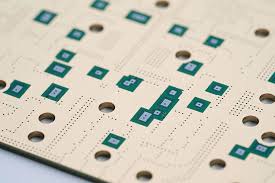
1. The manufacturing process of ceramic circuit boards involves multiple key steps
The manufacturing process and application fields of ceramic circuit boards are a complex and diverse subject. . Initially, it is crucial to select the right ceramic material. Common ceramic materials include alumina, aluminum nitride and silicon nitride, which are widely used due to their excellent thermal conductivity and electrical insulation properties. Next, the molding of ceramic substrates usually adopts press molding or injection molding methods, which can ensure the dimensional accuracy and mechanical strength of the substrate.
2. After molding, the substrate needs to undergo a high-temperature sintering process to improve its density and mechanical properties.
The control of sintering temperature and time is a key factor in ensuring the quality of ceramic substrates. Subsequently, the surface of the substrate needs to be precisely processed, such as grinding and polishing, to achieve the required flatness and finish. Next, the production of circuit patterns usually adopts screen printing or photolithography technology to deposit conductive materials such as silver, copper or gold on the ceramic substrate. Finally, the conductive material is firmly attached to the surface of the substrate by high-temperature sintering or laser sintering, thereby forming a stable circuit pattern.
3. After understanding the manufacturing process, it is equally important to explore the application areas of ceramic circuit boards.
Ceramic circuit boards are widely used in high-power electronic devices due to their excellent thermal conductivity and electrical insulation properties. For example, in the field of LED lighting, ceramic circuit boards can effectively dissipate heat and extend the service life of LEDs. In addition, in high-frequency communication equipment, the low dielectric constant and low loss factor of ceramic circuit boards make them ideal substrate materials, which can improve signal transmission speed and stability.
4. Ceramic circuit boards also have important applications in aerospace and military fields.
Due to their excellent high temperature resistance and radiation resistance, ceramic circuit boards can maintain stable performance in extreme environments and ensure the reliable operation of equipment. In addition, in medical equipment, the biocompatibility and corrosion resistance of ceramic circuit boards make them an ideal choice for implantable medical devices and high-precision sensors.
In summary, the manufacturing process of ceramic circuit boards is complex and delicate, and every step is crucial from material selection to molding, sintering and circuit pattern production. At the same time, ceramic circuit boards are widely used in many high-tech fields due to their excellent performance, including LED lighting, high-frequency communications, aerospace, military and medical equipment. Through continuous technological innovation and process improvement, ceramic circuit boards will play a more important role in the future and promote the development of various fields.
GET PCB MANUFACTURING AND ASSEMBLY QUOTE NOW!
Application and advantages of ceramic circuit boards in high temperature environments.
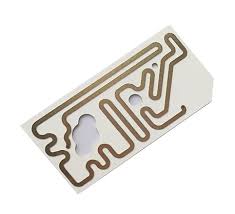
The application and advantages of ceramic circuit boards in high temperature environments is a topic worthy of in-depth discussion
1. Ceramic circuit boards perform well in high temperature environments due to their excellent thermal conductivity.
Compared with traditional organic substrates, ceramic materials such as aluminum oxide, aluminum nitride, and silicon nitride have higher thermal conductivity, which allows them to dissipate heat more effectively, thereby protecting circuit components from overheating damage. This feature is particularly important in high-power electronic devices because these devices generate a lot of heat during operation.
2. The stability of ceramic circuit boards in high temperature environments is also a major advantage.
Ceramic materials have excellent thermal stability and can maintain their physical and chemical properties unchanged at extreme temperatures. This means that ceramic circuit boards can work for a long time in high temperature environments without deformation or degradation, thereby ensuring the reliability and life of the circuit. In contrast, traditional organic substrates are prone to thermal expansion and decomposition at high temperatures, resulting in circuit failure.
3. Ceramic circuit boards also have excellent electrical insulation properties.
The high resistivity of ceramic materials enables them to effectively isolate current in high temperature and high voltage environments, preventing circuit short circuits and leakage. This feature is particularly important in high-frequency and high-voltage applications, such as radio frequency circuits and power electronic equipment. By using ceramic circuit boards, these devices can operate at higher operating temperatures and voltages, thereby improving their performance and efficiency.
4. The mechanical strength and chemical corrosion resistance of ceramic circuit boards are also key factors in their application in high-temperature environments.
Ceramic materials have high hardness and strength, and can withstand mechanical stress and impact without being easily broken or damaged. In addition, ceramic materials are highly resistant to chemical corrosion and can maintain their integrity in harsh chemical environments. This has led to the widespread use of ceramic circuit boards in aerospace, automotive electronics, and industrial control.
In summary, the application and advantages of ceramic circuit boards in high-temperature environments are mainly reflected in their excellent thermal conductivity, thermal stability, electrical insulation, mechanical strength, and chemical corrosion resistance. These characteristics make ceramic circuit boards an ideal choice for high-temperature and high-power electronic devices, which can significantly improve the reliability and performance of the equipment. With the continuous advancement of science and technology, the application prospects of ceramic circuit boards will be broader, providing a solid foundation for the development of various types of high-temperature electronic devices.