
Factors Affecting PCB DK and Phase Consistency
As frequencies continue to increase, controlling the phase consistency of PCB materials becomes increasingly difficult. Accurately predicting the phase change of PCB materials is not a simple or routine task. The signal phase of high-frequency and high-speed PCBs depends largely on the structure of the transmission lines made from them, as well as the dielectric constant (Dk) of the PCB materials.
The lower the Dk of the dielectric medium (for example, the Dk of air is about 1.0), the faster the electromagnetic waves propagate.
As the Dk increases, the wave propagates slower, which also affects the phase response of the propagating signal. When the Dk of the propagation medium changes, the waveform phase changes, because the lower or higher Dk will make the signal faster or slower in the propagation medium.
The Dk of PCB materials is usually anisotropic, with different Dk values in three dimensions (3D) of length, width, and thickness (corresponding to the x, y, and z axes). For some special types of circuit designs, not only do you need to consider the difference in Dk, but you must also consider the effect of the circuit manufacturing on the phase.
As PCB operating frequencies increase, especially at microwave and millimeter wave frequencies, such as fifth-generation (5G) cellular wireless communication network infrastructure equipment and advanced driver assistance systems (ADAS) in electronically assisted cars, phase stability and predictability will become increasingly important.
So what causes the Dk of PCB materials to change?
In some cases, the difference in Dk on the PCB is caused by the material itself (such as changes in copper surface roughness). In addition, harsh operating environments (such as high operating temperatures) can also cause the Dk of the PCB to change. By understanding the characteristics of the material, the manufacturing process, the operating environment, and even the test methods of Dk, we can study how the Dk of the PCB changes. This can better understand, predict, and minimize the impact of PCB phase changes.
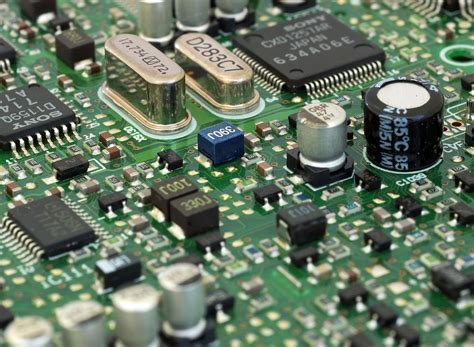
Anisotropy is an important property of circuit board materials.
The properties of Dk are very similar to “tensors” in three-dimensional mathematics. Different Dk values on the three axes lead to differences in electric flux and electric field strength in three-dimensional space.
Depending on the type of transmission line used in the circuit, the phase of a circuit with a coupled structure can be changed by the anisotropy of the material, and the performance of the circuit depends on the direction of the phase on the circuit board material.
Generally speaking, the anisotropy of PCB materials varies with the thickness of the board and the operating frequency, with lower Dk values being less anisotropic.
Filled reinforcements also contribute to this variation: PCB materials with glass fiber reinforcement generally have greater anisotropy than PCB materials without glass fiber reinforcement. When phase is the key metric and the Dk of the PCB is part of the circuit design modeling, the Dk values described comparing the two materials should be for the Dk on the same axis.
The effective Dk of a circuit depends on how electromagnetic waves propagate in a particular type of transmission line.
Depending on the transmission line, the electromagnetic waves propagate partly through the dielectric material of the PCB circuit board and partly through the air surrounding the PCB. The Dk value of air (about 1.00) is lower than that of any PCB circuit board material, so the effective Dk value is essentially a combined Dk value, which is determined by the electromagnetic waves propagating in the transmission line conductor, the electromagnetic waves propagating in the dielectric material, and the electromagnetic waves propagating in the air around the substrate.
“Design Dk” attempts to provide a more practical Dk than “effective Dk” because “design Dk” takes into account the combined effects of different transmission line technologies, manufacturing methods, conductors, and even the test methods for measuring Dk.
Design Dk is the Dk extracted when testing the material in the form of a circuit, and is also the most suitable Dk value to use in circuit design and simulation. Design Dk is not the effective Dk of the circuit, but it is the material Dk determined by measuring the effective Dk, and the design Dk can reflect the true performance of the circuit.
For a specific PCB circuit material, its design Dk value may change due to slight differences in different areas of the circuit board. For example, the thickness of the copper foil that makes up the circuit conductor may be uneven, which means that the design Dk will be different in places with different copper thicknesses, and the phase response of the circuit formed by these conductors will also change accordingly.
The roughness of the copper foil conductor surface will also affect the design Dk and phase response. Smoother copper foil (such as rolled copper) has less impact on the design Dk or phase response than rough copper foil.
The surface roughness of the copper conductors in different thicknesses of PCB dielectric materials has different effects on the design Dk and phase response of the circuit. Materials with thicker substrates tend to be less affected by the surface roughness of the copper conductors, and even for copper conductors with rougher surfaces, the design Dk value is closer to the dielectric Dk of the substrate material. For example, Rogers’ 6.6 mil RO4350B™ circuit material has an average design Dk of 3.96 from 8 to 40 GHz. For the same material with a thickness of 30 mils, the design Dk drops to an average of 3.68 over the same frequency range. When the material substrate thickness is doubled again (60 mils), the design Dk is 3.66, which is basically the dielectric intrinsic Dk of this glass fiber reinforced laminate.
From the above examples, it can be seen that thicker dielectric substrates are less affected by copper roughness and have relatively lower design Dk values. However, if thicker circuit boards are used to produce and process circuits, it will be more difficult to maintain signal amplitude and phase consistency, especially at millimeter-wave frequencies where the signal wavelength is smaller.
Higher frequency circuits are often better suited for thinner circuits, where the dielectric portion of the material has less impact on the design Dk and circuit performance. Thinner PCB substrates are more affected by the conductor in terms of signal loss and phase performance. At mmWave frequencies, circuit materials are also more sensitive to conductor properties (such as copper surface roughness) than thicker substrates in terms of their design Dk.
At RF/microwave and mmWave frequencies, circuit designers primarily use several conventional transmission line technologies such as microstrip, stripline, and grounded coplanar waveguide (GCPW). Each technology has different design approaches, design challenges, and associated advantages
For example, differences in the coupling behavior of GCPW circuits will affect the design Dk of the circuit. For tightly coupled GCPW circuits, and transmission lines with closely spaced spacing, the use of air between coplanar coupling regions can achieve more efficient electromagnetic propagation and minimize losses.
By using thicker copper conductors, higher sidewalls of the coupled conductors, and more air paths in the coupling regions, circuit losses can be minimized, but it is more important to understand the corresponding impact of reducing the variation in copper conductor thickness.
Many factors can affect the design Dk of a given circuit and circuit board material. For example, the temperature coefficient Dk (TCDk) of the circuit board material is a metric used to measure the impact of operating temperature on the design Dk and performance.
Lower TCDk values indicate that the circuit board material is less temperature-dependent. Similarly, high relative humidity (RH) will also increase the design Dk of the circuit board material, especially for highly hygroscopic materials. The characteristics of the PCB circuit board material, the PCB circuit board manufacturing process, and the uncertainties in the working environment will all affect the design Dk of the circuit board material. Only by understanding these characteristics and fully considering these factors during the design process can their impact be minimized.