
Skip to content
Andwin Circuits
  • Home
  • ProductsExpand
    • HDI multilayer PCB
    • Rigid Flex PCB
    • Flex pcb
    • Special PCBExpand
      • High Frequency PCBExpand
        • Rogers RO4350B PCB
        • Rogers RO4003 pcb
        • Rogers RO3003 PCB
        • Rogers 5880 PCB
        • DICLAD 527 PCB
        • Taconic TLX series
        • Taconic TLX-8 RF PCB
        • Taconic TLX-9 RF PCB
      • High speed pcbExpand
        • Megtron 6 High Speed PCB
        • TU-872 SLK Sp High Speed
      • High TG PCBExpand
        • SHENGYI SH260 PCB
        • ISOLA 370HR PCB
        • ISOLA IS410 PCB
        • ISOLA IS420 PCB
      • Heavy copper PCB
      • Copper coin pcb
      • Copper inlay PCB
    • Metal Core PCBExpand
      • Copper core pcb
      • Aluminum PCB
      • 2 Layers Aluminum PCB
      • Direct thermal MCPCB
      • 2 Layers Direct Thermal
    • Ceramic PCBExpand
      • DPC ceramic PCB
      • DBC ceramic PCB
      • Thick film Ceramic PCB
      • Al2O3 Alumina PCB
      • AIN ALN ceramic PCB
      • IGBT Ceramic PCB
  • ServiceExpand
    • PCB Assembly
    • Quick turn PCB assembly
    • PCBA conformal coating
  • IndustryExpand
    • Telecommunication
    • IoT and Wireless
    • Industrial Control
    • Thermal management
    • Power and Energy
    • IC test board
    • Automative
    • Medical
  • CapabilityExpand
    • Rigid PCB
    • Rigid flex PCB
    • Metal core PCB
    • PCB Assembly
  • TechnologyExpand
    • Blogs
    • Via in pad
    • PCB E-test
    • PCB stack up
    • MCPCB panelization
    • Controlled impedance PCB
  • AboutExpand
    • About us
    • Certification
    • Factory Tour
  • Contact
Andwin Circuits
Home / Blogs / High speed circuit pcb design

High speed circuit pcb design

ByGrace July 5, 2023June 14, 2024

1. Choose the right materials:

High-speed circuits require materials with low dielectric constants and low loss tangents.
FR-4 is a common material used for PCBs, but for high-speed circuits, materials like Rogers or Teflon may be more suitable.

2. Plan the layout:

The placement of components and traces on the PCB can greatly affect signal integrity.
It’s important to keep traces as short as possible and to avoid crossing over each other.

Grouping components by function can also help reduce noise.

3. Control impedance:

Impedance mismatches can cause signal reflections and degrade performance.
To control impedance, use controlled impedance traces and ensure that the trace width and spacing are consistent.

4. Use proper decoupling:

High-speed circuits are sensitive to noise, and decoupling capacitors can help reduce noise.
Place decoupling capacitors as close to the power pins of the IC as possible.

5. Test and iterate:

Once the PCB is designed, test it thoroughly to ensure that it meets the desired performance specifications.
If necessary, iterate on the design to improve performance.

Overall, designing a high-speed circuit PCB requires careful planning and attention to detail.
By following these steps and best practices, you can create a PCB that meets your performance requirements.
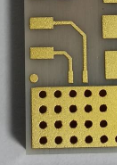
high speed bus pcb design

1. Use a high-quality PCB material with a low dielectric constant and loss tangent to minimize signal loss and distortion.

2. Keep the trace lengths as short as possible to reduce signal delay and skew.

3. Use controlled impedance routing to maintain signal integrity and minimize reflections.

4. Place decoupling capacitors near the power pins of the ICs to filter out noise and stabilize the power supply.

5. Use differential pairs for high-speed signals to reduce electromagnetic interference (EMI) and crosstalk.

6. Avoid routing high-speed signals near noisy components or power planes to minimize interference.

7. Use ground planes to provide a low-impedance return path for signals and reduce EMI.

8. Use signal termination techniques such as series or parallel termination to minimize signal reflections and improve signal quality.

9. Perform signal integrity simulations to verify the design and ensure that the signals meet the required timing and voltage levels.

10. Follow the manufacturer’s guidelines for the ICs and components used in the design to ensure proper operation and reliability.
GET IN TOUCH!

High-speed constraint values and PCB layout methods are critical for ensuring the performance and reliability of high-speed digital circuits.

Some important constraint values and layout methods include:

1. Trace length matching:

This involves ensuring that all traces that carry the same signal have the same length to prevent signal skew and timing issues.

2. Impedance matching:

This involves ensuring that the impedance of the trace matches the impedance of the source and load components to prevent signal reflections and loss.

3. Crosstalk minimization:

This involves ensuring that traces that are close to each other do not interfere with each other,
which can cause signal distortion and noise.

4. Ground plane placement:

This involves placing a ground plane underneath the signal traces to provide a low-impedance return path for the signals and reduce electromagnetic interference.

5. Power plane placement:

This involves placing a power plane adjacent to the ground plane to provide a low-impedance power source for the components and reduce electromagnetic interference.

6. Component placement:

This involves placing the components in a way that minimizes the length of the traces and reduces the amount of crosstalk and noise.

7. Via placement:

This involves placing vias in a way that minimizes the length of the traces and reduces the amount of crosstalk and noise.

Overall, high-speed constraint values and PCB layout methods are critical for ensuring the performance and reliability of high-speed digital circuits.
By following these guidelines, designers can minimize signal distortion, noise, and timing issues and ensure that their circuits operate as intended.

Post navigation

Previous Previous
High speed pcb connector
NextContinue
Allegro high speed pcb design

Search

Search

Products

  • HDI Multilayer PCB
  • Rigid Flex PCB
  • Flex pcb
  • High Frequency PCB
  • High speed pcb
  • Heavy copper PCB
  • Metal Core PCB
  • Ceramic PCB

Address

Andwin Circuits Co.,Limited
Email: sales@andwinpcb.com
Tel: +86 755 2832 9394
Fax:+86 755 2992  6717
ADD:1-2F-1217,HouDeQun Industrial park,
NanTing RD NO.56,ShaJing,BaoAn,Shenzhen 518104,GuangDong,China

Products

  • HDI Multilayer PCB
  • Rigid Flex PCB
  • Flex pcb
  • High Frequency PCB
  • High speed pcb
  • Heavy copper PCB
  • Metal Core PCB
  • Ceramic PCB

Technology

  • Blogs
  • Via in pad
  • PCB E-test
  • PCB stack up
  • Metal core PCB panelization
  • Controlled impedance PCB

CERTIFICATION

Certification >>


Copyright© 2003 - 2026 Andwin | All Rights Reserved | Powered by Andwin

Scroll to top
  • Home
  • Products
    • HDI multilayer PCB
    • Rigid Flex PCB
    • Flex pcb
    • Special PCB
      • High Frequency PCB
        • Rogers RO4350B PCB
        • Rogers RO4003 pcb
        • Rogers RO3003 PCB
        • Rogers 5880 PCB
        • DICLAD 527 PCB
        • Taconic TLX series
        • Taconic TLX-8 RF PCB
        • Taconic TLX-9 RF PCB
      • High speed pcb
        • Megtron 6 High Speed PCB
        • TU-872 SLK Sp High Speed
      • High TG PCB
        • SHENGYI SH260 PCB
        • ISOLA 370HR PCB
        • ISOLA IS410 PCB
        • ISOLA IS420 PCB
      • Heavy copper PCB
      • Copper coin pcb
      • Copper inlay PCB
    • Metal Core PCB
      • Copper core pcb
      • Aluminum PCB
      • 2 Layers Aluminum PCB
      • Direct thermal MCPCB
      • 2 Layers Direct Thermal
    • Ceramic PCB
      • DPC ceramic PCB
      • DBC ceramic PCB
      • Thick film Ceramic PCB
      • Al2O3 Alumina PCB
      • AIN ALN ceramic PCB
      • IGBT Ceramic PCB
  • Service
    • PCB Assembly
    • Quick turn PCB assembly
    • PCBA conformal coating
  • Industry
    • Telecommunication
    • IoT and Wireless
    • Industrial Control
    • Thermal management
    • Power and Energy
    • IC test board
    • Automative
    • Medical
  • Capability
    • Rigid PCB
    • Rigid flex PCB
    • Metal core PCB
    • PCB Assembly
  • Technology
    • Blogs
    • Via in pad
    • PCB E-test
    • PCB stack up
    • MCPCB panelization
    • Controlled impedance PCB
  • About
    • About us
    • Certification
    • Factory Tour
  • Contact
Search