
Material Requirements for Automotive HDI PCBs: A Comprehensive Analysis
Abstract
High-Density Interconnect (HDI) Printed Circuit Boards (PCBs) are critical components in modern automotive electronics, supporting advanced functionalities such as advanced driver-assistance systems (ADAS), infotainment, and vehicle electrification. The demanding operational conditions of automotive applications necessitate stringent material requirements for HDI PCBs, including thermal stability, mechanical strength, electrical performance, and reliability. This article explores the key material requirements for automotive HDI PCBs, discussing substrate materials, conductive layers, dielectric materials, and surface finishes. Additionally, it highlights industry standards and emerging trends in automotive PCB materials.
1. Introduction
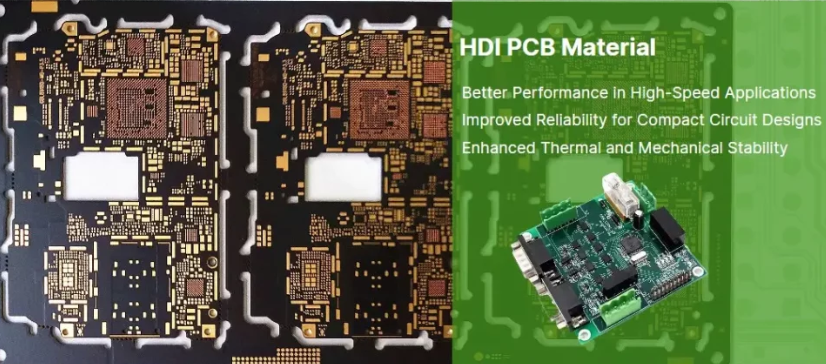
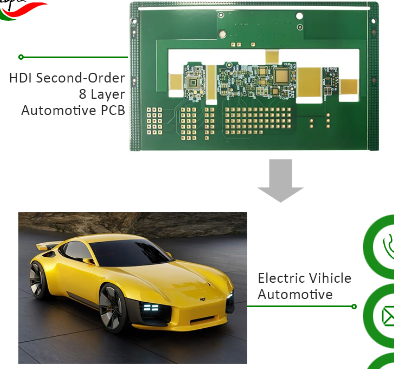
The automotive industry is undergoing a rapid transformation with the increasing adoption of electric vehicles (EVs), autonomous driving technologies, and connected car systems. These advancements rely heavily on high-performance electronic systems, where HDI PCBs play a crucial role. HDI PCBs enable miniaturization, high-speed signal transmission, and improved thermal management, making them indispensable for modern automotive applications.
However, automotive environments present extreme conditions, including temperature fluctuations, mechanical vibrations, humidity, and chemical exposure. Therefore, selecting appropriate materials for HDI PCBs is essential to ensure long-term reliability and performance. This article examines the material requirements for automotive HDI PCBs, focusing on substrate materials, conductive layers, dielectrics, and surface finishes.
2. Key Material Requirements for Automotive HDI PCBs
2.1 Substrate Materials
The substrate forms the foundation of an HDI PCB and must exhibit excellent thermal, mechanical, and electrical properties. Common substrate materials for automotive HDI PCBs include:
a) FR-4 (Flame Retardant-4)
- Advantages: Cost-effective, good mechanical strength, and electrical insulation.
- Limitations: Limited thermal performance (Tg ~130-180°C), may not be suitable for high-temperature applications.
- Applications: Used in non-critical automotive electronics where extreme thermal conditions are not a concern.
b) High-Tg FR-4
- Advantages: Higher glass transition temperature (Tg > 170°C), better thermal stability.
- Applications: Suitable for under-the-hood applications where temperatures can exceed 150°C.
c) Polyimide (PI)
- Advantages: Exceptional thermal stability (Tg > 250°C), flexibility, and chemical resistance.
- Limitations: Higher cost compared to FR-4.
- Applications: Used in high-temperature environments such as engine control units (ECUs) and power electronics.
d) PTFE (Polytetrafluoroethylene)
- Advantages: Excellent high-frequency performance, low dielectric loss.
- Limitations: Poor mechanical strength, difficult to process.
- Applications: Radar systems and RF applications in ADAS.
2.2 Conductive Materials (Copper Foils)
Copper is the primary conductive material in HDI PCBs due to its excellent electrical conductivity and thermal properties. Automotive HDI PCBs require:
- Electrodeposited (ED) Copper: Standard choice for fine-line traces, but may suffer from poor thermal cycling performance.
- Rolled Annealed (RA) Copper: Better flexibility and thermal cycling resistance, suitable for high-reliability applications.
- Low-Profile Copper Foils: Essential for ultra-fine pitch HDI designs to minimize signal loss.
2.3 Dielectric Materials
The dielectric layers in HDI PCBs must provide insulation, thermal stability, and controlled impedance. Key requirements include:
- Low Dielectric Constant (Dk): Minimizes signal delay, critical for high-speed applications.
- Low Dissipation Factor (Df): Reduces signal loss in high-frequency circuits.
- Thermal Conductivity: Helps dissipate heat in power-dense applications.
Common dielectric materials include:
- Prepreg (PP) Materials: Used in multilayer PCBs, must have good adhesion and thermal stability.
- Liquid Crystal Polymer (LCP): Excellent high-frequency performance, used in millimeter-wave radar PCBs.
- Ceramic-Filled PTFE: Combines thermal stability with high-frequency performance.
2.4 Surface Finishes
Surface finishes protect copper traces from oxidation and ensure reliable solderability. Automotive HDI PCBs require finishes that withstand harsh environments:
- ENIG (Electroless Nickel Immersion Gold): Provides excellent oxidation resistance and flatness for fine-pitch components.
- OSP (Organic Solderability Preservative): Cost-effective but less durable in harsh conditions.
- Immersion Silver (IAg): Good solderability but prone to tarnishing.
- ENEPIG (Electroless Nickel Electroless Palladium Immersion Gold): Superior reliability for high-performance applications.
3. Industry Standards and Testing Requirements
Automotive HDI PCBs must comply with stringent industry standards, including:
- IPC-6012: Qualification and performance specifications for rigid PCBs.
- AEC-Q100/Q200: Stress tests for automotive electronic components.
- IATF 16949: Quality management system for automotive suppliers.
Key reliability tests include:
- Thermal Cycling Testing: Evaluates performance under extreme temperature variations.
- Vibration and Shock Testing: Ensures mechanical durability.
- Humidity Resistance Testing: Assesses performance in high-humidity environments.
4. Emerging Trends in Automotive HDI PCB Materials
- High-Speed Low-Loss Materials: With the rise of 5G and autonomous driving, materials with ultra-low Dk/Df are in demand.
- Thermally Conductive Substrates: Improve heat dissipation in high-power EV applications.
- Embedded Passive and Active Components: Reduce PCB size and improve signal integrity.
5. Conclusion
The material selection for automotive HDI PCBs is critical to ensuring reliability, performance, and longevity in harsh automotive environments. Substrate materials, conductive layers, dielectrics, and surface finishes must meet stringent thermal, mechanical, and electrical requirements. As automotive electronics continue to evolve, advancements in PCB materials will play a pivotal role in enabling next-generation vehicle technologies.