
Measurement of Noise in Printed Circuit Boards (PCBs)
Abstract
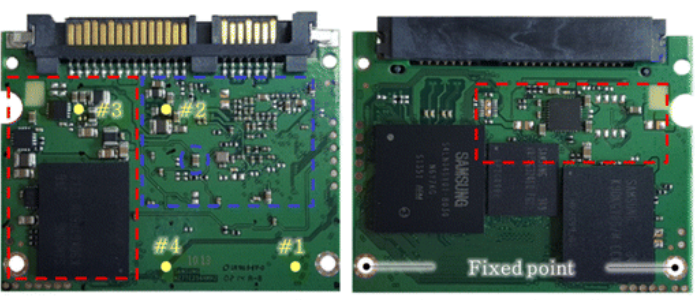
Noise in printed circuit boards (PCBs) can significantly impact the performance and reliability of electronic systems. Accurate measurement of PCB noise is essential for diagnosing signal integrity issues, electromagnetic interference (EMI), and power distribution network (PDN) stability. This paper discusses the sources of noise in PCBs, measurement techniques, instrumentation, and best practices for minimizing noise in high-speed and high-frequency designs.
1. Introduction
As electronic systems become faster and more complex, noise in PCBs has become a critical concern. Noise can originate from various sources, including switching digital circuits, power supply fluctuations, crosstalk, and external electromagnetic interference. Measuring and mitigating noise is crucial to ensure signal integrity, reduce bit errors, and comply with electromagnetic compatibility (EMC) standards.
This paper explores the following aspects of PCB noise measurement:
- Sources of PCB noise
- Measurement techniques and equipment
- Time-domain vs. frequency-domain analysis
- Best practices for noise reduction
2. Sources of PCB Noise
Understanding the origins of noise is essential for effective measurement and mitigation. The primary sources of noise in PCBs include:
2.1 Power Supply Noise (PDN Noise)
- Switching noise from DC-DC converters and voltage regulators.
- Ground bounce caused by high-speed switching currents.
- Impedance mismatches in power distribution networks.
2.2 Signal Integrity Noise
- Reflections due to impedance discontinuities in transmission lines.
- Crosstalk between adjacent traces (capacitive and inductive coupling).
- Simultaneous switching noise (SSN) from multiple digital signals switching simultaneously.
2.3 Electromagnetic Interference (EMI)
- Radiated emissions from high-frequency signals.
- Conducted emissions through power and ground planes.
3. PCB Noise Measurement Techniques
Accurate noise measurement requires appropriate instrumentation and methodologies. The two primary domains for noise analysis are time-domain and frequency-domain.
3.1 Time-Domain Measurements
Time-domain measurements capture noise as a function of time, useful for analyzing transient effects such as power supply ripple and signal reflections.
3.1.1 Oscilloscope Measurements
- Real-time oscilloscopes (bandwidth ≥ 5× signal frequency) capture fast transients.
- Differential probing minimizes ground loop interference.
- Proper grounding techniques (short ground leads) reduce measurement artifacts.
3.1.2 Eye Diagram Analysis
- Used in high-speed digital systems (e.g., PCIe, USB, DDR).
- Reveals jitter, noise margins, and signal integrity issues.
3.2 Frequency-Domain Measurements
Frequency-domain analysis helps identify periodic noise sources and EMI compliance issues.
3.2.1 Spectrum Analyzer Measurements
- Detects narrowband and broadband noise.
- Useful for identifying switching frequencies and harmonic emissions.
3.2.2 Vector Network Analyzer (VNA) for PDN Analysis
- Measures impedance of power delivery networks.
- Identifies resonant peaks that amplify noise.
3.3 Near-Field and Far-Field EMI Measurements
- Near-field probes detect localized EMI from traces and components.
- Far-field measurements (in anechoic chambers) assess radiated emissions for EMC compliance.
4. Instrumentation for PCB Noise Measurement
Selecting the right equipment is critical for accurate noise characterization:
| Instrument | Application |
|---|---|
| Oscilloscope | Time-domain noise, jitter, eye diagrams |
| Spectrum Analyzer | Frequency-domain noise, EMI analysis |
| VNA | PDN impedance, transmission line analysis |
| Current Probe | Power rail noise measurements |
| Near-Field Probe | Localized EMI detection |
5. Best Practices for Accurate Noise Measurement
To minimize measurement errors, follow these guidelines:
5.1 Proper Probing Techniques
- Use high-bandwidth, low-capacitance probes to avoid signal loading.
- Keep ground leads short to reduce inductance.
5.2 Minimizing Environmental Noise
- Shield the measurement setup from external EMI.
- Use battery-powered instruments when possible to avoid ground loops.
5.3 Post-Processing and Data Analysis
- Apply FFT (Fast Fourier Transform) to convert time-domain data into frequency spectra.
- Use statistical analysis (e.g., peak-to-peak, RMS) for noise characterization.
6. Noise Mitigation Strategies
Once noise sources are identified, mitigation techniques include:
- Decoupling capacitors to suppress high-frequency power noise.
- Proper PCB layout (controlled impedance traces, ground planes).
- Shielding for sensitive analog circuits.
- Spread-spectrum clocking to reduce EMI peaks.
7. Conclusion
Measuring noise in PCBs is a critical step in ensuring signal integrity, power stability, and EMI compliance. By employing time-domain and frequency-domain techniques with appropriate instrumentation, engineers can accurately diagnose and mitigate noise issues. Following best practices in probing, grounding, and data analysis enhances measurement accuracy, leading to more robust PCB designs.