
Skip to content
Andwin Circuits
  • Home
  • ProductsExpand
    • HDI multilayer PCB
    • Rigid Flex PCB
    • Flex pcb
    • Special PCBExpand
      • High Frequency PCBExpand
        • Rogers RO4350B PCB
        • Rogers RO4003 pcb
        • Rogers RO3003 PCB
        • Rogers 5880 PCB
        • DICLAD 527 PCB
        • Taconic TLX series
        • Taconic TLX-8 RF PCB
        • Taconic TLX-9 RF PCB
      • High speed pcbExpand
        • Megtron 6 High Speed PCB
        • TU-872 SLK Sp High Speed
      • High TG PCBExpand
        • SHENGYI SH260 PCB
        • ISOLA 370HR PCB
        • ISOLA IS410 PCB
        • ISOLA IS420 PCB
      • Heavy copper PCB
      • Copper coin pcb
      • Copper inlay PCB
    • Metal Core PCBExpand
      • Copper core pcb
      • Aluminum PCB
      • 2 Layers Aluminum PCB
      • Direct thermal MCPCB
      • 2 Layers Direct Thermal
    • Ceramic PCBExpand
      • DPC ceramic PCB
      • DBC ceramic PCB
      • Thick film Ceramic PCB
      • Al2O3 Alumina PCB
      • AIN ALN ceramic PCB
      • IGBT Ceramic PCB
  • ServiceExpand
    • PCB Assembly
    • Quick turn PCB assembly
    • PCBA conformal coating
  • IndustryExpand
    • Telecommunication
    • IoT and Wireless
    • Industrial Control
    • Thermal management
    • Power and Energy
    • IC test board
    • Automative
    • Medical
  • CapabilityExpand
    • Rigid PCB
    • Rigid flex PCB
    • Metal core PCB
    • PCB Assembly
  • TechnologyExpand
    • Blogs
    • Via in pad
    • PCB E-test
    • PCB stack up
    • MCPCB panelization
    • Controlled impedance PCB
  • AboutExpand
    • About us
    • Certification
    • Factory Tour
  • Contact
Andwin Circuits
Home / PCB module division and layout of key components

PCB module division and layout of key components

ByGrace July 18, 2025July 18, 2025

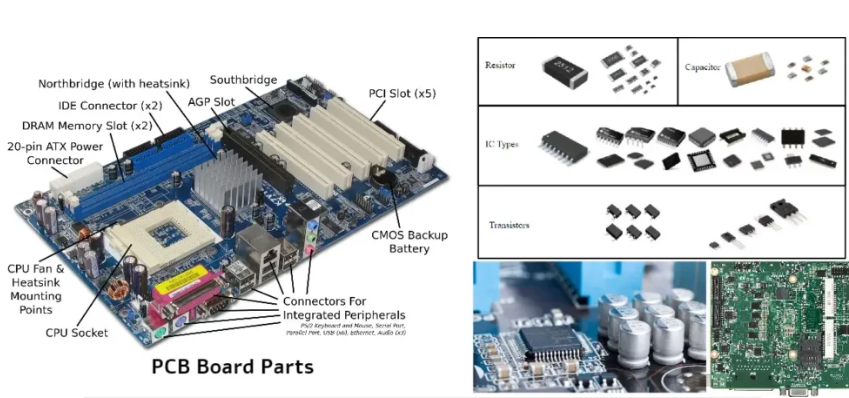
When talking about PCB EMC design, we cannot ignore the PCB module division and layout of key components. On the one hand, the relative position and direction of certain frequency generating devices, drivers, power modules, filter devices, etc. on the PCB will have a huge impact on the emission and reception of electromagnetic fields. On the other hand, the quality of the above layout will directly affect the quality of wiring.

Division by function

Various circuit modules implement different functions, such as clock circuits; amplifier circuits; drive circuits; A/D, D/A conversion circuits; I/O circuits, switching power supplies, filter circuits, etc. A complete design may include circuit modules with multiple functions. When designing PCB, we can divide the entire circuit into modules according to the signal flow direction. This ensures the rationality of the entire layout, achieves a short overall wiring path, and the modules are not intertwined, reducing the possibility of mutual interference between modules.
Contact us for PCB quote now |

Division by frequency

Circuit modules can be divided according to the operating frequency and rate of the signal: high, medium, and low are gradually expanded and not intertwined.

Division by signal type

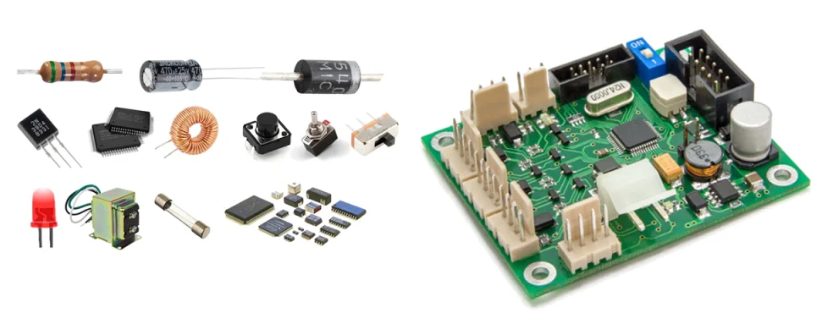
According to the signal type, it can be divided into two parts: digital circuit and analog circuit. In order to reduce the interference of digital circuits on analog circuits, so that they can coexist peacefully and achieve compatibility, different areas need to be defined for them during PCB layout, and necessary isolation should be performed in space to reduce mutual coupling. For digital-analog conversion circuits, such as A/D and D/A conversion circuits, they should be placed at the junction of digital circuits and analog circuits. The direction of device placement should be based on the flow of signals, so that the signal leads are as short as possible, and the pins of the analog part are located above the analog ground, and the pins of the digital part are located above the digital ground.
Contact us for PCB quote now |

Comprehensive layout

One principle of circuit layout is that the key high-speed signal routing should be as short as possible according to the signal flow relationship, and secondly, the neatness and beauty of the circuit board should be considered. The clock signal should be as short as possible. If the clock routing cannot be shortened, shielded ground wires should be added on both sides of the clock line. Shielding measures should also be considered for more sensitive signal lines. The clock circuit has a large external radiation, which will have a great impact on some sensitive circuits, especially analog circuits. Therefore, the clock circuit should be kept away from other irrelevant circuits during circuit layout; in order to prevent the external radiation of the clock signal, the clock circuit should generally be kept away from the I/O circuit and cable connector. Low-frequency digital I/O circuits and analog I/O circuits should be placed close to the connectors, and clock circuits, high-speed circuits, and memory devices are often placed at the innermost part of the circuit board (away from the handle); medium and low-speed logic circuits are generally placed in the middle of the circuit board; if there are A/D and D/A circuits, they are generally placed in the middle of the circuit board.

Contact us for PCB quote now |

Post Tags: #aluminum clad pcb#aluminum core pcb#aluminum pcb#assemble pcb#pcb component placement#PCB layout#pcb module division

Post navigation

Previous Previous
How to isolate the digital ground and analog ground of PCB
NextContinue
Three major factors affecting PCB impedance

Search

Search

Products

  • HDI Multilayer PCB
  • Rigid Flex PCB
  • Flex pcb
  • High Frequency PCB
  • High speed pcb
  • Heavy copper PCB
  • Metal Core PCB
  • Ceramic PCB

Address

Andwin Circuits Co.,Limited
Email: sales@andwinpcb.com
Tel: +86 755 2832 9394
Fax:+86 755 2992  6717
ADD:1-2F-1217,HouDeQun Industrial park,
NanTing RD NO.56,ShaJing,BaoAn,Shenzhen 518104,GuangDong,China

Products

  • HDI Multilayer PCB
  • Rigid Flex PCB
  • Flex pcb
  • High Frequency PCB
  • High speed pcb
  • Heavy copper PCB
  • Metal Core PCB
  • Ceramic PCB

Technology

  • Blogs
  • Via in pad
  • PCB E-test
  • PCB stack up
  • Metal core PCB panelization
  • Controlled impedance PCB

CERTIFICATION

Certification >>


Copyright© 2003 - 2026 Andwin | All Rights Reserved | Powered by Andwin

Scroll to top
  • Home
  • Products
    • HDI multilayer PCB
    • Rigid Flex PCB
    • Flex pcb
    • Special PCB
      • High Frequency PCB
        • Rogers RO4350B PCB
        • Rogers RO4003 pcb
        • Rogers RO3003 PCB
        • Rogers 5880 PCB
        • DICLAD 527 PCB
        • Taconic TLX series
        • Taconic TLX-8 RF PCB
        • Taconic TLX-9 RF PCB
      • High speed pcb
        • Megtron 6 High Speed PCB
        • TU-872 SLK Sp High Speed
      • High TG PCB
        • SHENGYI SH260 PCB
        • ISOLA 370HR PCB
        • ISOLA IS410 PCB
        • ISOLA IS420 PCB
      • Heavy copper PCB
      • Copper coin pcb
      • Copper inlay PCB
    • Metal Core PCB
      • Copper core pcb
      • Aluminum PCB
      • 2 Layers Aluminum PCB
      • Direct thermal MCPCB
      • 2 Layers Direct Thermal
    • Ceramic PCB
      • DPC ceramic PCB
      • DBC ceramic PCB
      • Thick film Ceramic PCB
      • Al2O3 Alumina PCB
      • AIN ALN ceramic PCB
      • IGBT Ceramic PCB
  • Service
    • PCB Assembly
    • Quick turn PCB assembly
    • PCBA conformal coating
  • Industry
    • Telecommunication
    • IoT and Wireless
    • Industrial Control
    • Thermal management
    • Power and Energy
    • IC test board
    • Automative
    • Medical
  • Capability
    • Rigid PCB
    • Rigid flex PCB
    • Metal core PCB
    • PCB Assembly
  • Technology
    • Blogs
    • Via in pad
    • PCB E-test
    • PCB stack up
    • MCPCB panelization
    • Controlled impedance PCB
  • About
    • About us
    • Certification
    • Factory Tour
  • Contact
Search