
Testing Methods and Standards for FPC Flexible Printed Circuit Boards
1. Introduction
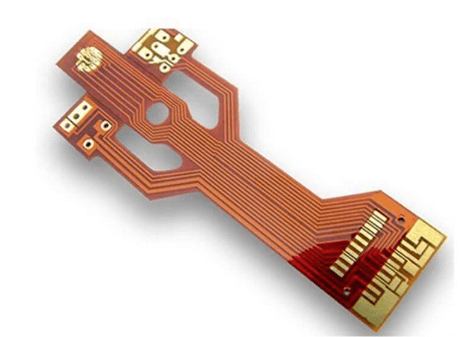
Flexible Printed Circuit (FPC) boards are widely used in modern electronics due to their lightweight, thin profile, and ability to bend and fold. They are essential in applications such as smartphones, wearable devices, medical equipment, and automotive electronics. However, the flexibility of FPCs introduces unique challenges in testing and quality assurance. This article explores the key testing methods and industry standards for FPCs to ensure reliability and performance.
2. Key Testing Methods for FPCs
2.1 Electrical Testing
Electrical testing ensures that the conductive traces on the FPC function correctly without short circuits or open circuits.
2.1.1 Continuity Testing
- Checks for open circuits by verifying electrical connectivity between designated points.
- Automated test equipment (ATE) applies a small current to measure resistance.
2.1.2 Insulation Resistance Testing
- Measures resistance between adjacent conductors to detect potential short circuits.
- High-voltage (typically 100V–500V) is applied to ensure insulation integrity.
2.1.3 High-Voltage (Hi-Pot) Testing
- Evaluates dielectric strength by applying high voltage (500V–1500V) between conductors and ground.
- Detects insulation breakdown or leakage currents.
2.2 Mechanical Testing
Since FPCs are subject to bending and flexing, mechanical durability is critical.
2.2.1 Flexibility and Bend Testing
- Dynamic Flex Testing: Repeated bending (e.g., 100,000 cycles) to simulate real-world usage.
- Static Flex Testing: Measures deformation under constant bending stress.
2.2.2 Peel Strength Testing
- Assesses adhesion between copper traces and the flexible substrate.
- A force gauge measures the force required to peel the conductor from the base material.
2.2.3 Tensile Strength Testing
- Determines the maximum force the FPC can withstand before breaking.
2.3 Environmental Testing
FPCs must perform reliably under various environmental conditions.
2.3.1 Thermal Cycling Testing
- Exposes the FPC to extreme temperature changes (-40°C to +125°C) to test expansion and contraction effects.
2.3.2 Humidity Testing (Damp Heat Testing)
- Evaluates performance in high-humidity environments (85% RH at 85°C for 1,000 hours).
2.3.3 Salt Spray Testing
- Checks corrosion resistance by exposing the FPC to a saline mist.
2.4 Optical and Visual Inspection
Automated Optical Inspection (AOI) and manual checks detect:
- Solder defects (bridges, voids).
- Misalignment of components.
- Surface scratches or delamination.
2.5 Impedance Testing (for High-Speed Circuits)
- Measures characteristic impedance (typically 50Ω or 100Ω for differential pairs).
- Time-Domain Reflectometry (TDR) is commonly used.
2.6 Solderability Testing
- Ensures proper wetting of solder on pads.
- Tests include dip-and-look and wetting balance analysis.
3. Industry Standards for FPC Testing
3.1 IPC Standards
The IPC (Association Connecting Electronics Industries) provides key standards for FPC testing:
- IPC-6013: Qualification and performance specification for flexible PCBs.
- IPC-T-50: Defines terms for PCB testing.
- IPC-A-600: Acceptability of printed boards.
- IPC-J-STD-003: Solderability testing.
3.2 IEC Standards
- IEC 61189-3: Test methods for electronic materials, printed boards, and assemblies.
- IEC 60068: Environmental testing standards.
3.3 UL Standards
- UL 796: Safety certification for flexible materials.
3.4 Military and Automotive Standards
- MIL-P-50884: Military specifications for flexible circuits.
- AEC-Q100/Q200: Automotive reliability testing.
4. Challenges in FPC Testing
4.1 Handling Thin and Flexible Materials
- FPCs are delicate and require specialized fixtures for testing.
4.2 High-Density Interconnects (HDI) Testing
- Fine-pitch traces and microvias require high-resolution testing methods.
4.3 Dynamic Flex Reliability
- Repeated bending can cause microcracks, requiring advanced fatigue testing.
4.4 Signal Integrity in High-Speed Applications
- Impedance control and crosstalk must be rigorously tested.
5. Future Trends in FPC Testing
5.1 Automated and AI-Based Inspection
- Machine learning improves defect detection in AOI systems.
5.2 3D X-Ray Inspection
- Detects hidden defects in multilayer FPCs.
5.3 In-Line Testing for Industry 4.0
- Real-time monitoring and predictive maintenance in smart factories.
5.4 Advanced Materials Testing
- New flexible substrates (e.g., polyimide alternatives) require updated test protocols.
6. Conclusion
Testing FPCs involves a combination of electrical, mechanical, environmental, and optical inspections to ensure reliability. Adhering to IPC, IEC, and UL standards is essential for quality assurance. As FPC technology evolves, advanced testing methods such as AI-driven inspection and 3D X-ray will become increasingly important. By implementing rigorous testing protocols, manufacturers can produce high-performance FPCs for next-generation electronics.