
What Is Lead-Free Solder Made Of?
Introduction
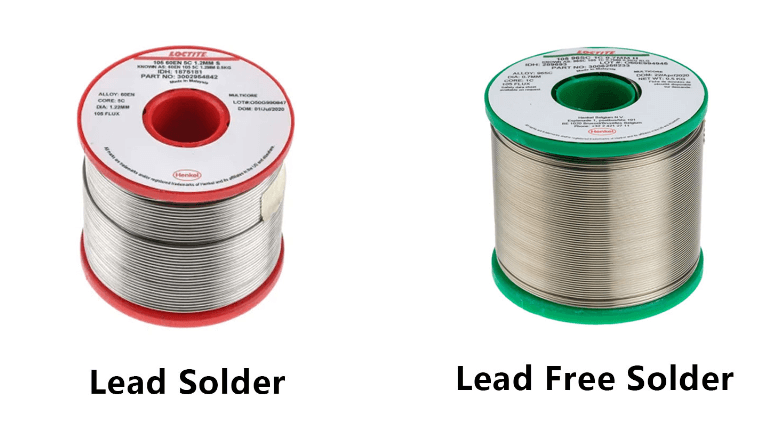
Solder is a fusible metal alloy used to create permanent bonds between metal workpieces in electronics, plumbing, and other applications. Traditional solder has long contained lead (Pb) due to its low melting point, excellent wetting properties, and reliability. However, due to environmental and health concerns, lead-free solder has become the standard in many industries, particularly since the implementation of the Restriction of Hazardous Substances (RoHS) Directive in 2006.
This article explores the composition of lead-free solder, its common alloys, advantages, disadvantages, and applications.
1. Why Lead-Free Solder?
Before discussing what lead-free solder is made of, it’s important to understand why lead was removed from solder in the first place:
- Health Risks: Lead is a toxic heavy metal that can cause neurological damage, especially in children.
- Environmental Concerns: Lead contamination from electronic waste (e-waste) can pollute soil and water.
- Regulatory Requirements: The RoHS Directive and similar laws worldwide restrict the use of lead in electronics.
As a result, manufacturers shifted to lead-free alternatives, which required new alloy formulations to maintain performance.
2. Primary Components of Lead-Free Solder
Lead-free solder is primarily made from a combination of tin (Sn) with other metals such as silver (Ag), copper (Cu), bismuth (Bi), and antimony (Sb). The most common lead-free solder alloys include:
2.1 Tin-Silver-Copper (Sn-Ag-Cu, or SAC Alloys)
The most widely used lead-free solder is the SAC305 alloy, which consists of:
- 96.5% Tin (Sn) – Provides the base for the alloy, ensuring good wetting and conductivity.
- 3.0% Silver (Ag) – Improves mechanical strength and thermal fatigue resistance.
- 0.5% Copper (Cu) – Enhances joint reliability and reduces intermetallic brittleness.
Advantages:
- Good mechanical strength
- Reliable thermal cycling performance
- Widely adopted in electronics manufacturing
Disadvantages:
- Higher melting point (~217°C) than lead-based solder (~183°C)
- More expensive due to silver content
2.2 Tin-Copper (Sn-Cu)
A simpler and more cost-effective alternative is the Sn-Cu alloy, typically:
- 99.3% Tin (Sn)
- 0.7% Copper (Cu)
Advantages:
- Lower cost (no silver)
- Suitable for wave soldering
Disadvantages:
- Higher melting point (~227°C)
- Less robust mechanical properties compared to SAC alloys
2.3 Tin-Silver (Sn-Ag)
Another common alloy is Sn-Ag, usually:
- 96.5% Tin (Sn)
- 3.5% Silver (Ag)
Advantages:
- Better fatigue resistance than Sn-Cu
- Good for high-stress applications
Disadvantages:
- Higher cost than Sn-Cu
- Still higher melting point than leaded solder
2.4 Tin-Bismuth (Sn-Bi)
For lower-temperature applications, Sn-Bi alloys are used:
- 42% Tin (Sn)
- 58% Bismuth (Bi)
Advantages:
- Low melting point (~138°C)
- Good for heat-sensitive components
Disadvantages:
- Brittle joints
- Not suitable for high-stress applications
2.5 Other Alloy Additives
Some lead-free solders include small amounts of additional elements to improve performance:
- Antimony (Sb) – Increases strength but can make solder more brittle.
- Nickel (Ni) – Helps prevent erosion of soldering iron tips.
- Germanium (Ge) – Reduces oxidation in the molten solder.
3. Properties of Lead-Free Solder Compared to Leaded Solder
| Property | Lead-Free Solder (SAC305) | Lead-Based Solder (Sn63/Pb37) |
|---|---|---|
| Melting Point | ~217°C | ~183°C |
| Tensile Strength | Higher | Lower |
| Electrical Conductivity | Slightly Lower | Slightly Higher |
| Wetting Ability | Requires better flux | Excellent wetting |
| Cost | More expensive | Cheaper |
4. Challenges with Lead-Free Solder
Despite its benefits, lead-free solder presents some challenges:
4.1 Higher Melting Points
The increased melting temperature requires higher soldering iron settings, which can damage sensitive components.
4.2 Tin Whiskers
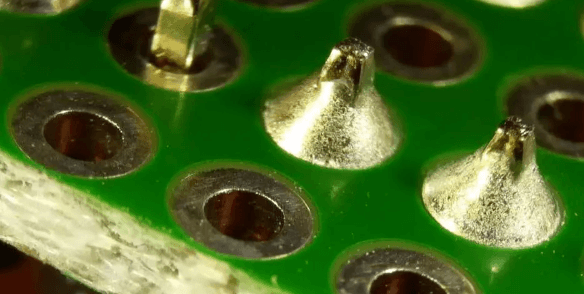
Pure tin can grow microscopic whiskers over time, causing short circuits in electronics.
4.3 Brittle Joints
Some alloys (like Sn-Bi) are more prone to cracking under mechanical stress.
4.4 Flux Requirements
Lead-free solder often requires more aggressive flux to ensure proper wetting.
5. Applications of Lead-Free Solder
- Consumer Electronics: Smartphones, laptops, and tablets (RoHS compliance).
- Automotive Electronics: Modern cars rely on lead-free solder for reliability.
- Medical Devices: Lead-free alloys ensure biocompatibility.
- Aerospace and Defense: Some exemptions exist, but lead-free is increasingly adopted.
6. Future Trends in Lead-Free Solder
Researchers continue to develop new alloys to address the limitations of current lead-free solders, such as:
- Nanoparticle-enhanced solders for better thermal properties.
- Low-temperature alloys for flexible electronics.
- Improved anti-whisker coatings to prevent tin whisker growth.
Conclusion
Lead-free solder is primarily composed of tin (Sn) combined with silver (Ag), copper (Cu), bismuth (Bi), or other metals to replace traditional lead-based alloys. While it offers environmental and health benefits, it also comes with challenges like higher melting points and increased costs. The most common alloy, SAC305 (Sn96.5-Ag3.0-Cu0.5), is widely used in electronics manufacturing.
As technology advances, new lead-free solder formulations will continue to improve performance, making them even more reliable for future applications.