
what is rogers pcb board
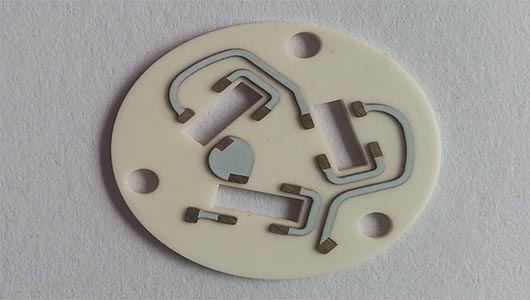
A Rogers PCB board is a type of printed circuit board that is made using Rogers Corporation’s high-performance laminates.
These laminates are made from a combination of ceramic and polymer materials, which provide excellent electrical and mechanical properties.
Rogers PCB boards are commonly used in high-frequency applications, such as in the telecommunications, aerospace, and defense industries.
They are known for their low dielectric loss, high thermal conductivity, and excellent dimensional stability.
Rogers PCB boards are also resistant to moisture, chemicals, and extreme temperatures, making them ideal for harsh environments.
The manufacturing process for Rogers PCB boards involves several steps, including designing the circuit layout, drilling holes, applying copper layers, etching the circuit pattern, and adding surface finishes.
Why do you need a Rogers board
A Rogers board is a high-performance circuit board made of specialized materials that offer excellent electrical properties, such as low dielectric loss, high thermal conductivity,
and low signal loss. These properties make Rogers boards ideal for high-frequency applications, such as radio frequency (RF) and microwave circuits,
where signal integrity and reliability are critical. Rogers boards are commonly used in applications such as telecommunications, aerospace, defense, and automotive industries,
where high-speed data transfer and signal processing are essential. In addition, Rogers boards are also used in applications where high thermal conductivity is required,
such as in LED lighting and power electronics. Overall, a Rogers board is an excellent choice for applications that require high performance, reliability, and durability.
How to make Rogers circuit board
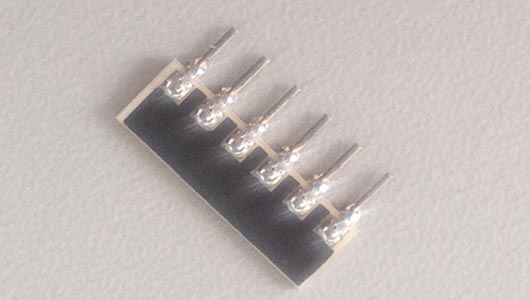
Making a Rogers circuit board involves several steps,
including design, material selection, fabrication, and assembly.
Here are the general steps involved in making a Rogers circuit board:
1. Design:
The first step in making a Rogers circuit board is to create a design for the circuit board using a computer-aided design (CAD) software. The design should include the layout of the components, the routing of the traces, and the placement of the vias.
2. Material selection:
Once the design is complete, the next step is to select the appropriate Rogers material for the circuit board. Rogers materials come in various grades, each with its unique electrical and mechanical properties, so it’s essential to choose the right material for the specific application.
3. Fabrication:
The fabrication process involves several steps, including drilling, plating, etching, and lamination. The first step is to drill the holes for the vias and through-holes. Next, the board is plated with copper to create the circuit traces. The board is then etched to remove any excess copper, leaving only the desired traces. Finally, the board is laminated with the Rogers material.
4. Assembly:
Once the board is fabricated, the components are assembled onto the board using surface-mount technology (SMT) or through-hole technology (THT). The board is then tested to ensure that it meets the required specifications.
Overall, making a Rogers circuit board requires specialized knowledge and equipment.
It’s essential to work with an experienced PCB manufacturer who can guide you through the process and ensure that your board meets the required specifications.

AMB technology is a further development of DBC technology.
It is a method of combining ceramics and metals by using active metal elements (such as Ti/Ag/Zr/Cu) in solder.
Ceramics form a reactive layer that can be wetted by liquid solder.
Role of the Rogers circuit board
The Rogers circuit board plays a critical role in electronic devices and systems that require high-frequency performance.
Rogers circuit boards are made from a high-performance material that has excellent electrical and thermal properties,
making them ideal for use in high-frequency applications such as microwave and RF devices, antennas, and amplifiers.
The low dielectric constant and loss tangent of Rogers circuit boards allow for minimal signal loss and distortion, making them ideal for use in high-speed digital circuits and wireless communication systems.
The material’s dimensional stability and mechanical strength also make it suitable for use in harsh environments, where temperature and humidity can affect the performance of electronic devices.
Overall, the Rogers circuit board is an essential component in many electronic devices and systems that require high-frequency performance, reliability, and durability.