
Skip to content
Andwin Circuits
  • Home
  • ProductsExpand
    • HDI multilayer PCB
    • Rigid Flex PCB
    • Flex pcb
    • Special PCBExpand
      • High Frequency PCBExpand
        • Rogers RO4350B PCB
        • Rogers RO4003 pcb
        • Rogers RO3003 PCB
        • Rogers 5880 PCB
        • DICLAD 527 PCB
        • Taconic TLX series
        • Taconic TLX-8 RF PCB
        • Taconic TLX-9 RF PCB
      • High speed pcbExpand
        • Megtron 6 High Speed PCB
        • TU-872 SLK Sp High Speed
      • High TG PCBExpand
        • SHENGYI SH260 PCB
        • ISOLA 370HR PCB
        • ISOLA IS410 PCB
        • ISOLA IS420 PCB
      • Heavy copper PCB
      • Copper coin pcb
      • Copper inlay PCB
    • Metal Core PCBExpand
      • Copper core pcb
      • Aluminum PCB
      • 2 Layers Aluminum PCB
      • Direct thermal MCPCB
      • 2 Layers Direct Thermal
    • Ceramic PCBExpand
      • DPC ceramic PCB
      • DBC ceramic PCB
      • Thick film Ceramic PCB
      • Al2O3 Alumina PCB
      • AIN ALN ceramic PCB
      • IGBT Ceramic PCB
  • ServiceExpand
    • PCB Assembly
    • Quick turn PCB assembly
    • PCBA conformal coating
  • IndustryExpand
    • Telecommunication
    • IoT and Wireless
    • Industrial Control
    • Thermal management
    • Power and Energy
    • IC test board
    • Automative
    • Medical
  • CapabilityExpand
    • Rigid PCB
    • Rigid flex PCB
    • Metal core PCB
    • PCB Assembly
  • TechnologyExpand
    • Blogs
    • Via in pad
    • PCB E-test
    • PCB stack up
    • MCPCB panelization
    • Controlled impedance PCB
  • AboutExpand
    • About us
    • Certification
    • Factory Tour
  • Contact
Andwin Circuits

4 layer pcb best practices
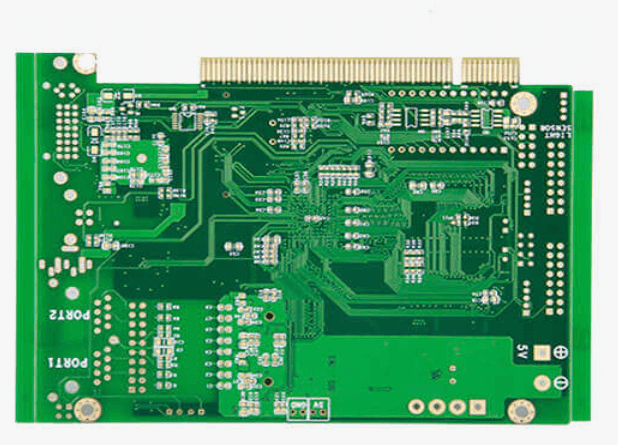
In high-frequency circuit design, 4-layer PCB (printed circuit board) has become the first choice of engineers because of its unique structure and performance advantages.

4-layer PCB improves the stability of the circuit and enhances the integrity of the signal

First, the multi-layer structure of the 4-layer PCB provides better electromagnetic compatibility (EMC). In high-frequency circuits, the transmission speed of signals is extremely fast, which is prone to electromagnetic interference (EMI). By increasing the number of layers, the 4-layer PCB can effectively isolate the signal layer and the power layer, thereby reducing the impact of electromagnetic interference. This design not only improves the stability of the circuit, but also enhances the integrity of the signal.

4-layer PCB ensures reliable operation in high-frequency environments

In addition, 4-layer PCB also has better thermal management performance in high-frequency circuit design. High-frequency circuits usually generate a lot of heat, which may cause circuit performance degradation or even damage if it cannot be effectively dissipated. The multi-layer structure of the 4-layer PCB allows the arrangement of heat dissipation channels between different layers, thereby improving the heat dissipation efficiency. This design not only extends the service life of the circuit, but also ensures its reliable operation in high-frequency environments.
Contact us for PCB quote now |

4-layer PCB improves the performance and reliability of the circuit

At the same time, the 4-layer PCB also provides higher design flexibility. In high-frequency circuit design, the complexity and density of wiring are often high. The multi-layer structure of 4-layer PCB allows engineers to perform signal routing between different layers, thereby reducing the crossover and interference of wiring. This design not only simplifies the circuit layout, but also improves the performance and reliability of the circuit.

The advantages of 4-layer PCBs are widely used in high-speed data transmission and high-frequency signal communication equipment

Further, the application of 4-layer PCBs in high-frequency circuit design is also reflected in its higher signal transmission speed. High-frequency signals have very strict requirements on the transmission path, and any slight impedance change may cause signal distortion. 4-layer PCBs can provide lower signal transmission loss and higher signal transmission speed by optimizing the interlayer structure and material selection. This advantage makes 4-layer PCBs widely used in high-speed data transmission and high-frequency communication equipment.

Contact us for PCB quote now |

4-layer PCBs can ensure that the circuit runs stably in various complex environments

Finally, the application of 4-layer PCBs in high-frequency circuit design is also reflected in its higher reliability and stability. High-frequency circuits have extremely high requirements on the stability of components, and any slight changes may affect the overall performance of the circuit. 4-layer PCB can provide higher mechanical strength and electrical performance through its multi-layer structure and high-quality manufacturing process, thus ensuring the stable operation of the circuit in various complex environments.

In summary, 4-layer PCB has significant advantages in high-frequency circuit design, including better electromagnetic compatibility, higher thermal management performance, higher design flexibility, faster signal transmission speed, and higher reliability and stability. These advantages make 4-layer PCB widely used in high-frequency circuit design and become the first choice for engineers when designing high-performance circuits.

Our company uses the best technology in the design and manufacture of PCBs and provides the best customized services. Welcome to contact us for customization.

Contact us for PCB quote now |

Address

Andwin Circuits Co.,Limited
Email: sales@andwinpcb.com
Tel: +86 755 2832 9394
Fax:+86 755 2992  6717
ADD:1-2F-1217,HouDeQun Industrial park,
NanTing RD NO.56,ShaJing,BaoAn,Shenzhen 518104,GuangDong,China

Products

  • HDI Multilayer PCB
  • Rigid Flex PCB
  • Flex pcb
  • High Frequency PCB
  • High speed pcb
  • Heavy copper PCB
  • Metal Core PCB
  • Ceramic PCB

Technology

  • Blogs
  • Via in pad
  • PCB E-test
  • PCB stack up
  • Metal core PCB panelization
  • Controlled impedance PCB

CERTIFICATION

Certification >>


Copyright© 2003 - 2026 Andwin | All Rights Reserved | Powered by Andwin

Scroll to top
  • Home
  • Products
    • HDI multilayer PCB
    • Rigid Flex PCB
    • Flex pcb
    • Special PCB
      • High Frequency PCB
        • Rogers RO4350B PCB
        • Rogers RO4003 pcb
        • Rogers RO3003 PCB
        • Rogers 5880 PCB
        • DICLAD 527 PCB
        • Taconic TLX series
        • Taconic TLX-8 RF PCB
        • Taconic TLX-9 RF PCB
      • High speed pcb
        • Megtron 6 High Speed PCB
        • TU-872 SLK Sp High Speed
      • High TG PCB
        • SHENGYI SH260 PCB
        • ISOLA 370HR PCB
        • ISOLA IS410 PCB
        • ISOLA IS420 PCB
      • Heavy copper PCB
      • Copper coin pcb
      • Copper inlay PCB
    • Metal Core PCB
      • Copper core pcb
      • Aluminum PCB
      • 2 Layers Aluminum PCB
      • Direct thermal MCPCB
      • 2 Layers Direct Thermal
    • Ceramic PCB
      • DPC ceramic PCB
      • DBC ceramic PCB
      • Thick film Ceramic PCB
      • Al2O3 Alumina PCB
      • AIN ALN ceramic PCB
      • IGBT Ceramic PCB
  • Service
    • PCB Assembly
    • Quick turn PCB assembly
    • PCBA conformal coating
  • Industry
    • Telecommunication
    • IoT and Wireless
    • Industrial Control
    • Thermal management
    • Power and Energy
    • IC test board
    • Automative
    • Medical
  • Capability
    • Rigid PCB
    • Rigid flex PCB
    • Metal core PCB
    • PCB Assembly
  • Technology
    • Blogs
    • Via in pad
    • PCB E-test
    • PCB stack up
    • MCPCB panelization
    • Controlled impedance PCB
  • About
    • About us
    • Certification
    • Factory Tour
  • Contact
Search