
4 oz Copper PCB: A Comprehensive Guide
Introduction
Printed Circuit Boards (PCBs) are the backbone of modern electronics, providing the necessary electrical connections between components. One critical aspect of PCB design is the copper weight, which determines the thickness of the copper layer on the board. Among the various options available, 4 oz copper PCBs are widely used in high-power and high-current applications due to their superior conductivity and thermal management capabilities.
This article explores 4 oz copper PCBs in detail, covering their benefits, applications, design considerations, manufacturing challenges, and comparisons with other copper weights. By the end, you will have a thorough understanding of why and when to use 4 oz copper PCBs in your projects.
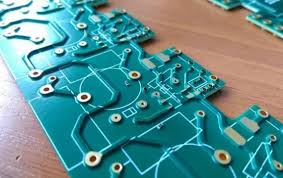
What is a 4 oz Copper PCB?
Copper weight in PCBs is measured in ounces (oz) per square foot. A 4 oz copper PCB means that the copper thickness is approximately 5.6 mils (0.14 mm) per layer. This is significantly thicker than standard PCBs, which typically use 1 oz (1.4 mils) or 2 oz (2.8 mils) copper.
Why Choose 4 oz Copper?
- Higher Current Carrying Capacity – Thicker copper allows for greater current flow without overheating.
- Better Thermal Management – Dissipates heat more efficiently, reducing the risk of thermal failure.
- Improved Durability – Withstands mechanical stress better than thinner copper layers.
- Lower Resistance – Reduces power loss in high-power circuits.
Applications of 4 oz Copper PCBs
Due to their enhanced electrical and thermal properties, 4 oz copper PCBs are commonly used in:
- Power Electronics
- Motor controllers
- Power inverters
- High-current power supplies
- Automotive Systems
- Electric vehicle (EV) battery management
- High-power LED lighting
- Engine control units (ECUs)
- Industrial Equipment
- Heavy machinery control systems
- High-power RF amplifiers
- Welding equipment
- Renewable Energy Systems
- Solar power inverters
- Wind turbine controllers
- Battery storage systems
- Military and Aerospace
- High-reliability avionics
- Radar and communication systems
Design Considerations for 4 oz Copper PCBs
Designing a PCB with 4 oz copper requires special considerations to ensure manufacturability and performance:
1. Trace Width and Spacing
- Thicker copper requires wider traces to avoid excessive heat buildup.
- Minimum spacing must be increased to prevent short circuits due to copper spreading during etching.
2. Thermal Management
- Use thermal vias to dissipate heat efficiently.
- Consider metal-core PCBs (MCPCBs) for extreme thermal conditions.
3. Etching Challenges
- Thicker copper makes etching more difficult, requiring precise control to avoid undercutting.
- Plated through-holes (PTHs) must be designed with adequate annular rings.
4. PCB Material Selection
- FR-4 is common but may not be sufficient for very high temperatures.
- High-Tg (Glass Transition Temperature) materials or ceramic substrates may be needed.
5. Solder Mask and Silkscreen
- Thicker copper can affect solder mask application, requiring adjustments in the manufacturing process.
- Silkscreen must be carefully placed to avoid interference with thick copper traces.
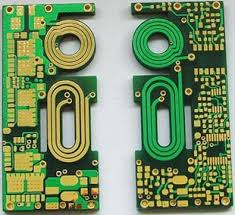
Manufacturing Challenges of 4 oz Copper PCBs
Producing 4 oz copper PCBs presents unique challenges:
- Etching Precision
- The etching process must be tightly controlled to maintain trace accuracy.
- Over-etching can weaken traces, while under-etching can cause shorts.
- Drilling and Plating
- Thicker copper requires robust drilling to avoid burrs.
- Plated through-holes must ensure proper copper deposition.
- Lamination Issues
- Thick copper can cause uneven lamination, leading to delamination risks.
- Proper pressure and temperature control are critical.
- Cost Implications
- 4 oz copper PCBs are more expensive due to higher material costs and complex manufacturing.
- Lead times may be longer compared to standard PCBs.
Comparison with Other Copper Weights
| Feature | 1 oz Copper (1.4 mils) | 2 oz Copper (2.8 mils) | 4 oz Copper (5.6 mils) |
|---|---|---|---|
| Current Capacity | Low | Moderate | High |
| Thermal Performance | Basic | Improved | Excellent |
| Cost | Low | Moderate | High |
| Manufacturing Complexity | Easy | Moderate | Difficult |
| Typical Applications | Consumer electronics | Power supplies, LEDs | High-power industrial systems |
When to Choose 4 oz Over 2 oz or 1 oz?
- High-current applications (>20A)
- Extreme thermal environments
- High-reliability requirements (military, aerospace)
Conclusion
4 oz copper PCBs are an excellent choice for high-power, high-current, and thermally demanding applications. While they come with higher costs and manufacturing complexities, their benefits in current handling, thermal dissipation, and durability make them indispensable in industries like automotive, industrial machinery, renewable energy, and aerospace.
When designing a 4 oz copper PCB, careful attention must be paid to trace width, thermal management, material selection, and manufacturing tolerances. By understanding these factors, engineers can leverage the full potential of 4 oz copper PCBs to build robust and efficient electronic systems.
For projects requiring extreme power handling and reliability, 4 oz copper PCBs are often the best solution—ensuring performance, longevity, and safety in even the most demanding environments.
Final Thoughts
As technology advances, the demand for high-power PCBs continues to grow. 4 oz copper PCBs represent a critical component in modern electronics, enabling innovations in electric vehicles, renewable energy, and industrial automation. By selecting the right copper weight and optimizing design practices, engineers can push the boundaries of what’s possible in electronic design.
Would you like recommendations for 4 oz copper PCB manufacturers or further details on specific design techniques? Let us know in the comments!