
Skip to content
Andwin Circuits
  • Home
  • ProductsExpand
    • HDI multilayer PCB
    • Rigid Flex PCB
    • Flex pcb
    • Special PCBExpand
      • High Frequency PCBExpand
        • Rogers RO4350B PCB
        • Rogers RO4003 pcb
        • Rogers RO3003 PCB
        • Rogers 5880 PCB
        • DICLAD 527 PCB
        • Taconic TLX series
        • Taconic TLX-8 RF PCB
        • Taconic TLX-9 RF PCB
      • High speed pcbExpand
        • Megtron 6 High Speed PCB
        • TU-872 SLK Sp High Speed
      • High TG PCBExpand
        • SHENGYI SH260 PCB
        • ISOLA 370HR PCB
        • ISOLA IS410 PCB
        • ISOLA IS420 PCB
      • Heavy copper PCB
      • Copper coin pcb
      • Copper inlay PCB
    • Metal Core PCBExpand
      • Copper core pcb
      • Aluminum PCB
      • 2 Layers Aluminum PCB
      • Direct thermal MCPCB
      • 2 Layers Direct Thermal
    • Ceramic PCBExpand
      • DPC ceramic PCB
      • DBC ceramic PCB
      • Thick film Ceramic PCB
      • Al2O3 Alumina PCB
      • AIN ALN ceramic PCB
      • IGBT Ceramic PCB
  • ServiceExpand
    • PCB Assembly
    • Quick turn PCB assembly
    • PCBA conformal coating
  • IndustryExpand
    • Telecommunication
    • IoT and Wireless
    • Industrial Control
    • Thermal management
    • Power and Energy
    • IC test board
    • Automative
    • Medical
  • CapabilityExpand
    • Rigid PCB
    • Rigid flex PCB
    • Metal core PCB
    • PCB Assembly
  • TechnologyExpand
    • Blogs
    • Via in pad
    • PCB E-test
    • PCB stack up
    • MCPCB panelization
    • Controlled impedance PCB
  • AboutExpand
    • About us
    • Certification
    • Factory Tour
  • Contact
Andwin Circuits
Home / Blogs / How does a thermal pad work

How does a thermal pad work

ByGrace June 29, 2023June 15, 2024

A thermal pad works by filling the microscopic gaps and imperfections between two surfaces,
such as a heat-generating component and a heat sink or cooling solution.

These gaps can create air pockets that act as insulators, reducing the efficiency of heat transfer and causing the component to overheat.

The thermal pad is made of a soft, flexible material that conforms to the shape of the surfaces it is placed between.
It is designed to be thermally conductive, meaning it can transfer heat from one surface to another.

When the thermal pad is compressed between the two surfaces, it fills in the gaps and creates a continuous path for heat to flow.
The thermal pad is also designed to be non-conductive, meaning it does not conduct electricity.
This is important because it prevents any electrical current from flowing between the two surfaces,

which could cause damage to the component or the cooling solution.

Overall, the thermal pad helps to improve the efficiency of heat transfer between a heat-generating component and a cooling solution,
reducing the risk of overheating and improving the performance and lifespan of the component.
GET IN TOUCH!

thermal pad pcb design

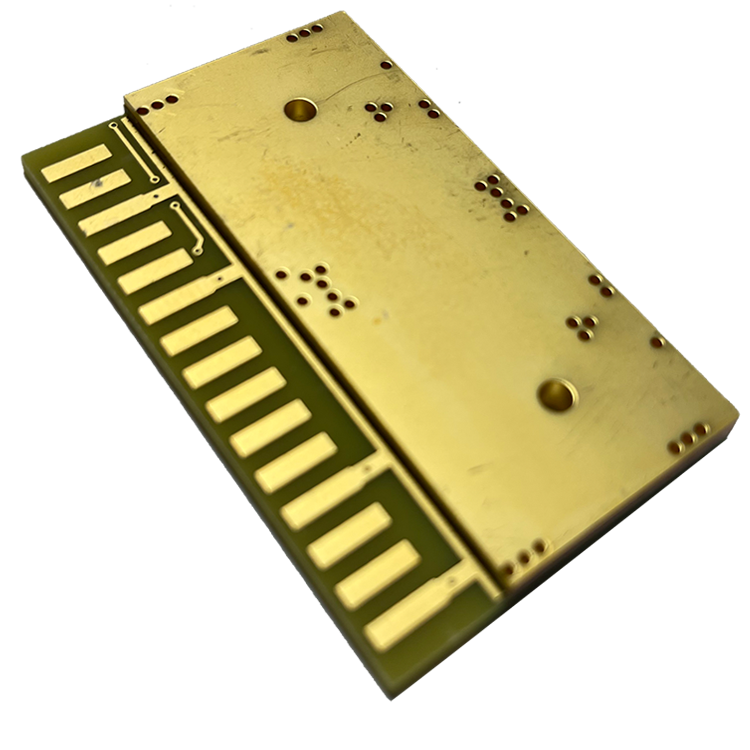
Thermal pads are used in PCB design to provide a thermal interface between a component and the PCB.
Here are some tips for designing thermal pads in PCBs:

1. Determine the thermal requirements:

Before designing the thermal pad, it is important to determine the thermal requirements of the component.
This includes the maximum operating temperature, the heat dissipation requirements, and the thermal resistance of the component.

2. Choose the right material:

The material used for the thermal pad should have good thermal conductivity and be able to withstand high temperatures.
Copper and aluminum are commonly used materials for thermal pads.

3. Determine the size and shape:

The size and shape of the thermal pad should be designed to match the component.
The pad should be large enough to cover the entire component and provide a good thermal interface.

4. Place the thermal pad correctly:

The thermal pad should be placed in the correct location on the PCB to ensure good thermal contact with the component.
It should also be connected to a ground plane to provide a low thermal resistance path to dissipate heat.

5. Use vias to improve thermal performance:

Vias can be used to improve the thermal performance of the PCB by providing a low thermal resistance path between the thermal pad and the ground plane.

6. Test the thermal performance:

It is important to test the thermal performance of the PCB to ensure that it meets the thermal requirements of the component.
This can be done using thermal imaging or other thermal testing methods.

GET IN TOUCH!

Post navigation

Previous Previous
What is thermal relief in pcb
NextContinue
PCB On Ceramic,You Can Select IT

Search

Search

Products

  • HDI Multilayer PCB
  • Rigid Flex PCB
  • Flex pcb
  • High Frequency PCB
  • High speed pcb
  • Heavy copper PCB
  • Metal Core PCB
  • Ceramic PCB

Address

Andwin Circuits Co.,Limited
Email: sales@andwinpcb.com
Tel: +86 755 2832 9394
Fax:+86 755 2992  6717
ADD:1-2F-1217,HouDeQun Industrial park,
NanTing RD NO.56,ShaJing,BaoAn,Shenzhen 518104,GuangDong,China

Products

  • HDI Multilayer PCB
  • Rigid Flex PCB
  • Flex pcb
  • High Frequency PCB
  • High speed pcb
  • Heavy copper PCB
  • Metal Core PCB
  • Ceramic PCB

Technology

  • Blogs
  • Via in pad
  • PCB E-test
  • PCB stack up
  • Metal core PCB panelization
  • Controlled impedance PCB

CERTIFICATION

Certification >>


Copyright© 2003 - 2026 Andwin | All Rights Reserved | Powered by Andwin

Scroll to top
  • Home
  • Products
    • HDI multilayer PCB
    • Rigid Flex PCB
    • Flex pcb
    • Special PCB
      • High Frequency PCB
        • Rogers RO4350B PCB
        • Rogers RO4003 pcb
        • Rogers RO3003 PCB
        • Rogers 5880 PCB
        • DICLAD 527 PCB
        • Taconic TLX series
        • Taconic TLX-8 RF PCB
        • Taconic TLX-9 RF PCB
      • High speed pcb
        • Megtron 6 High Speed PCB
        • TU-872 SLK Sp High Speed
      • High TG PCB
        • SHENGYI SH260 PCB
        • ISOLA 370HR PCB
        • ISOLA IS410 PCB
        • ISOLA IS420 PCB
      • Heavy copper PCB
      • Copper coin pcb
      • Copper inlay PCB
    • Metal Core PCB
      • Copper core pcb
      • Aluminum PCB
      • 2 Layers Aluminum PCB
      • Direct thermal MCPCB
      • 2 Layers Direct Thermal
    • Ceramic PCB
      • DPC ceramic PCB
      • DBC ceramic PCB
      • Thick film Ceramic PCB
      • Al2O3 Alumina PCB
      • AIN ALN ceramic PCB
      • IGBT Ceramic PCB
  • Service
    • PCB Assembly
    • Quick turn PCB assembly
    • PCBA conformal coating
  • Industry
    • Telecommunication
    • IoT and Wireless
    • Industrial Control
    • Thermal management
    • Power and Energy
    • IC test board
    • Automative
    • Medical
  • Capability
    • Rigid PCB
    • Rigid flex PCB
    • Metal core PCB
    • PCB Assembly
  • Technology
    • Blogs
    • Via in pad
    • PCB E-test
    • PCB stack up
    • MCPCB panelization
    • Controlled impedance PCB
  • About
    • About us
    • Certification
    • Factory Tour
  • Contact
Search