
Skip to content
Andwin Circuits
  • Home
  • ProductsExpand
    • HDI multilayer PCB
    • Rigid Flex PCB
    • Flex pcb
    • Special PCBExpand
      • High Frequency PCBExpand
        • Rogers RO4350B PCB
        • Rogers RO4003 pcb
        • Rogers RO3003 PCB
        • Rogers 5880 PCB
        • DICLAD 527 PCB
        • Taconic TLX series
        • Taconic TLX-8 RF PCB
        • Taconic TLX-9 RF PCB
      • High speed pcbExpand
        • Megtron 6 High Speed PCB
        • TU-872 SLK Sp High Speed
      • High TG PCBExpand
        • SHENGYI SH260 PCB
        • ISOLA 370HR PCB
        • ISOLA IS410 PCB
        • ISOLA IS420 PCB
      • Heavy copper PCB
      • Copper coin pcb
      • Copper inlay PCB
    • Metal Core PCBExpand
      • Copper core pcb
      • Aluminum PCB
      • 2 Layers Aluminum PCB
      • Direct thermal MCPCB
      • 2 Layers Direct Thermal
    • Ceramic PCBExpand
      • DPC ceramic PCB
      • DBC ceramic PCB
      • Thick film Ceramic PCB
      • Al2O3 Alumina PCB
      • AIN ALN ceramic PCB
      • IGBT Ceramic PCB
  • ServiceExpand
    • PCB Assembly
    • Quick turn PCB assembly
    • PCBA conformal coating
  • IndustryExpand
    • Telecommunication
    • IoT and Wireless
    • Industrial Control
    • Thermal management
    • Power and Energy
    • IC test board
    • Automative
    • Medical
  • CapabilityExpand
    • Rigid PCB
    • Rigid flex PCB
    • Metal core PCB
    • PCB Assembly
  • TechnologyExpand
    • Blogs
    • Via in pad
    • PCB E-test
    • PCB stack up
    • MCPCB panelization
    • Controlled impedance PCB
  • AboutExpand
    • About us
    • Certification
    • Factory Tour
  • Contact
Andwin Circuits
Home / Blogs / Flex pcb depaneling

Flex pcb depaneling

ByGrace August 14, 2023June 14, 2024

PCB (printed circuit board) depaneling, also called singulation, is the process of removing numerous smaller,
individual PCBs from a larger multi-PCB panel produced during manufacturing.

The depaneling process was created in order to increase throughput of PCB manufacturing lines as circuit board sizes reduced.
At CMS Laser,

our depaneling process has the advantage of speed, pin-point accuracy,
no tooling cost or wear, no part induced stress, and no cutting oils or other waste.
Depaneling Methods

PCBs are typically manufactured in large panels containing multiple boards at a time, but can also be produced as single units if need be.
The depaneling of PCBs process can be fully automatic, manual, or semi-automatic.

There are several methods used, including laser PCB depaneling, within the electronics industry.
Let’s examine what they are:
GET IN TOUCH!

Punching/Die Cutting:

The punching method is the process of singular PCBs being punched out of the panel through the use of a special fixture.
The punching fixture has sharp blades on one part and supports on the other.

A different die is required for each board and dies must frequently be replaced to maintain sharpness.
Although the production rate is high, the custom-designed fixtures and blades require a reoccurring cost.
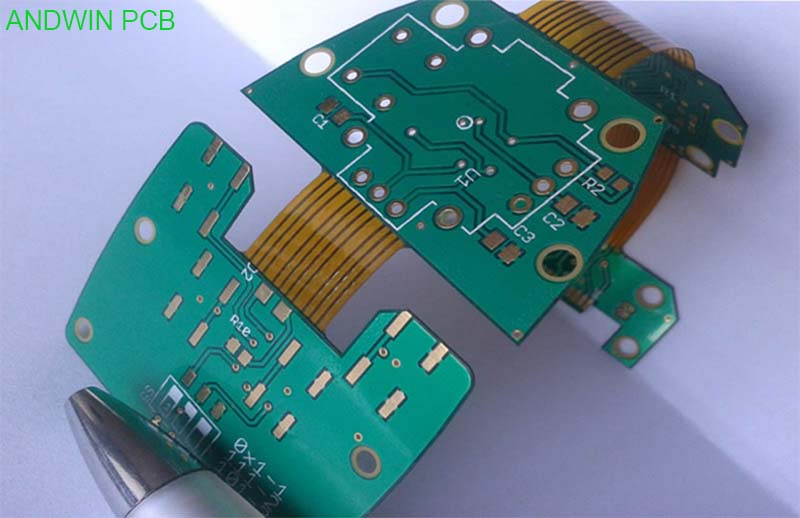
rigid flex pcb

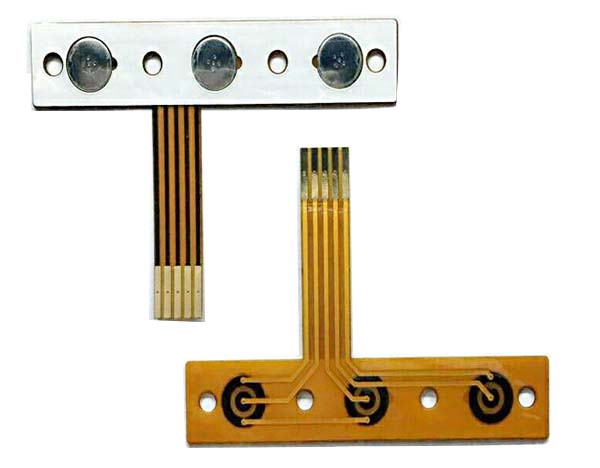
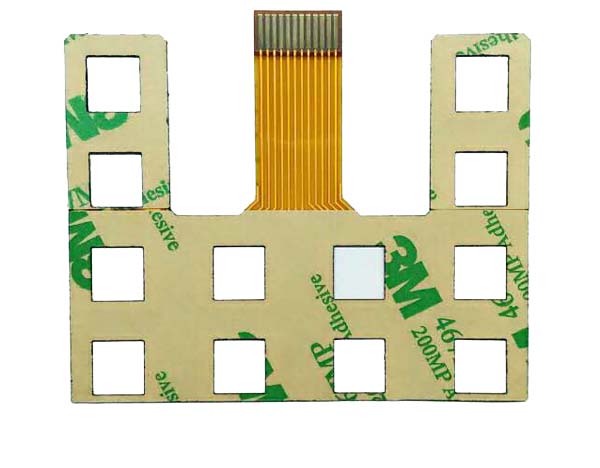
Flex PCB depaneling is the process of separating individual flexible printed circuit boards from a larger panel.
There are several methods for depaneling flex PCBs, including:

1. Scoring: A scoring tool is used to create a groove along the desired separation line, and then the panel is bent to break the PCBs apart.

2. V-cut: A V-shaped groove is cut into the panel along the separation line, and then the panel is bent to break the PCBs apart.

3. Laser cutting: A laser is used to cut along the separation line, which provides a precise and clean cut.

4. Router cutting: A router is used to cut along the separation line, which is a good option for thicker or more rigid flex PCBs.

5. Punching: A punch tool is used to create a hole along the separation line, and then the PCBs are separated by bending or twisting.

The method used for depaneling flex PCBs depends on the specific design and requirements of the PCB,
as well as the equipment and resources available for the depaneling process.

It is important to choose a method that minimizes stress on the PCB and maintains the integrity of the components and traces.

the role of flex pcb depaneling

Flex PCB depaneling plays a crucial role in the manufacturing process of flexible printed circuit boards (PCBs).
Flex PCBs are thin and flexible circuit boards that are used in a variety of electronic devices, including smartphones, tablets, and wearable technology.

During the manufacturing process, flex PCBs are typically produced in large panels that contain multiple individual circuits.
These panels must be separated into individual circuits before they can be used in electronic devices. This is where flex PCB depaneling comes in.

Flex PCB depaneling is the process of separating the individual circuits from the larger panel.
This process is typically done using a specialized machine that cuts the panel along the pre-determined break lines.

The machine uses a variety of cutting methods, including laser cutting, milling, and routing.

Flex PCB depaneling is important because it allows manufacturers to produce large quantities of circuits quickly and efficiently.
It also ensures that each circuit is separated cleanly and accurately,

which is important for ensuring the functionality and reliability of the final product.

Overall, flex PCB depaneling plays a critical role in the manufacturing process of flexible printed circuit boards,
and is an essential step in the production of electronic devices.

GET IN TOUCH!

Post navigation

Previous Previous
Flex pcb design rules
NextContinue
What is ceramic pcb thermal conductivity?

Search

Search

Products

  • HDI Multilayer PCB
  • Rigid Flex PCB
  • Flex pcb
  • High Frequency PCB
  • High speed pcb
  • Heavy copper PCB
  • Metal Core PCB
  • Ceramic PCB

Address

Andwin Circuits Co.,Limited
Email: sales@andwinpcb.com
Tel: +86 755 2832 9394
Fax:+86 755 2992  6717
ADD:1-2F-1217,HouDeQun Industrial park,
NanTing RD NO.56,ShaJing,BaoAn,Shenzhen 518104,GuangDong,China

Products

  • HDI Multilayer PCB
  • Rigid Flex PCB
  • Flex pcb
  • High Frequency PCB
  • High speed pcb
  • Heavy copper PCB
  • Metal Core PCB
  • Ceramic PCB

Technology

  • Blogs
  • Via in pad
  • PCB E-test
  • PCB stack up
  • Metal core PCB panelization
  • Controlled impedance PCB

CERTIFICATION

Certification >>


Copyright© 2003 - 2026 Andwin | All Rights Reserved | Powered by Andwin

Scroll to top
  • Home
  • Products
    • HDI multilayer PCB
    • Rigid Flex PCB
    • Flex pcb
    • Special PCB
      • High Frequency PCB
        • Rogers RO4350B PCB
        • Rogers RO4003 pcb
        • Rogers RO3003 PCB
        • Rogers 5880 PCB
        • DICLAD 527 PCB
        • Taconic TLX series
        • Taconic TLX-8 RF PCB
        • Taconic TLX-9 RF PCB
      • High speed pcb
        • Megtron 6 High Speed PCB
        • TU-872 SLK Sp High Speed
      • High TG PCB
        • SHENGYI SH260 PCB
        • ISOLA 370HR PCB
        • ISOLA IS410 PCB
        • ISOLA IS420 PCB
      • Heavy copper PCB
      • Copper coin pcb
      • Copper inlay PCB
    • Metal Core PCB
      • Copper core pcb
      • Aluminum PCB
      • 2 Layers Aluminum PCB
      • Direct thermal MCPCB
      • 2 Layers Direct Thermal
    • Ceramic PCB
      • DPC ceramic PCB
      • DBC ceramic PCB
      • Thick film Ceramic PCB
      • Al2O3 Alumina PCB
      • AIN ALN ceramic PCB
      • IGBT Ceramic PCB
  • Service
    • PCB Assembly
    • Quick turn PCB assembly
    • PCBA conformal coating
  • Industry
    • Telecommunication
    • IoT and Wireless
    • Industrial Control
    • Thermal management
    • Power and Energy
    • IC test board
    • Automative
    • Medical
  • Capability
    • Rigid PCB
    • Rigid flex PCB
    • Metal core PCB
    • PCB Assembly
  • Technology
    • Blogs
    • Via in pad
    • PCB E-test
    • PCB stack up
    • MCPCB panelization
    • Controlled impedance PCB
  • About
    • About us
    • Certification
    • Factory Tour
  • Contact
Search