
Modulation technology: the key to audio signal transmission
In today’s audio communication, modulation technology is very important! Whether it is radio broadcasting, audio streaming, or professional audio equipment, this modulation technology is the basis for transmitting sound signals smoothly. With it, we can transform the original audio signal into a format suitable for running in various communication channels. Next, let’s think about the basic concepts, classifications, applications, and importance of this modulation technology in audio signal transmission.
Let’s talk about the basic concepts of this modulation technology first.
Modulation is to embed information signals, such as audio signals, into carrier signals. This carrier is a high-frequency signal that is specifically used to transmit information. During modulation, the audio signal will affect some characteristics of the carrier, such as amplitude, frequency, or phase. In this way, the spectrum can be effectively utilized to improve the efficiency and quality of signal transmission.
The basic process of modulation can be divided into several steps.
First, the audio signal must be sampled and quantized to become a digital signal.
Then, the modulator will modulate the carrier according to the selected modulation method.
Finally, the modulated signal is sent to the receiving end through transmission media such as air and optical fiber. At the receiving end, the D38999/20MB5HA demodulator converts the modulated signal back to the original audio signal, so that the audio information is restored!
Let’s talk about the main classification of modulation technology. This modulation technology can be roughly divided into two categories: analog modulation and digital modulation.
Analog modulation includes:
- Amplitude modulation (AM): This method is to let the audio signal change the amplitude of the carrier to achieve modulation. AM modulation was used a lot in early broadcasting, especially in medium wave and short wave broadcasting. However, AM signals are more sensitive to noise and interference, so the sound quality is generally not as good as other modulation methods.
- Frequency modulation (FM): The audio quality of FM modulation is better than AM. It transmits audio information by changing the frequency of the carrier. This trick is often used in FM broadcasting, especially for transmitting music and high-fidelity audio.
- Phase modulation (PM): This is modulated by changing the phase of the carrier. Although PM is not very common in practical applications, it is closely related to FM and performs well in some communication systems.
Digital modulation includes:
- Pulse Code Modulation (PCM): This is a way to convert analog signals into digital signals. In PCM, after the audio signal is sampled and quantized, it becomes binary data and can be transmitted digitally. This is the basis of modern audio transmission and is used in devices such as CDs and digital audio workstations (DAWs).
- Amplitude Shift Keying (ASK), Frequency Shift Keying (FSK), Phase Shift Keying (PSK): These are common digital modulation technologies and are widely used in data communications. ASK represents data by changing the signal amplitude, FSK transmits information by changing the carrier frequency, and PSK transmits information by changing the signal phase.
Next, let’s take a look at the application of modulation technology in audio signal transmission. There are many application scenarios for this modulation technology in audio signal transmission.
1.Broadcasting and audio streaming:
- Modern radio stations rely on FM and AM modulation technology to transmit audio programs to a wide range of listeners. FM radio is particularly suitable for transmitting high-fidelity music, while AM is mostly used for information programs. With the development of the Internet, audio streaming services such as Spotify and Apple Music also rely on digital modulation technology to transmit audio content so that users can listen to music anytime and anywhere.
2.Communication system:
- In mobile communications and wireless networks, modulation technology can ensure that audio calls are clear and reliable. Using modern digital modulation technologies such as QAM (quadrature amplitude modulation) can achieve high data transmission rates and give people a high-definition sound quality call experience.
3.Audio equipment:
- Professional audio equipment, such as microphones, mixing consoles and sound systems, generally use high-quality modulation technology to process audio signals. These devices can transmit the best audio signals in live performances, recording studios and broadcasts, ensuring that the artist’s voice is accurately captured and reproduced.
4.Home entertainment:
- In home entertainment systems, modulation technology is also indispensable. Whether it is a home theater, smart speakers or Bluetooth speakers, these devices rely on modulation technology to achieve high-quality audio transmission, giving users a better user experience.
Finally, let’s talk about the future development of modulation technology. As technology continues to advance, modulation technology is also constantly changing. The emergence of 5G technology has brought new opportunities for audio transmission.
With higher frequency bands and faster data rates, audio signal transmission will become faster and more efficient. In addition, the application of artificial intelligence technology can make audio processing smarter, sound quality better, delay less, and realize personalized audio services.
The innovation of modulation technology is also reflected in new audio formats, such as spatial audio and immersive audio technology, which are all modulated to create richer and more realistic audio experiences. As sound propagation technology continues to move forward, we have reason to believe that modulation technology will play a more important role in the transmission of audio signals in the future!
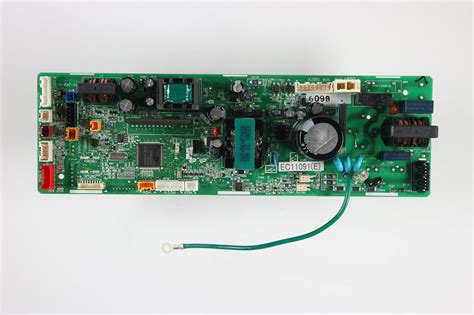
In PCB (printed circuit board) design, the modulation technology of audio transmission signals is the key to achieving high-quality audio signal transmission.
Audio signals usually have a lower frequency range (20 Hz to 20 kHz), so special attention should be paid to signal integrity and anti-interference ability in PCB design. Modulation technology can convert audio signals into a form suitable for transmission, thereby reducing noise and distortion and improving transmission efficiency.
A common modulation technique is pulse width modulation (PWM), which encodes audio signals by changing the width of the pulse.
PWM technology is widely used in digital audio amplifiers because it can efficiently convert digital signals into analog audio signals. In PCB design, the transmission of PWM signals requires special attention to the rise and fall times of the signal to avoid signal distortion. In addition, the interference of high-frequency noise should be minimized in the PCB layout, such as by reasonably planning the direction of the power and ground lines and using decoupling capacitors to filter out high-frequency noise.
Another commonly used modulation technique is orthogonal frequency division multiplexing (OFDM), which decomposes the audio signal into multiple subcarriers, each of which is transmitted at a different frequency. OFDM technology is widely used in wireless audio transmission because it can effectively resist multipath interference and frequency selective fading. In PCB design, the transmission of OFDM signals needs to ensure the orthogonality between the subcarriers to avoid mutual interference between signals. This is usually achieved through precise impedance matching and signal layer layout.
In addition, differential signal transmission is also a common audio signal modulation technology.
Differential signaling cancels common-mode noise by transmitting a pair of signals with opposite phases, thereby improving the signal’s anti-interference ability. In PCB design, the routing of differential signals should be kept symmetrical as much as possible and have the same length to avoid distortion caused by inconsistent signal delays. Impedance control of differential pairs is also key in design, and simulation tools are usually needed to optimize routing parameters.
In short, in PCB design, the modulation technology of audio transmission signals needs to comprehensively consider signal integrity, anti-interference ability and transmission efficiency. By reasonably selecting modulation technology and optimizing PCB layout, the quality and reliability of audio signals can be effectively improved.