
Pad selection for PCB drilling
The requirements for the upper pad for drilling circuit boards are: a certain surface hardness to prevent burrs on the upper surface of the drilling. But it cannot be too hard to wear the drill bit. The resin content of the upper and lower pads themselves cannot be too high, otherwise molten resin balls will be formed and adhered to the hole wall during drilling.
The larger the thermal conductivity, the better, so that the heat generated during drilling can be quickly taken away, the temperature of the drill bit during drilling holes can be reduced, and the drill bit can be prevented from annealing. It must have a certain rigidity to prevent the plate from vibrating when the drill is lifted, and it must have a certain elasticity to deform immediately when the drill bit contacts the drill, so that the drill bit can be accurately aligned with the position of the hole to be drilled, ensuring the accuracy of the drilling position.
The material must be uniform and there must be no impurities to produce uneven nodes of softness and hardness, otherwise the drill bit will easily break. If the surface of the upper pad is hard and slippery, the small diameter drill bit may slip and deviate from the original hole position to drill an elliptical inclined hole on the circuit board.
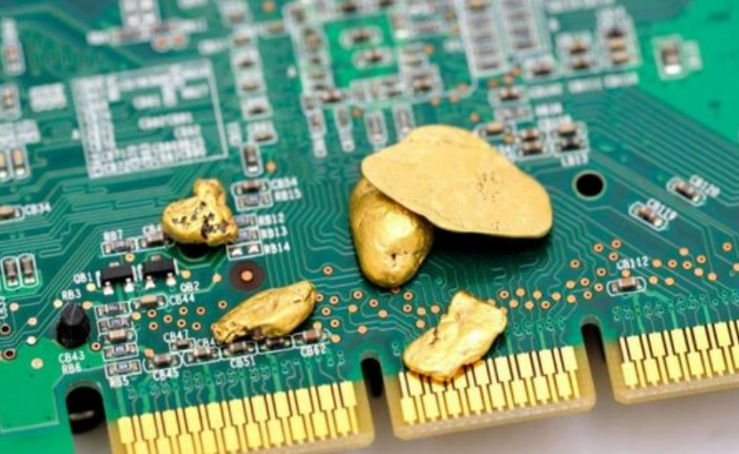
The upper pads used in China are mainly phenolic paper board, epoxy glass cloth board and aluminum foil with a thickness of 0.2-0.5mm.
For example, LF2Y2 (No. 2 rust-proof aluminum in semi-cold hardening state or LF21Y (No. 21 rust-proof aluminum in cold hardening state) with a thickness of 0.3mm has a better effect as the upper pad for drilling holes in ordinary double-sided boards. The appropriate hardness can prevent burrs on the upper surface of the holes. Aluminum has good thermal conductivity and rigid elasticity, which has a certain heat dissipation effect on the drill bit. The material of aluminum foil is more uniform than phenolic board and has no impurities, so the probability of broken drill bits and deviated holes is much smaller than that of phenolic board. It can reduce the drilling temperature and is an environmentally friendly material.
It is increasingly widely used and many factories have already Aluminum foil is used as the upper pad. Compared with phenolic board and epoxy board, the holes may not be contaminated by resin because of the resin contained. The thickness of aluminum foil is usually 0.15, 0.20 and 0.30 mm. In actual use, 0.15 has the best contact with the surface of the board, but the process is not easy to control during cutting, transportation and use. The price of 0.30 is a bit higher. Generally, 0.20 mm aluminum foil is used as a compromise. The actual thickness is generally 0.18 mm.
There is a composite upper pad abroad, the upper and lower layers of which are 0.06 mm aluminum alloy foil, and the middle layer is pure fiber.
The core of the copper foil has a total thickness of 0.35mm. It is not difficult to see that this structure and material can meet the requirements of the upper pad for drilling holes in printed circuit boards. It is used for the upper pad of high-quality multi-layer boards. Compared with aluminum foil, its advantages are: high drilling quality, high hole position accuracy, and increased drill life due to less wear. At the same time, the board recovers its original shape after being subjected to external force much better than aluminum foil, and it is much lighter, especially suitable for drilling small holes.
The lower pads used in China include phenolic paper board, cardboard, and wood chip board. Cardboard is soft and easy to produce burrs, but the texture is uniform and it is not easy to break the drill bit or bite the drill bit, but it is cheap and can be used in thin copper foil or single-sided boards. The texture of wood chip board is more uniform. Poor, the hardness is better than paper board, but if the copper foil of the circuit board drilled is larger than 35 microns, burrs will be generated. I have tried to use this board to drill a double-sided board with 70 micron copper foil, and all failed. The best hardness and uniformity of phenolic paper board are between the first two. It has the best effect, but it is more expensive and not environmentally friendly.
Similarly, there is a composite bottom plate abroad, the upper and lower layers of which are 0.06mm aluminum alloy foil, the middle layer is a pure fiber core, and the total thickness is 1.50mm. Of course, the performance is very outstanding and environmentally friendly, far exceeding phenolic paper board, especially when drilling multi-layer boards and small diameter holes, its advantages can be fully reflected. The disadvantage is of course the high price.