
The Comprehensive Guide to Green PCB Boards: Manufacturing, Advantages, and Applications
Introduction
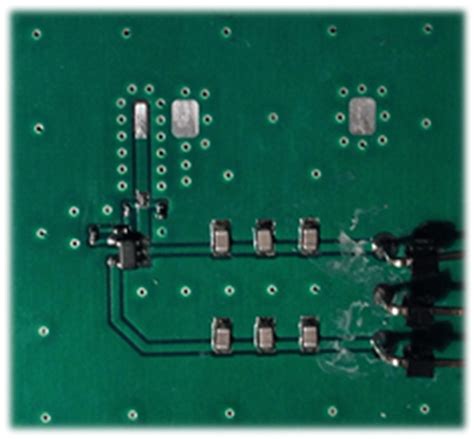
Printed Circuit Boards (PCBs) are the backbone of modern electronics, providing mechanical support and electrical connections for electronic components. Among the various types of PCBs, green PCB boards are the most commonly used. The green color comes from the solder mask, a protective layer that prevents short circuits and oxidation.
This article explores green PCB boards in detail, covering their manufacturing process, advantages, disadvantages, applications, and comparisons with other colored PCBs.
1. Why Are Most PCBs Green?
The green color in PCBs is due to the solder mask, a polymer layer applied to protect copper traces from environmental damage and prevent solder bridges during assembly. Historically, green became the standard due to several reasons:
- Military and Industrial Standards: Early PCBs were developed for military applications, where green was preferred for its reliability and contrast with white silkscreen markings.
- Optical Inspection Benefits: Green provides good contrast for automated optical inspection (AOI) systems, making it easier to detect defects.
- Availability and Cost: Green solder mask materials were widely available and cost-effective, leading to mass adoption.
While green remains dominant, modern PCBs come in various colors (blue, red, black, white), but green still holds over 70% of the market share.
2. Manufacturing Process of Green PCB Boards
The production of green PCBs follows standard PCB fabrication steps, with the solder mask application being the key differentiator.
Step 1: Design and Layout
- Engineers design the circuit using EDA (Electronic Design Automation) software.
- The design includes copper traces, component placements, and drill holes.
Step 2: Substrate Preparation
- The base material is usually FR-4 (Flame Retardant-4), a fiberglass-epoxy laminate.
- Copper foil is laminated onto the substrate.
Step 3: Etching
- A photoresist layer is applied, exposed to UV light, and developed to form the circuit pattern.
- Unwanted copper is etched away using chemicals (e.g., ferric chloride).
Step 4: Solder Mask Application (Green Layer)
- The green solder mask is applied via screen printing or photoimaging.
- The board is exposed to UV light to cure the mask, leaving openings for soldering.
Step 5: Silkscreen Printing
- Component labels, logos, and identifiers are printed in white or yellow ink.
Step 6: Surface Finish
- A surface finish (e.g., HASL, ENIG, OSP) is applied to prevent oxidation.
Step 7: Testing and Inspection
- Automated optical inspection (AOI) and electrical testing ensure quality.
3. Advantages of Green PCB Boards
✅ Better for Automated Optical Inspection (AOI)
- The high contrast between green solder mask and white silkscreen improves defect detection.
✅ Cost-Effective and Widely Available
- Green solder mask materials are cheaper due to economies of scale.
✅ Good Thermal and Mechanical Properties
- The epoxy-based green solder mask provides excellent heat resistance and durability.
✅ Military and Industrial Reliability
- Green PCBs have a long history of use in high-reliability applications.
✅ Easier Rework and Debugging
- Engineers are accustomed to working with green PCBs, making troubleshooting easier.
4. Disadvantages of Green PCB Boards
❌ Aesthetic Limitations
- Some consumer electronics prefer colored PCBs (e.g., black for high-end gadgets).
❌ Not Ideal for All Lighting Conditions
- Under certain lighting, green may cause eye strain during manual inspection.
❌ Slightly Higher Reflectivity Than Dark PCBs
- Darker PCBs (black, blue) reduce glare in some applications.
5. Applications of Green PCB Boards
Green PCBs are used in nearly every industry, including:
- Consumer Electronics: TVs, smartphones, laptops.
- Automotive Electronics: Engine control units (ECUs), infotainment systems.
- Medical Devices: MRI machines, pacemakers.
- Industrial Equipment: PLCs, robotics.
- Aerospace & Defense: Avionics, radar systems.
6. Green vs. Other PCB Colors
| Feature | Green PCB | Black PCB | Blue PCB | Red PCB | White PCB |
|---|---|---|---|---|---|
| Cost | Lowest | Higher | Moderate | Moderate | Highest |
| AOI Performance | Best | Good | Good | Good | Poor |
| Heat Dissipation | Good | Best | Moderate | Moderate | Poor |
| Aesthetics | Standard | Premium | Modern | High-Visibility | Clean Look |
| Reflectivity | Moderate | Low | Moderate | High | Very High |
Conclusion: Green remains the best all-around choice, while other colors serve niche needs.
7. Future Trends in PCB Colors
- High-Tech Applications: Black PCBs are gaining popularity in premium electronics.
- Customization: Some brands use colored PCBs for branding (e.g., red for gaming motherboards).
- Improved Materials: New solder mask formulations may offer better performance in non-green variants.
However, green PCBs will likely remain dominant due to their reliability and cost benefits.
Conclusion
Green PCB boards are the industry standard for a reason—they offer the best balance of cost, reliability, and manufacturability. While alternative colors exist for aesthetic or specialized purposes, green PCBs continue to dominate consumer, industrial, and military applications.
As PCB technology evolves, we may see more color options, but green will remain the go-to choice for most engineers.