
The Comprehensive Guide to CNC PCB Manufacturing
Introduction
Printed Circuit Boards (PCBs) are the backbone of modern electronics, enabling the interconnection of electronic components in devices ranging from smartphones to industrial machinery. While traditional PCB manufacturing relies on chemical etching, Computer Numerical Control (CNC) machining offers a faster, more precise, and environmentally friendly alternative for prototyping and low-volume production.
1. What is CNC PCB Manufacturing?
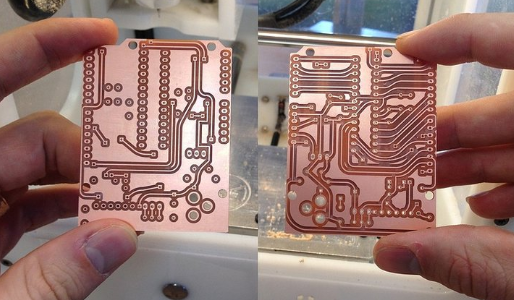
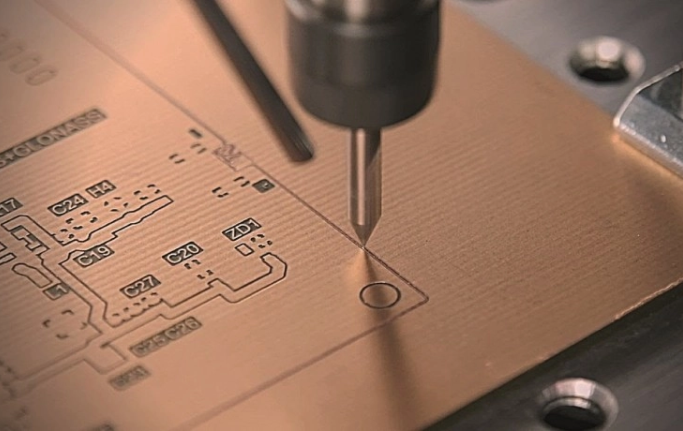
CNC PCB manufacturing involves using a computer-controlled milling machine to mechanically remove copper from a substrate to create circuit traces, pads, and holes. Unlike traditional methods that use chemicals (such as ferric chloride for etching), CNC machining is a subtractive process where a rotating cutter carves out the desired conductive pathways.
Key Components of a CNC PCB Machine
- Spindle: Rotates the cutting tool at high speeds (typically 10,000–100,000 RPM).
- Cutting Tools (End Mills): Small-diameter bits (0.1–3.0 mm) for precision routing.
- Work Bed: Holds the PCB material in place (often with vacuum suction).
- Control Software: Converts PCB design files (Gerber or G-code) into machine movements.
2. Advantages of CNC PCB Machining
1. Rapid Prototyping
- No need for chemical processing or masks—ideal for quick design iterations.
- Same-day PCB fabrication is possible with CNC milling.
2. No Chemical Waste
- Eliminates hazardous etchants like ferric chloride, making it eco-friendly.
- Reduces disposal costs and safety concerns.
3. High Precision
- Can achieve trace widths as small as 0.1 mm (4 mils).
- Suitable for high-frequency and RF circuits where precision is critical.
4. Flexibility in Materials
- Works with FR4, aluminum, Rogers, and flexible PCBs.
- Can also mill enclosures and solder stencils.
5. Single or Double-Sided PCBs
- Some CNC machines support double-sided milling with alignment features.
3. CNC PCB Manufacturing Process
Step 1: PCB Design & File Preparation
- Design the PCB using software like KiCad, Eagle, or Altium.
- Export Gerber files (for traces) and Excellon files (for drill holes).
- Convert files to G-code using CAM software (e.g., FlatCAM, Bantam Tools).
Step 2: Material Setup
- Secure a copper-clad board on the CNC bed.
- Ensure proper leveling to avoid uneven milling.
Step 3: Tool Selection & Calibration
- Choose appropriate end mills:
- V-bit (30°–60°): For fine traces.
- Flat end mill: For clearing large copper areas.
- Calibrate spindle speed, feed rate, and depth of cut.
Step 4: Milling the PCB
- The CNC machine follows the G-code to:
- Isolate traces by removing excess copper.
- Drill holes for vias and component leads.
- Cut the board outline.
Step 5: Post-Processing
- Deburring: Smooth rough edges.
- Cleaning: Remove copper dust.
- Inspection: Verify trace continuity (multimeter or automated optical inspection).
4. Challenges & Limitations of CNC PCB Machining
1. Slower for Mass Production
- Chemical etching is faster for large batches.
- CNC is best for prototypes and small-scale production.
2. Limited to Simpler Designs
- Very fine pitch components (e.g., BGA, 0.2mm traces) may be difficult.
- Multilayer PCBs require manual layer alignment.
3. Tool Wear & Breakage
- Small end mills can break if fed too aggressively.
- Requires regular tool replacement.
4. Surface Finish Differences
- Milled PCBs have rougher edges than etched ones.
- May need manual solder mask application.
5. Comparing CNC vs. Traditional PCB Manufacturing
| Feature | CNC PCB Milling | Chemical Etching | Laser Ablation |
|---|---|---|---|
| Speed | Medium | Fast (batch) | Fast (single) |
| Precision | High (0.1mm) | Medium (0.2mm) | Very High (0.05mm) |
| Material Waste | Low (only removed copper) | High (chemicals) | Medium (vaporized copper) |
| Cost (Prototype) | Low | Medium | High |
| Environmental Impact | Low (no chemicals) | High (toxic waste) | Medium (laser energy) |
6. Future Trends in CNC PCB Manufacturing
1. Hybrid CNC-Laser Systems
- Combining CNC milling with laser etching for ultra-fine traces.
2. Automated Tool Changers
- Reducing manual intervention for multi-step PCB milling.
3. AI-Based Optimization
- Machine learning for adaptive feed rates to prevent tool breakage.
4. Desktop CNC Machines
- Affordable hobbyist-friendly CNC mills (e.g., Bantam Tools, Stepcraft).
5. Integration with 3D Printing
- Hybrid additive-subtractive manufacturing for embedded electronics.
Conclusion
CNC PCB machining is a versatile, eco-friendly, and precise alternative to traditional etching, making it ideal for prototyping, educational use, and low-volume production. While it has limitations in mass production and ultra-fine pitch designs, advancements in hybrid machining, automation, and AI are expanding its capabilities.
For engineers, makers, and small businesses, investing in a CNC PCB mill can significantly accelerate development cycles while reducing environmental impact. As technology evolves, CNC-based PCB fabrication will continue to play a crucial role in electronics innovation.