
Flexible PCB Panel: Design, Benefits, and Applications
Introduction
Printed Circuit Boards (PCBs) are essential components in modern electronics, providing mechanical support and electrical connections for electronic components. Traditional rigid PCBs have been widely used for decades, but the growing demand for compact, lightweight, and flexible electronic devices has led to the rise of Flexible PCBs (FPCBs).
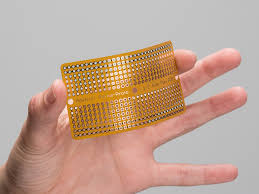
A Flexible PCB Panel refers to an array of multiple flexible circuits arranged on a single sheet for efficient manufacturing. These panels allow for cost-effective mass production while maintaining the advantages of flexibility, durability, and space-saving design. This article explores the design considerations, benefits, applications, and challenges associated with flexible PCB panels.
1. Design Considerations for Flexible PCB Panels
Designing a flexible PCB panel requires careful planning to ensure manufacturability, reliability, and performance. Key factors include:
1.1 Material Selection
Flexible PCBs are typically made from polyimide (PI) or polyester (PET) substrates due to their excellent thermal stability, flexibility, and electrical insulation properties. Key materials include:
- Base Material: Polyimide (most common) or PET for cost-sensitive applications.
- Conductive Layers: Copper (electrodeposited or rolled annealed).
- Adhesives: Acrylic or epoxy-based adhesives for layer bonding.
- Coverlay: Protective layer (often polyimide) to shield circuits from environmental damage.
1.2 Panelization Techniques
Panelization involves arranging multiple flexible circuits on a single panel for efficient fabrication. Common methods include:
- Tab Routing: Small tabs hold individual PCBs in place, allowing easy depaneling.
- V-Scoring: Partial cuts (V-grooves) facilitate breaking apart PCBs after assembly.
- Laser Cutting: Precision cutting for complex shapes.
1.3 Bend Radius and Flexibility
Flexible PCBs must be designed with an appropriate bend radius to prevent cracking or delamination. The minimum bend radius depends on:
- Material thickness (thinner PCBs bend more easily).
- Copper type (rolled annealed copper is more flexible than electrodeposited).
- Layer count (single-layer PCBs are more flexible than multi-layer ones).
1.4 Trace Routing and Spacing
- Avoid sharp corners to reduce stress points.
- Use curved traces for better flexibility.
- Maintain proper spacing to prevent short circuits during bending.
1.5 Stiffeners and Reinforcement
Some flexible PCB designs require stiffeners (e.g., FR4 or polyimide) in areas where components are mounted to provide mechanical support.

2. Benefits of Flexible PCB Panels
Flexible PCB panels offer several advantages over traditional rigid PCBs:
2.1 Space and Weight Savings
- Flexible circuits can be bent, folded, or twisted, enabling compact designs in wearables, medical devices, and aerospace applications.
- Reduced weight compared to rigid PCBs with connectors.
2.2 Enhanced Durability
- Resistant to vibrations, shocks, and mechanical stress.
- Suitable for dynamic applications (e.g., folding smartphones, robotic arms).
2.3 Improved Signal Integrity
- Fewer connectors reduce signal loss and electromagnetic interference (EMI).
- High-speed signal transmission in applications like 5G and IoT.
2.4 Cost-Effective Manufacturing
- Panelization reduces material waste and assembly time.
- Suitable for high-volume production.
2.5 Thermal Management
- Polyimide substrates dissipate heat efficiently.
- Can withstand high-temperature soldering processes.
3. Applications of Flexible PCB Panels
Flexible PCB panels are used in various industries due to their versatility:
3.1 Consumer Electronics
- Smartphones & Tablets: Flexible PCBs enable foldable displays and compact internal layouts.
- Wearables: Smartwatches, fitness trackers, and AR/VR headsets.
3.2 Medical Devices
- Implantable Devices: Pacemakers, hearing aids.
- Diagnostic Equipment: Flexible sensors for monitoring.
3.3 Automotive Industry
- Dashboard Displays: Curved and flexible circuits for modern dashboards.
- LED Lighting: Flexible PCBs in adaptive headlights.
3.4 Aerospace & Defense
- Satellites & UAVs: Lightweight, high-reliability circuits.
- Military Equipment: Ruggedized flexible PCBs for harsh environments.
3.5 Industrial & IoT Applications
- Robotics: Flexible circuits in robotic joints.
- Smart Sensors: IoT devices requiring bendable electronics.
4. Challenges and Solutions in Flexible PCB Panel Manufacturing
Despite their advantages, flexible PCB panels present some challenges:
4.1 Handling and Assembly Difficulties
- Thin and delicate materials require specialized handling.
- Solution: Automated assembly with precision pick-and-place machines.
4.2 Higher Initial Costs
- Flexible PCBs may cost more than rigid PCBs due to specialized materials.
- Solution: Economies of scale in panelized production reduce per-unit costs.
4.3 Thermal and Mechanical Stress
- Repeated bending can cause fatigue.
- Solution: Proper design (adequate bend radius, strain relief).
4.4 Complex Testing and Inspection
- Flexible circuits require advanced testing methods (e.g., automated optical inspection).
- Solution: In-circuit testing (ICT) and flying probe testing.
5. Future Trends in Flexible PCB Panals
The flexible PCB market is evolving with new technologies:
- Stretchable Electronics: Emerging materials allow fully stretchable circuits.
- 3D Printed Flexible PCBs: Additive manufacturing for rapid prototyping.
- Hybrid Rigid-Flex PCBs: Combining rigid and flexible sections for complex designs.
Conclusion
Flexible PCB panels are revolutionizing electronics by enabling lightweight, durable, and space-efficient designs. Their applications span consumer electronics, medical devices, automotive systems, and aerospace. While challenges exist in manufacturing and assembly, advancements in materials and panelization techniques continue to drive adoption.
As technology progresses, flexible PCBs will play an even greater role in next-generation electronics, paving the way for innovations like foldable smartphones, wearable health monitors, and advanced IoT devices.
By understanding the design principles, benefits, and challenges of flexible PCB panels, engineers and manufacturers can leverage their full potential in modern electronic applications.