
Skip to content
Andwin Circuits
  • Home
  • ProductsExpand
    • HDI multilayer PCB
    • Rigid Flex PCB
    • Flex pcb
    • Special PCBExpand
      • High Frequency PCBExpand
        • Rogers RO4350B PCB
        • Rogers RO4003 pcb
        • Rogers RO3003 PCB
        • Rogers 5880 PCB
        • DICLAD 527 PCB
        • Taconic TLX series
        • Taconic TLX-8 RF PCB
        • Taconic TLX-9 RF PCB
      • High speed pcbExpand
        • Megtron 6 High Speed PCB
        • TU-872 SLK Sp High Speed
      • High TG PCBExpand
        • SHENGYI SH260 PCB
        • ISOLA 370HR PCB
        • ISOLA IS410 PCB
        • ISOLA IS420 PCB
      • Heavy copper PCB
      • Copper coin pcb
      • Copper inlay PCB
    • Metal Core PCBExpand
      • Copper core pcb
      • Aluminum PCB
      • 2 Layers Aluminum PCB
      • Direct thermal MCPCB
      • 2 Layers Direct Thermal
    • Ceramic PCBExpand
      • DPC ceramic PCB
      • DBC ceramic PCB
      • Thick film Ceramic PCB
      • Al2O3 Alumina PCB
      • AIN ALN ceramic PCB
      • IGBT Ceramic PCB
  • ServiceExpand
    • PCB Assembly
    • Quick turn PCB assembly
    • PCBA conformal coating
  • IndustryExpand
    • Telecommunication
    • IoT and Wireless
    • Industrial Control
    • Thermal management
    • Power and Energy
    • IC test board
    • Automative
    • Medical
  • CapabilityExpand
    • Rigid PCB
    • Rigid flex PCB
    • Metal core PCB
    • PCB Assembly
  • TechnologyExpand
    • Blogs
    • Via in pad
    • PCB E-test
    • PCB stack up
    • MCPCB panelization
    • Controlled impedance PCB
  • AboutExpand
    • About us
    • Certification
    • Factory Tour
  • Contact
Andwin Circuits
Home / The Meaning and Design Challenges of PCB Copper

The Meaning and Design Challenges of PCB Copper

ByGrace June 12, 2025June 12, 2025

Introduction

Printed Circuit Boards (PCBs) are the backbone of modern electronics, providing mechanical support and electrical connections for electronic components. One of the most critical materials in PCB manufacturing is copper, which serves as the conductive pathway for electrical signals. The proper use of copper in PCB design significantly impacts the board’s performance, reliability, and manufacturability.

This article explores the meaning of PCB copper, its role in circuit design, and the key challenges engineers face when designing PCBs with copper traces, planes, and pads.

The Role of Copper in PCBs

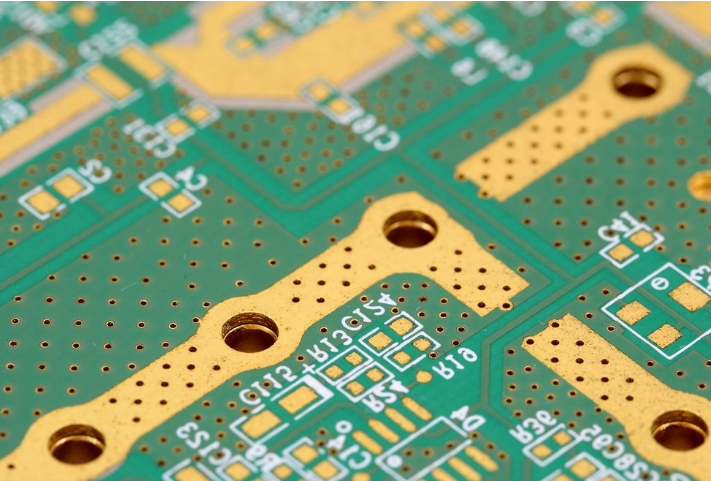
Copper is the primary conductive material used in PCBs due to its excellent electrical conductivity, thermal properties, and cost-effectiveness. It forms the conductive pathways (traces), pads, and planes that connect different components on the board.

1. Copper Traces

  • These are thin lines of copper that carry electrical signals between components.
  • Width and thickness determine current-carrying capacity and impedance.

2. Copper Planes (Power and Ground Planes)

  • Large copper areas provide low-impedance power distribution and heat dissipation.
  • Reduce electromagnetic interference (EMI) by acting as shielding layers.

3. Copper Pads and Vias

  • Pads provide connection points for component leads.
  • Vias are plated copper holes that connect different PCB layers.

The amount of copper used in a PCB is measured in ounces per square foot (oz/ft²), with common thicknesses being 0.5 oz, 1 oz, and 2 oz.
Contact us for PCB quote now |

Key Design Challenges with PCB Copper

While copper is essential for PCB functionality, its use introduces several design and manufacturing challenges. Below are the most critical difficulties engineers must address.

1. Copper Thickness and Current Carrying Capacity

  • Challenge: Thin traces may overheat or fail under high current.
  • Solution: Use trace width calculators based on IPC-2152 standards to determine appropriate thickness.

2. Signal Integrity and Impedance Control

  • Challenge: High-speed signals require controlled impedance traces.
  • Solution: Precise trace width, dielectric material selection, and reference plane management.

3. Thermal Management

  • Challenge: Excessive current can cause copper to heat up, leading to thermal stress.
  • Solution: Use thermal relief pads, copper pours, and heat sinks.

4. Electromagnetic Interference (EMI) and Crosstalk

  • Challenge: High-frequency signals can induce noise in adjacent traces.
  • Solution: Proper grounding, spacing, and shielding techniques.

5. Manufacturing Tolerances and Etching Issues

  • Challenge: Over-etching can lead to thinner traces, while under-etching causes shorts.
  • Solution: Follow Design for Manufacturing (DFM) guidelines and work closely with PCB fabricators.

6. Copper Balancing for Multilayer PCBs

  • Challenge: Uneven copper distribution can cause warping during lamination.
  • Solution: Symmetrical copper distribution and proper stack-up design.

7. High-Frequency and RF Considerations

  • Challenge: Skin effect increases resistance at high frequencies.
  • Solution: Use thicker copper or specialized surface treatments.

8. Corrosion and Oxidation Prevention

  • Challenge: Exposed copper can oxidize, leading to poor solderability.
  • Solution: Apply surface finishes like ENIG (Electroless Nickel Immersion Gold) or HASL (Hot Air Solder Leveling).
Contact us for PCB quote now |

Conclusion

Copper is a fundamental material in PCB design, enabling electrical connectivity and thermal management. However, its use introduces challenges related to current handling, signal integrity, thermal dissipation, EMI, and manufacturability. Engineers must carefully consider copper thickness, trace geometry, and layout strategies to ensure reliable PCB performance.

By understanding these challenges and applying best practices in PCB design, manufacturers can produce high-quality boards that meet the demands of modern electronics.

Contact us for PCB quote now |
Post Tags: #aluminum clad pcb#aluminum core pcb#aluminum pcb#assemble pcb#pcb copper

Post navigation

Previous Previous
How to Conduct High and Low Temperature Testing for PCB Boards
NextContinue
The Necessity of Copper Pour in PCB Design

Search

Search

Products

  • HDI Multilayer PCB
  • Rigid Flex PCB
  • Flex pcb
  • High Frequency PCB
  • High speed pcb
  • Heavy copper PCB
  • Metal Core PCB
  • Ceramic PCB

Address

Andwin Circuits Co.,Limited
Email: sales@andwinpcb.com
Tel: +86 755 2832 9394
Fax:+86 755 2992  6717
ADD:1-2F-1217,HouDeQun Industrial park,
NanTing RD NO.56,ShaJing,BaoAn,Shenzhen 518104,GuangDong,China

Products

  • HDI Multilayer PCB
  • Rigid Flex PCB
  • Flex pcb
  • High Frequency PCB
  • High speed pcb
  • Heavy copper PCB
  • Metal Core PCB
  • Ceramic PCB

Technology

  • Blogs
  • Via in pad
  • PCB E-test
  • PCB stack up
  • Metal core PCB panelization
  • Controlled impedance PCB

CERTIFICATION

Certification >>


Copyright© 2003 - 2026 Andwin | All Rights Reserved | Powered by Andwin

Scroll to top
  • Home
  • Products
    • HDI multilayer PCB
    • Rigid Flex PCB
    • Flex pcb
    • Special PCB
      • High Frequency PCB
        • Rogers RO4350B PCB
        • Rogers RO4003 pcb
        • Rogers RO3003 PCB
        • Rogers 5880 PCB
        • DICLAD 527 PCB
        • Taconic TLX series
        • Taconic TLX-8 RF PCB
        • Taconic TLX-9 RF PCB
      • High speed pcb
        • Megtron 6 High Speed PCB
        • TU-872 SLK Sp High Speed
      • High TG PCB
        • SHENGYI SH260 PCB
        • ISOLA 370HR PCB
        • ISOLA IS410 PCB
        • ISOLA IS420 PCB
      • Heavy copper PCB
      • Copper coin pcb
      • Copper inlay PCB
    • Metal Core PCB
      • Copper core pcb
      • Aluminum PCB
      • 2 Layers Aluminum PCB
      • Direct thermal MCPCB
      • 2 Layers Direct Thermal
    • Ceramic PCB
      • DPC ceramic PCB
      • DBC ceramic PCB
      • Thick film Ceramic PCB
      • Al2O3 Alumina PCB
      • AIN ALN ceramic PCB
      • IGBT Ceramic PCB
  • Service
    • PCB Assembly
    • Quick turn PCB assembly
    • PCBA conformal coating
  • Industry
    • Telecommunication
    • IoT and Wireless
    • Industrial Control
    • Thermal management
    • Power and Energy
    • IC test board
    • Automative
    • Medical
  • Capability
    • Rigid PCB
    • Rigid flex PCB
    • Metal core PCB
    • PCB Assembly
  • Technology
    • Blogs
    • Via in pad
    • PCB E-test
    • PCB stack up
    • MCPCB panelization
    • Controlled impedance PCB
  • About
    • About us
    • Certification
    • Factory Tour
  • Contact
Search