
Concept and treatment of residual copper rate in PCB manufacturing
Concept of residual copper rate in PCB manufacturing: The manufacturing process of PCB starts with a PCB “substrate” made of glass epoxy or similar materials. The first step in manufacturing is to light-draw the PCB design wiring for the connection between parts. The method is to use negative transfer (Subtractive transfer) to “print” the circuit film of the designed PCB circuit board on the metal conductor.
This technique is to cover the entire surface with a thin layer of copper foil and eliminate the excess part. If a double-sided board is made, copper foil will be laid on both sides of the PCB substrate. To make a multi-layer board, the two double-sided boards can be “pressed” together with a special adhesive.
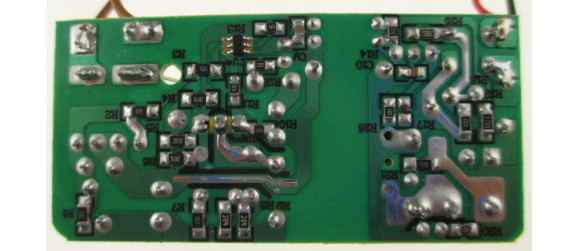
Next, the drilling and electroplating required for connecting components can be performed on the PCB board. After the machine equipment drills the holes according to the drilling requirements, the hole wall must be electroplated (Plated-Through-Hole technology, PTH). After the metal treatment inside the hole wall, the internal layers of the circuit can be connected to each other.
Before starting electroplating, the debris in the hole must be cleared. This is because the resin epoxy will produce some chemical changes after heating, and it will cover the internal PCB layer, so it must be cleared first. Both the cleaning and electroplating actions are completed in the chemical process. Next, the solder mask (solder mask ink) needs to be covered on the outermost PCB design wiring, so that the PCB design wiring will not contact the electroplated part.
Then the various component markings are printed on the circuit board to mark the location of each part. It cannot cover any PCB design wiring or gold fingers, otherwise it may reduce the solderability or the stability of the current connection. In addition, if there is a metal connection part, the “gold finger” part is usually plated with gold, so that when inserting the expansion slot, high-quality current connection can be ensured. Finally, it is testing. To test whether the PCB has a short circuit or a break, optical or electronic methods can be used. The optical method uses scanning to find defects in each layer, and electronic testing usually uses a flying probe to check all connections. Electronic testing is more accurate in finding short circuits or open circuits, but optical testing can more easily detect problems with incorrect gaps between conductors.
After the circuit board substrate is completed, a finished motherboard is equipped with various large and small components on the PCB substrate as needed – first use the SMT automatic placement machine to “weld” the IC chip and the patch components, and then manually connect some work that the machine cannot do, and use the wave crest/reflow soldering process to firmly fix these plug-in components on the PCB, so a motherboard is produced.
Treatment method: Flooring:
- Floor maintenance:
To maintain wooden floors, you must first maintain the paint film on the surface and not damage its “appearance”. However, since the paint film on the surface of wood is different, the maintenance methods are also different.
Nitro wood varnish floor: It is not advisable to wipe with a wet cloth or water to avoid losing gloss and peeling. Every six months or several months, apply polishing wax, and then wipe with clean cotton yarn. Usually use a soft towel or cotton yarn to wipe off the dust on the paint film. Note Be careful to prevent exposure and smoke.
Lacquer and lacquer floors: Do not wipe frequently with low-temperature water.
Polyurethane paint floors: Do not wipe with water to avoid wiping off the surface lipids and reducing the surface gloss.
Alkyd varnish floors: When using, you can wipe with a wet cloth or soft towel. It is not suitable to place hot objects on this floor, and do not cover the surface with plastic paper or paper.
Secondly, the maintenance of wooden floors should also pay attention to avoid scratches on the floor by hard objects such as heavy metal sharp objects, glass tiles, and shoe nails. When moving furniture, do not drag on the floor surface; avoid stepping on cigarette butts on the floor, placing acidic and alkaline objects; and do not directly place high-temperature objects such as kettles and stoves.
After a long period of use, wooden floors will become old and should be painted in time. There are two ways to paint: one is to paint and color directly, the method is the same as wooden furniture, and it can be painted after drying. Floor wax, secondly, does not require any color as a base color, nor does it require any paint, but can be directly wiped with floor wax. Because wooden flooring is a natural material, it is not only durable, but also becomes more perfect and more natural with the passage of time, especially pure waxed wooden flooring, which will become particularly bright, smooth and beautiful.
2.Maintenance of laminate flooring
The use and maintenance of laminate flooring is relatively simple. In daily use, as long as you pay attention to the following points, you can ensure the normal use of the floor.
(1) All wooden floors will change their moisture content with the increase or decrease of environmental humidity or temperature changes, affecting the expansion and contraction of the floor. Therefore, you should maintain a reasonable moisture content of the floor like protecting your skin.
(2) The floor does not need to be waxed or painted. Do not use sandpaper to polish it.
(3) It is recommended to place a stepping mat at the door to prevent dust particles from being brought in and damaging the floor.
(4) Floor surface Please use household detergent to clean the stains and oil stains on the floor. Do not use a lot of water to clean the floor.
(5) In the dry northern regions, pay attention to increasing the humidity of the floor surface in winter. Use a damp mop to mop the floor and increase the surface humidity appropriately. This can effectively solve the problem of cracks and cracks in the floor. If cracks occur in some locations, please notify the sales unit in time to fill the local area. After filling, increase the surface humidity appropriately to facilitate the recovery of the floor.
(6) In the rainy season, please keep the windows closed to avoid rain.
(7) Pay attention to the maintenance of indoor facilities such as heating and air conditioning to prevent water leakage and soaking of the floor. If the floor is found to be soaked in water, the soaked floor should be removed as soon as possible and dried in a cool place or the sales unit should be notified in time for disposal.
(8) At the entrance of the bathroom and kitchen, pay attention to the timely cleaning of accumulated water.
(9) Do not drag when moving furniture. It is better to lift it.