
Skip to content
Andwin Circuits
  • Home
  • ProductsExpand
    • HDI multilayer PCB
    • Rigid Flex PCB
    • Flex pcb
    • Special PCBExpand
      • High Frequency PCBExpand
        • Rogers RO4350B PCB
        • Rogers RO4003 pcb
        • Rogers RO3003 PCB
        • Rogers 5880 PCB
        • DICLAD 527 PCB
        • Taconic TLX series
        • Taconic TLX-8 RF PCB
        • Taconic TLX-9 RF PCB
      • High speed pcbExpand
        • Megtron 6 High Speed PCB
        • TU-872 SLK Sp High Speed
      • High TG PCBExpand
        • SHENGYI SH260 PCB
        • ISOLA 370HR PCB
        • ISOLA IS410 PCB
        • ISOLA IS420 PCB
      • Heavy copper PCB
      • Copper coin pcb
      • Copper inlay PCB
    • Metal Core PCBExpand
      • Copper core pcb
      • Aluminum PCB
      • 2 Layers Aluminum PCB
      • Direct thermal MCPCB
      • 2 Layers Direct Thermal
    • Ceramic PCBExpand
      • DPC ceramic PCB
      • DBC ceramic PCB
      • Thick film Ceramic PCB
      • Al2O3 Alumina PCB
      • AIN ALN ceramic PCB
      • IGBT Ceramic PCB
  • ServiceExpand
    • PCB Assembly
    • Quick turn PCB assembly
    • PCBA conformal coating
  • IndustryExpand
    • Telecommunication
    • IoT and Wireless
    • Industrial Control
    • Thermal management
    • Power and Energy
    • IC test board
    • Automative
    • Medical
  • CapabilityExpand
    • Rigid PCB
    • Rigid flex PCB
    • Metal core PCB
    • PCB Assembly
  • TechnologyExpand
    • Blogs
    • Via in pad
    • PCB E-test
    • PCB stack up
    • MCPCB panelization
    • Controlled impedance PCB
  • AboutExpand
    • About us
    • Certification
    • Factory Tour
  • Contact
Andwin Circuits
Home / What is the most direct way to determine the number of PCB layers?

What is the most direct way to determine the number of PCB layers?

ByGrace July 5, 2025July 5, 2025

1.Visual inspection

    Since the layers in the PCB are tightly combined, it is generally not easy to see the actual number, but if you carefully observe the board fault, you can still distinguish it. If you are careful, we will find that there is one or more layers of white material in the middle of the PCB. In fact, this is the insulation layer between the layers, which is used to ensure that there will be no short circuit between different PCB layers. Because the current multi-layer PCB boards use more single- or double-sided wiring boards, and put an insulation layer between each layer of the board and press it together, the number of layers of the PCB board represents how many independent wiring layers there are, and the insulation layer between the layers has become the most intuitive way for us to judge the number of layers of the PCB.
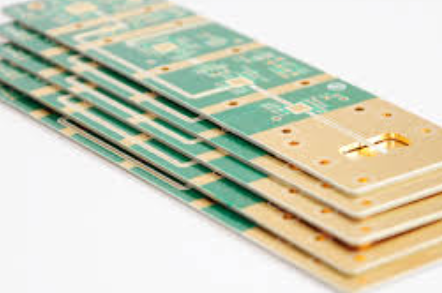
    How to see the number of PCB layers

    2.Guide hole and blind hole light method

      The guide hole light method uses the “guide hole” on the PCB to identify the number of PCB layers. The principle is mainly because the circuit connection of the multi-layer PCB uses the guide hole technology. If we want to see how many layers the PCB has, we can identify it by observing the guide hole.

      On the most basic PCB (single-sided motherboard), the parts are concentrated on one side, and the wires are concentrated on the other side. If you want to use a multi-layer board, you need to punch holes in the board so that the component pins can pass through the board to the other side, so the guide holes will penetrate the PCB board. Therefore, we can see that the pins of the parts are soldered on the other side.

      For example, if the board uses a 4-layer board, it is necessary to route on the 1st and 4th layers (signal layers), and the other layers have other uses (ground layer and power layer). The purpose of placing the signal layer on both sides of the power layer and the ground layer is to prevent mutual interference and facilitate correction of the signal line. If some board guide holes appear on the front of the PCB board, but cannot be found on the back, then it must be a 6/8-layer board. If the same guide holes can be found on both sides of the PCB board, it is naturally a 4-layer board.

      However, many board manufacturers currently use another routing method, which is to connect only some of the lines, and use buried holes and blind hole technology in the routing. Blind holes connect several layers of internal PCB to the surface PCB without penetrating the entire circuit board.

      Buried vias only connect the internal PCB, so they cannot be seen from the surface. Since blind vias do not need to penetrate the entire PCB, if there are six layers or more, the light will not pass through when the board is facing the light source. Therefore, there was a very popular saying before: judge whether the PCB is four-layer or six-layer or more by whether the vias leak light. This method has its reasons, but it is also not applicable. It can be used as a reference method.

      3.Accumulation method

        To be precise, this is not a method, but an experience. However, this is what we think is the most accurate. We can judge the number of layers of the PCB by the routing and component positions of some public board PCB boards. Because in the current IT hardware industry where the update is so fast, there are not many manufacturers who have the ability to redesign the PCB.

        For example, a few years ago, a large number of 9550 graphics cards used a 6-layer PCB design. Careful friends can compare how much difference there is between it and the 9600PRO or 9600XT board type? Only some components are omitted, and the PCB is highly consistent.

        In the 1990s, there was a popular saying that the number of PCB layers can be seen by placing the PCB vertically, and many people believed it. This statement was later proved to be nonsense. Even if the manufacturing process at that time was backward, how could the eyes distinguish the distance thinner than a hair? Later, this method continued and modified, and gradually evolved into another measurement method. Now many people believe that the number of PCB layers can be measured with precision measuring instruments such as “vernier calipers”, and we dare not agree with this statement.

        Regardless of whether there is such a precision instrument, why can’t we see that the 12-layer PCB is 3 times thicker than the 4-layer one? Different PCBs will use different manufacturing processes, and there is no unified standard for measurement. How to judge the number of layers based on thickness?

        In fact, the number of PCB layers has a great impact on the board. For example, why do you need to use at least 6-layer PCBs to install dual CPUs? Because this allows the PCB to have 3 or 4 signal layers, 1 ground layer, and 1 or 2 power layers. Then the signal lines can be far enough apart to reduce interference with each other and have sufficient current supply. However, a 4-layer PCB design is sufficient for general motherboards. Using a 6-layer PCB is too costly and does not provide much performance improvement.

        Contact us for PCB quote now |
        Post Tags: #aluminum clad pcb#aluminum core pcb#aluminum pcb#assemble pcb

        Post navigation

        Previous Previous
        How to make trade-offs in the design of PCB power distribution network
        NextContinue
        What to pay attention to in PCB secondary design

        Search

        Search

        Products

        • HDI Multilayer PCB
        • Rigid Flex PCB
        • Flex pcb
        • High Frequency PCB
        • High speed pcb
        • Heavy copper PCB
        • Metal Core PCB
        • Ceramic PCB

        Address

        Andwin Circuits Co.,Limited
        Email: sales@andwinpcb.com
        Tel: +86 755 2832 9394
        Fax:+86 755 2992  6717
        ADD:1-2F-1217,HouDeQun Industrial park,
        NanTing RD NO.56,ShaJing,BaoAn,Shenzhen 518104,GuangDong,China

        Products

        • HDI Multilayer PCB
        • Rigid Flex PCB
        • Flex pcb
        • High Frequency PCB
        • High speed pcb
        • Heavy copper PCB
        • Metal Core PCB
        • Ceramic PCB

        Technology

        • Blogs
        • Via in pad
        • PCB E-test
        • PCB stack up
        • Metal core PCB panelization
        • Controlled impedance PCB

        CERTIFICATION

        Certification >>


        Copyright© 2003 - 2026 Andwin | All Rights Reserved | Powered by Andwin

        Scroll to top
        • Home
        • Products
          • HDI multilayer PCB
          • Rigid Flex PCB
          • Flex pcb
          • Special PCB
            • High Frequency PCB
              • Rogers RO4350B PCB
              • Rogers RO4003 pcb
              • Rogers RO3003 PCB
              • Rogers 5880 PCB
              • DICLAD 527 PCB
              • Taconic TLX series
              • Taconic TLX-8 RF PCB
              • Taconic TLX-9 RF PCB
            • High speed pcb
              • Megtron 6 High Speed PCB
              • TU-872 SLK Sp High Speed
            • High TG PCB
              • SHENGYI SH260 PCB
              • ISOLA 370HR PCB
              • ISOLA IS410 PCB
              • ISOLA IS420 PCB
            • Heavy copper PCB
            • Copper coin pcb
            • Copper inlay PCB
          • Metal Core PCB
            • Copper core pcb
            • Aluminum PCB
            • 2 Layers Aluminum PCB
            • Direct thermal MCPCB
            • 2 Layers Direct Thermal
          • Ceramic PCB
            • DPC ceramic PCB
            • DBC ceramic PCB
            • Thick film Ceramic PCB
            • Al2O3 Alumina PCB
            • AIN ALN ceramic PCB
            • IGBT Ceramic PCB
        • Service
          • PCB Assembly
          • Quick turn PCB assembly
          • PCBA conformal coating
        • Industry
          • Telecommunication
          • IoT and Wireless
          • Industrial Control
          • Thermal management
          • Power and Energy
          • IC test board
          • Automative
          • Medical
        • Capability
          • Rigid PCB
          • Rigid flex PCB
          • Metal core PCB
          • PCB Assembly
        • Technology
          • Blogs
          • Via in pad
          • PCB E-test
          • PCB stack up
          • MCPCB panelization
          • Controlled impedance PCB
        • About
          • About us
          • Certification
          • Factory Tour
        • Contact
        Search