
Skip to content
Andwin Circuits
  • Home
  • ProductsExpand
    • HDI multilayer PCB
    • Rigid Flex PCB
    • Flex pcb
    • Special PCBExpand
      • High Frequency PCBExpand
        • Rogers RO4350B PCB
        • Rogers RO4003 pcb
        • Rogers RO3003 PCB
        • Rogers 5880 PCB
        • DICLAD 527 PCB
        • Taconic TLX series
        • Taconic TLX-8 RF PCB
        • Taconic TLX-9 RF PCB
      • High speed pcbExpand
        • Megtron 6 High Speed PCB
        • TU-872 SLK Sp High Speed
      • High TG PCBExpand
        • SHENGYI SH260 PCB
        • ISOLA 370HR PCB
        • ISOLA IS410 PCB
        • ISOLA IS420 PCB
      • Heavy copper PCB
      • Copper coin pcb
      • Copper inlay PCB
    • Metal Core PCBExpand
      • Copper core pcb
      • Aluminum PCB
      • 2 Layers Aluminum PCB
      • Direct thermal MCPCB
      • 2 Layers Direct Thermal
    • Ceramic PCBExpand
      • DPC ceramic PCB
      • DBC ceramic PCB
      • Thick film Ceramic PCB
      • Al2O3 Alumina PCB
      • AIN ALN ceramic PCB
      • IGBT Ceramic PCB
  • ServiceExpand
    • PCB Assembly
    • Quick turn PCB assembly
    • PCBA conformal coating
  • IndustryExpand
    • Telecommunication
    • IoT and Wireless
    • Industrial Control
    • Thermal management
    • Power and Energy
    • IC test board
    • Automative
    • Medical
  • CapabilityExpand
    • Rigid PCB
    • Rigid flex PCB
    • Metal core PCB
    • PCB Assembly
  • TechnologyExpand
    • Blogs
    • Via in pad
    • PCB E-test
    • PCB stack up
    • MCPCB panelization
    • Controlled impedance PCB
  • AboutExpand
    • About us
    • Certification
    • Factory Tour
  • Contact
Andwin Circuits
Home / Should You Use Lead-Free PCB Assembly?

Should You Use Lead-Free PCB Assembly?

ByGrace July 7, 2025July 7, 2025

In February 2003, EU 1, which includes nearly 30 of the continent’s 50 countries, adopted the Restriction of Hazardous Substances Directive 2002/95/EC, or RoHS 1. The directive set July 1, 2006 as the deadline for restricting the use of six “hazardous materials” in the manufacture of electrical and electronic equipment. Compliance with the directive and its subsequent amendments (which added four additional substances) became mandatory for European manufacturers and all other countries producing electronics for the EU market.

Since PCBs are a major component in virtually all electronic systems, the RoHS directive applies directly to many PCB manufacturing steps. By far the most impacted stage of board manufacturing is PCB assembly (or PCBA), and RoHS compliance means replacing traditional lead-based solder with lead-free alternatives. But what does this mean for your PCB development? Before we tackle that question, let’s take a look at lead-free and lead-free board assembly. Then, you’ll be in a better position to decide whether you should use lead-free PCB assembly.
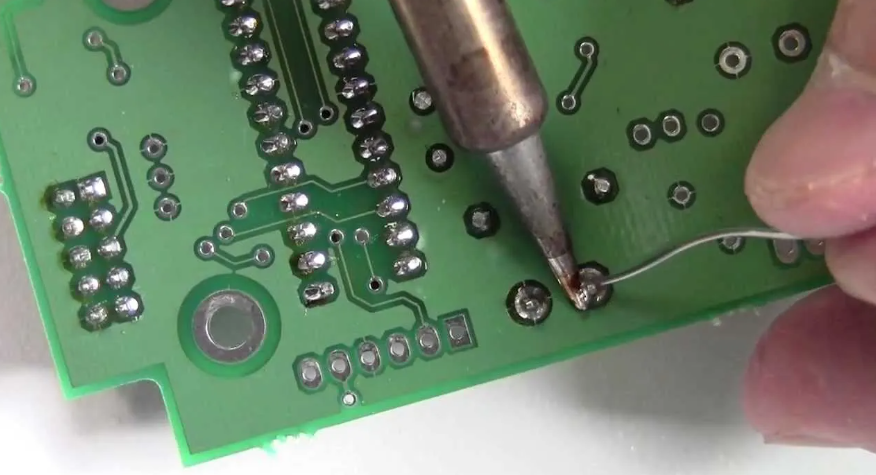
Leaded vs. Lead-Free PCB Assembly

When assembling a circuit board, the components, either surface mount technology (SMT) or through-hole, are connected via a soldering process. For decades, most solders used for PCBA have been tin-lead (Sn-Pb) alloys. Popular Sn-Pb ratios are 60/40 and 63/37, which have melting point temperatures of 188°C (370°F) and 183°C (361°F), respectively. During reflow, which is the preferred method for connecting surface mount device (SMD) packages, the solder can reach temperatures as high as 235°C (455°F) before cooling as it turns to liquid form.

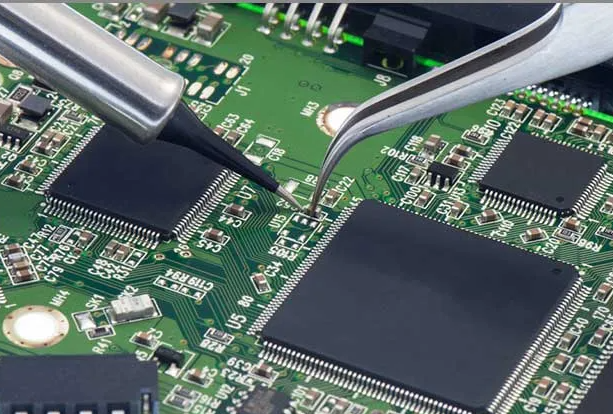
The temperatures for lead-free PCBA are generally higher than those for Sn-Pb solder. For example, the melting point temperatures for tin-silver (Sn-Ag) are 220°C (428°F) for 96.5/3.5 and 240°C (464°F) for 95/5, respectively. Reflow temperatures may peak at 250°C (482°F). These higher temperatures have implications for board construction and component selection. If the board material chosen has too low a decomposition temperature, exposure to the high temperatures involved in lead-free PCB assembly may cause irreversible damage. Care must also be taken when selecting components to ensure that there is no damage, especially during reflow if high temperatures are present on the board for an extended period of time.

From a PCB manufacturing perspective, the main concern with lead-free PCB assembly is damage to the board caused by elevated temperatures. Rework is also more difficult. Materials are another consideration, as substrates and laminates must be selected based on their temperature properties. However, before deciding too early that choosing lead-free PCB assembly is unreasonable, let’s explore other reasons to make this change.
Contact us for PCB quote now |

You should use lead-free PCB assembly if:

If any of the items in the following list describe your situation, you may benefit from using lead-free PCB components.

l Your product may be sold in a country with regulatory requirements, such as the European Union.

l Your state or local government requires lead-free manufacturing processes, such as in California.

l The OEM of the motherboard requires you to meet regulatory standards, such as IBM and Hewlett Packard.

l You are concerned about the health risks to people who use and consume lead-based products.

l You are concerned about the potential liability risks associated with lead-containing products.

l You understand the breakthroughs that lead-free PCB assembly has made in smaller PCB manufacturing and want to promote continued progress in this area.

l You recognize the drive for green manufacturing and want to attract customers who place a high premium on these issues.

Today, in order to comply with the RoHS directive, the following substances can only be present at the levels shown.

Ensuring that your boards are RoHS compliant means that you must ensure that your selected contract manufacturer (CM) has defined lead-free processes, including soldering, materials, components, solder mask, and surface finish. Lead-free PCB assembly is quickly becoming the standard for PCB manufacturing. As mentioned above, this is due to regulatory requirements, environmental concerns, and other reasons.

Contact us for PCB quote now |
Post Tags: #aluminum clad pcb#aluminum core pcb#aluminum pcb#assemble pcb#pcb assembly

Post navigation

Previous Previous
PCB automatic board making machine operation guide
NextContinue
Types and selections of PCB surface molding

Search

Search

Products

  • HDI Multilayer PCB
  • Rigid Flex PCB
  • Flex pcb
  • High Frequency PCB
  • High speed pcb
  • Heavy copper PCB
  • Metal Core PCB
  • Ceramic PCB

Address

Andwin Circuits Co.,Limited
Email: sales@andwinpcb.com
Tel: +86 755 2832 9394
Fax:+86 755 2992  6717
ADD:1-2F-1217,HouDeQun Industrial park,
NanTing RD NO.56,ShaJing,BaoAn,Shenzhen 518104,GuangDong,China

Products

  • HDI Multilayer PCB
  • Rigid Flex PCB
  • Flex pcb
  • High Frequency PCB
  • High speed pcb
  • Heavy copper PCB
  • Metal Core PCB
  • Ceramic PCB

Technology

  • Blogs
  • Via in pad
  • PCB E-test
  • PCB stack up
  • Metal core PCB panelization
  • Controlled impedance PCB

CERTIFICATION

Certification >>


Copyright© 2003 - 2026 Andwin | All Rights Reserved | Powered by Andwin

Scroll to top
  • Home
  • Products
    • HDI multilayer PCB
    • Rigid Flex PCB
    • Flex pcb
    • Special PCB
      • High Frequency PCB
        • Rogers RO4350B PCB
        • Rogers RO4003 pcb
        • Rogers RO3003 PCB
        • Rogers 5880 PCB
        • DICLAD 527 PCB
        • Taconic TLX series
        • Taconic TLX-8 RF PCB
        • Taconic TLX-9 RF PCB
      • High speed pcb
        • Megtron 6 High Speed PCB
        • TU-872 SLK Sp High Speed
      • High TG PCB
        • SHENGYI SH260 PCB
        • ISOLA 370HR PCB
        • ISOLA IS410 PCB
        • ISOLA IS420 PCB
      • Heavy copper PCB
      • Copper coin pcb
      • Copper inlay PCB
    • Metal Core PCB
      • Copper core pcb
      • Aluminum PCB
      • 2 Layers Aluminum PCB
      • Direct thermal MCPCB
      • 2 Layers Direct Thermal
    • Ceramic PCB
      • DPC ceramic PCB
      • DBC ceramic PCB
      • Thick film Ceramic PCB
      • Al2O3 Alumina PCB
      • AIN ALN ceramic PCB
      • IGBT Ceramic PCB
  • Service
    • PCB Assembly
    • Quick turn PCB assembly
    • PCBA conformal coating
  • Industry
    • Telecommunication
    • IoT and Wireless
    • Industrial Control
    • Thermal management
    • Power and Energy
    • IC test board
    • Automative
    • Medical
  • Capability
    • Rigid PCB
    • Rigid flex PCB
    • Metal core PCB
    • PCB Assembly
  • Technology
    • Blogs
    • Via in pad
    • PCB E-test
    • PCB stack up
    • MCPCB panelization
    • Controlled impedance PCB
  • About
    • About us
    • Certification
    • Factory Tour
  • Contact
Search