
PCB Surface Finish Comparison: ENIG vs HASL vs OSP for Assembly
If you want to select the right PCB surface finish for reliable assembly and long-term performance, then you will need to understand the critical differences between ENIG, HASL, and OSP in terms of solderability, shelf life, cost, and application requirements.
Surface finish selection accounts for up to 25% of assembly-related quality issues in PCB manufacturing. The wrong finish choice leads to soldering defects, poor component reliability, and costly rework. Whether you specify Electroless Nickel Immersion Gold (ENIG), Hot Air Solder Leveling (HASL), or Organic Solderability Preservative (OSP), your decision impacts assembly yield, product lifespan, and manufacturing costs.
This guide compares the three most common PCB surface finishes across critical parameters: surface flatness, shelf life, assembly compatibility, cost factors, and applications.
What is PCB Surface Finish?
PCB surface finish is a protective coating applied to exposed copper pads after circuit board fabrication. This coating prevents copper oxidation, maintains solderability during storage, and provides a reliable surface for component attachment during PCB assembly. Without proper finish, copper oxidizes within hours, preventing solder wetting and causing assembly defects.
ENIG Surface Finish
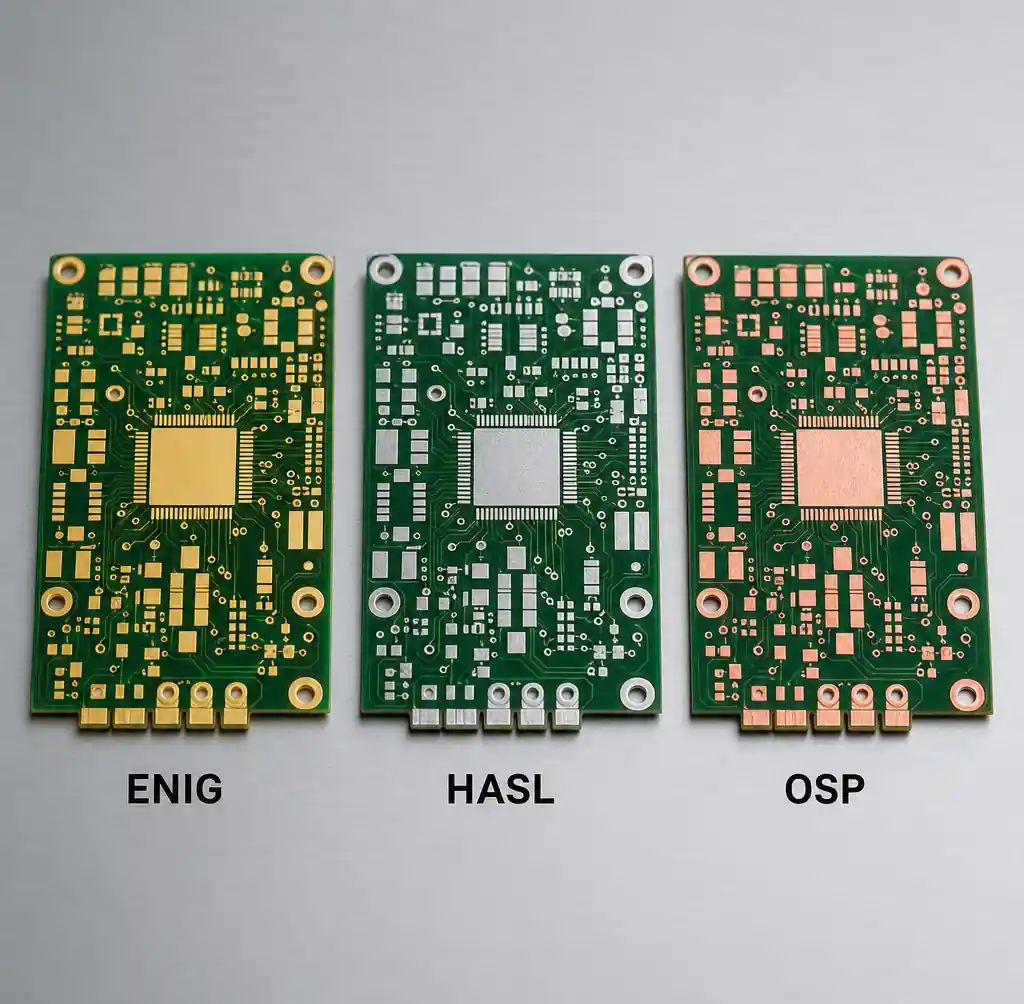
Electroless Nickel Immersion Gold (ENIG) is a two-layer metallic coating with 3-6 micrometers of nickel covered by 0.05-0.1 micrometer gold. The nickel provides the solderable surface while gold prevents oxidation during storage.
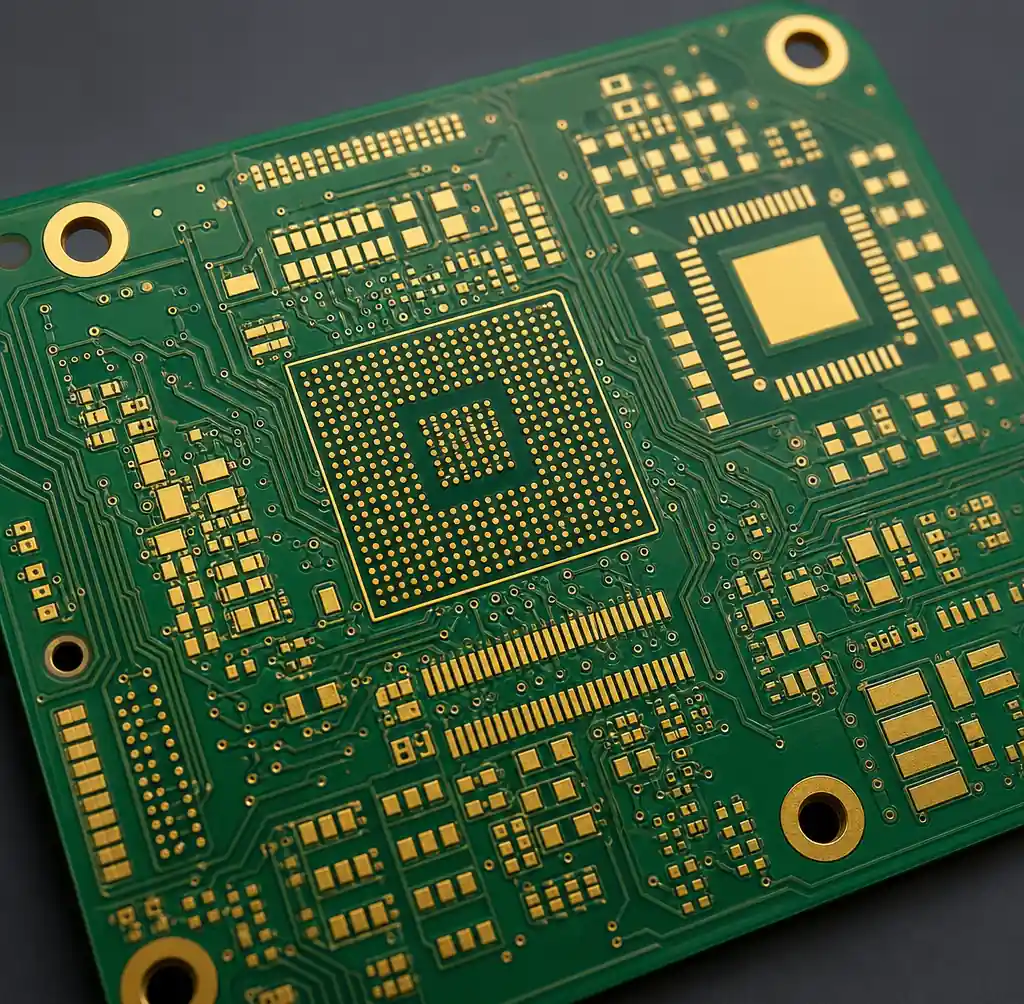
ENIG processing uses chemical deposition, creating uniform coating thickness across complex geometries. The flat surface profile makes it ideal for 0.4mm pitch BGAs, QFNs, and 0201 components. You can also use ENIG for gold wire bonding, keypads, and edge connectors. ENIG offers 12+ month shelf life and supports multiple reflow cycles without degradation, making it suitable for complex assemblies requiring rework.
HASL Surface Finish
Hot Air Solder Leveling (HASL) applies molten solder to the PCB, then uses hot air knives to level the coating. Traditional HASL uses 63/37 tin-lead solder, while lead-free HASL uses SAC305 alloy for RoHS compliance.
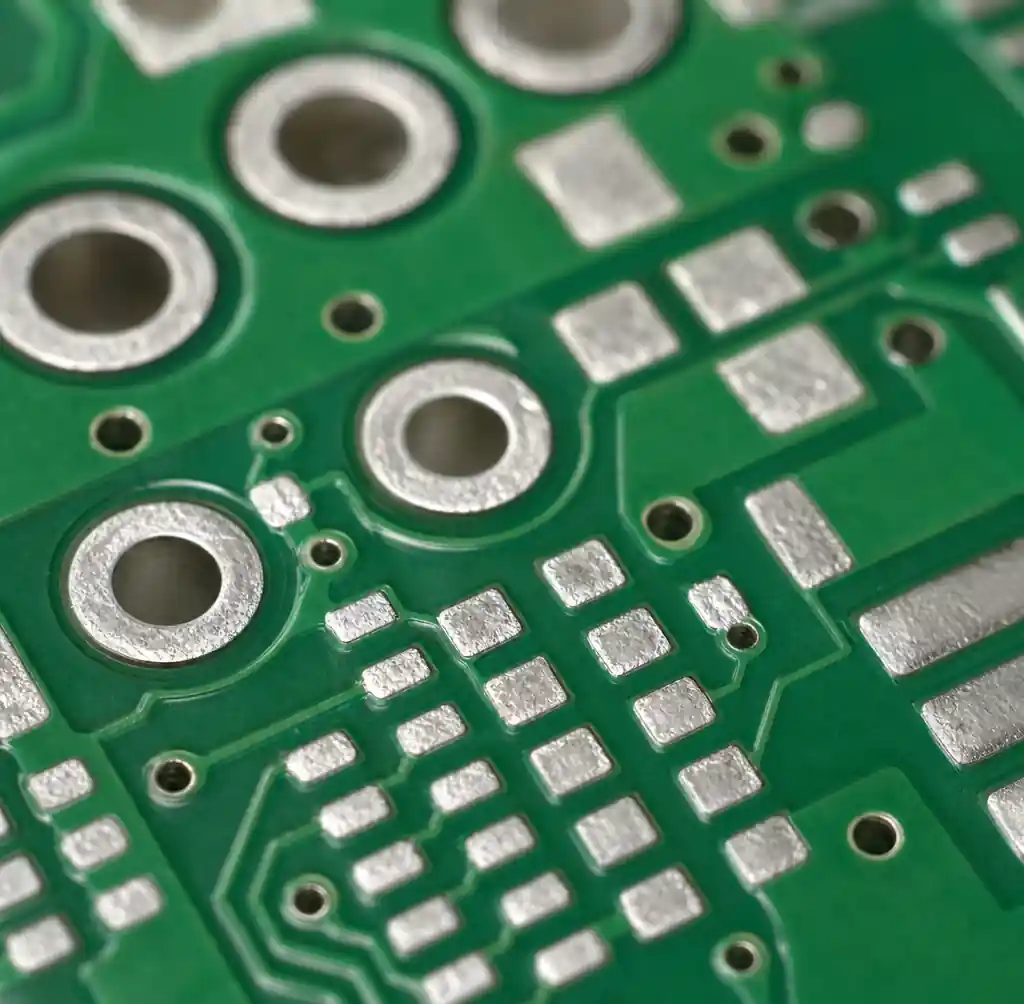
HASL creates an uneven surface with 1-40 micrometer thickness variations. The finish provides excellent solderability because it is solder alloy itself—the coating melts during assembly and combines with paste solder. Lead-free HASL processes at 260-270°C, requiring base materials that tolerate high temperatures without warpage.
OSP Surface Finish
Organic Solderability Preservative (OSP) applies a thin 0.2-0.5 micrometer organic coating to copper surfaces, preventing oxidation while remaining solderable. The coating burns off during reflow, exposing fresh copper for solder wetting.
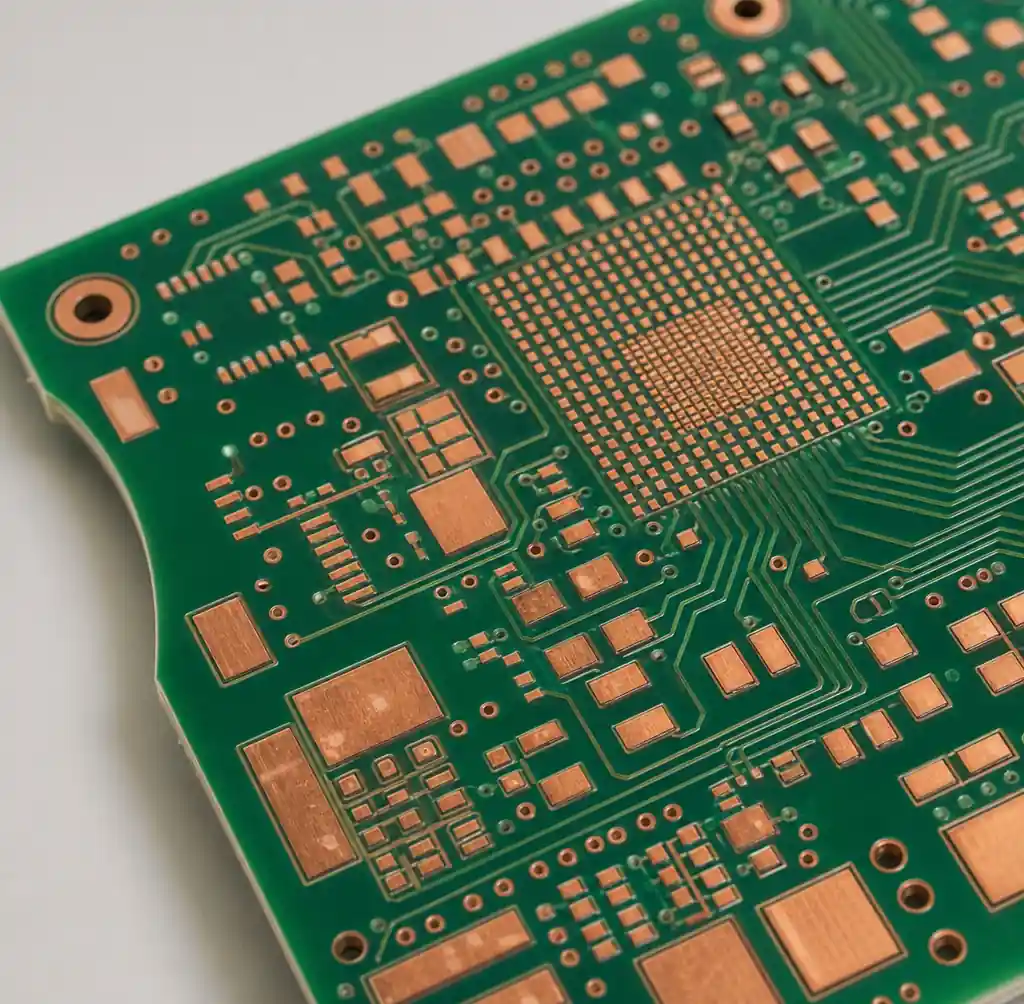
OSP processing uses water-based chemistry without heavy metals, making it environmentally friendly. The thin coating preserves copper pad flatness, ideal for HDI PCB designs with 0.3mm pitch components. The transparent coating allows visual inspection of copper quality. OSP shelf life is 6-12 months, requiring assembly within this timeframe for reliable solder joints.
Surface Finish Comparison
Understanding performance differences across key parameters helps you select the optimal finish for your application.
| Parameter | ENIG | HASL (Lead-Free) | OSP |
|---|---|---|---|
| Surface Flatness | Excellent (±1-2µm) | Poor (±10-40µm) | Excellent (±0.5µm) |
| Shelf Life | 12+ months | 6-12 months | 6-12 months |
| Reflow Cycles | Multiple (3-6×) | Multiple (3-6×) | Limited (1-2×) |
| Fine Pitch Compatibility | Excellent (≥0.4mm) | Poor (≥0.65mm) | Excellent (≥0.3mm) |
| Wire Bonding | Yes (gold surface) | No | No |
| RoHS Compliant | Yes | Yes (lead-free version) | Yes |
| Relative Cost | High (3-4× vs OSP) | Medium (1.5-2× vs OSP) | Low (baseline) |
Surface flatness critically impacts fine-pitch assembly. ENIG and OSP provide coplanar surfaces within 1-2 micrometers, supporting reliable paste printing and placement for BGAs and QFNs. HASL’s uneven surface causes printing variations that create bridging or insufficient solder on fine-pitch components.
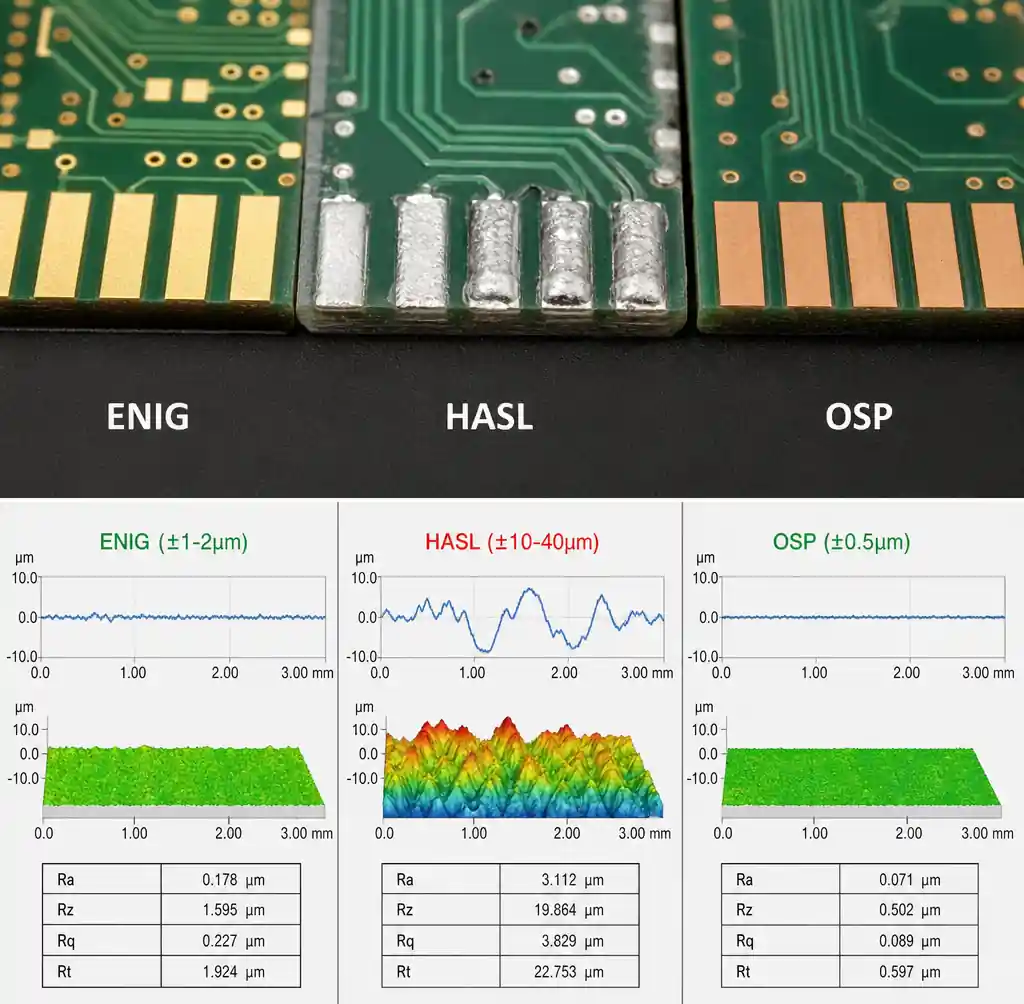
ENIG tolerates 4-6 reflow cycles without degradation, suitable for complex assemblies requiring rework. OSP degrades after 1-2 cycles as the organic coating burns off, exposing copper to oxidation.
Shelf Life and Storage
Proper storage conditions directly affect surface finish solderability and assembly yield over time.
| Finish Type | Typical Shelf Life | Storage Requirements | Solderability After Storage |
|---|---|---|---|
| ENIG | 12-24 months | Vacuum sealed, <30°C, <60% RH | Excellent – minimal degradation |
| HASL | 6-12 months | Vacuum sealed, <30°C, <60% RH | Good – may need flux activation |
| OSP | 6-12 months | Vacuum sealed, <25°C, <50% RH | Fair – degrades with moisture exposure |
ENIG demonstrates superior shelf stability because the gold layer protects nickel from oxidation. The finish maintains solderability after 18-24 months when vacuum sealed with desiccant, reducing inventory management complexity.
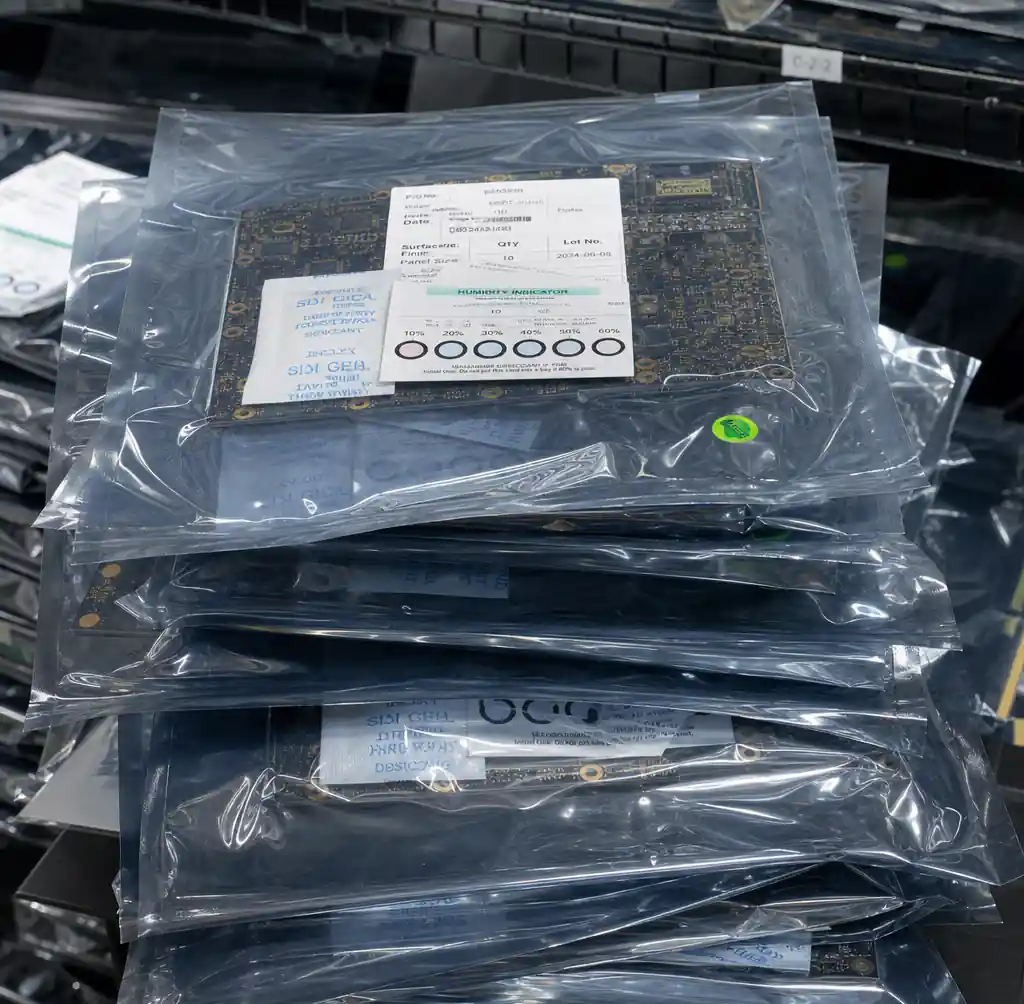
HASL shelf life depends on solder alloy oxidation resistance. Lead-free SAC alloys oxidize more readily than tin-lead, reducing shelf life. OSP requires strict storage control because the organic coating absorbs moisture. For quick turn PCB assembly with short storage periods, OSP’s limited shelf life presents minimal risk.
Assembly Considerations
Different surface finishes require specific assembly process adjustments for optimal solder joint quality and yield.
ENIG works well with SAC lead-free and tin-lead solder pastes. The nickel layer prevents gold embrittlement when gold thickness stays below 0.1 micrometers. ENIG tolerates standard reflow profiles without special considerations and supports multiple thermal cycles.
HASL provides excellent paste wetting because the finish is solder alloy. However, uneven thickness causes solder volume variations requiring paste deposit adjustments. Lead-free HASL melts at 217°C during preheat, potentially causing component movement. You should minimize soak time in 180-220°C range.
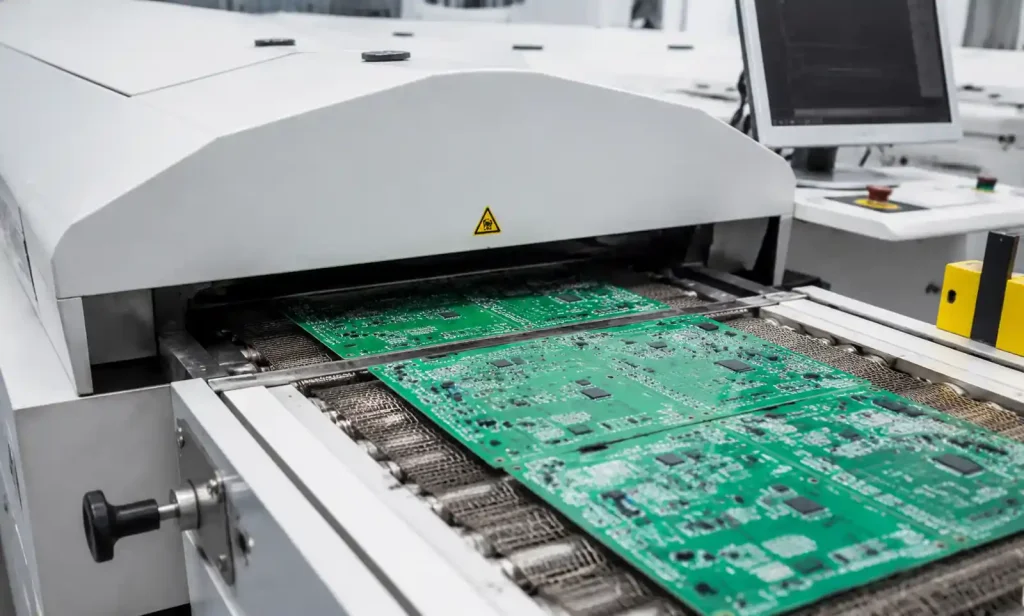
OSP requires no special paste formulation. The organic coating burns off during preheat, exposing clean copper. Peak temperatures should not exceed 250°C for lead-free to prevent copper oxidation after OSP removal.
ENIG’s flat surface produces consistent solder joint profiles for automated optical inspection. HASL’s uneven surface complicates AOI programming but X-ray inspection works well. OSP’s transparent coating enables pre-assembly copper pad inspection.
Cost Analysis
Surface finish costs vary based on processing complexity, material costs, and production volume.
ENIG costs 3-4 times more than OSP due to chemical processing and precious metal content. The nickel plating requires multiple baths, precise temperature control, and heavy metal waste treatment. HASL costs 1.5-2 times OSP pricing. Lead-free HASL requires higher temperatures and expensive SAC alloys.
OSP provides the most cost-effective finish. The simple chemical process uses environmentally friendly, low-cost materials and adds negligible time to fabrication schedules, supporting fast turnaround PCB manufacturing.
Total cost analysis should include assembly yield impacts. ENIG and OSP’s flat surfaces reduce defects for fine-pitch components, potentially offsetting higher finish costs through improved yields. Calculate cost per good assembly rather than cost per board when evaluating options.
Application Recommendations
Selecting the optimal surface finish depends on your design characteristics, component types, and reliability requirements.
When to Choose ENIG
Specify ENIG surface finish for:
- Fine-pitch BGAs with 0.4-0.5mm pitch or smaller
- QFN packages requiring flat mounting surfaces
- Gold wire bonding applications
- Multiple reflow cycles (3+ times) for complex assemblies
- Medical device PCBs requiring IPC-6012 Class 3 reliability
- Telecommunication equipment with fine-pitch components
- Products with uncertain assembly schedules
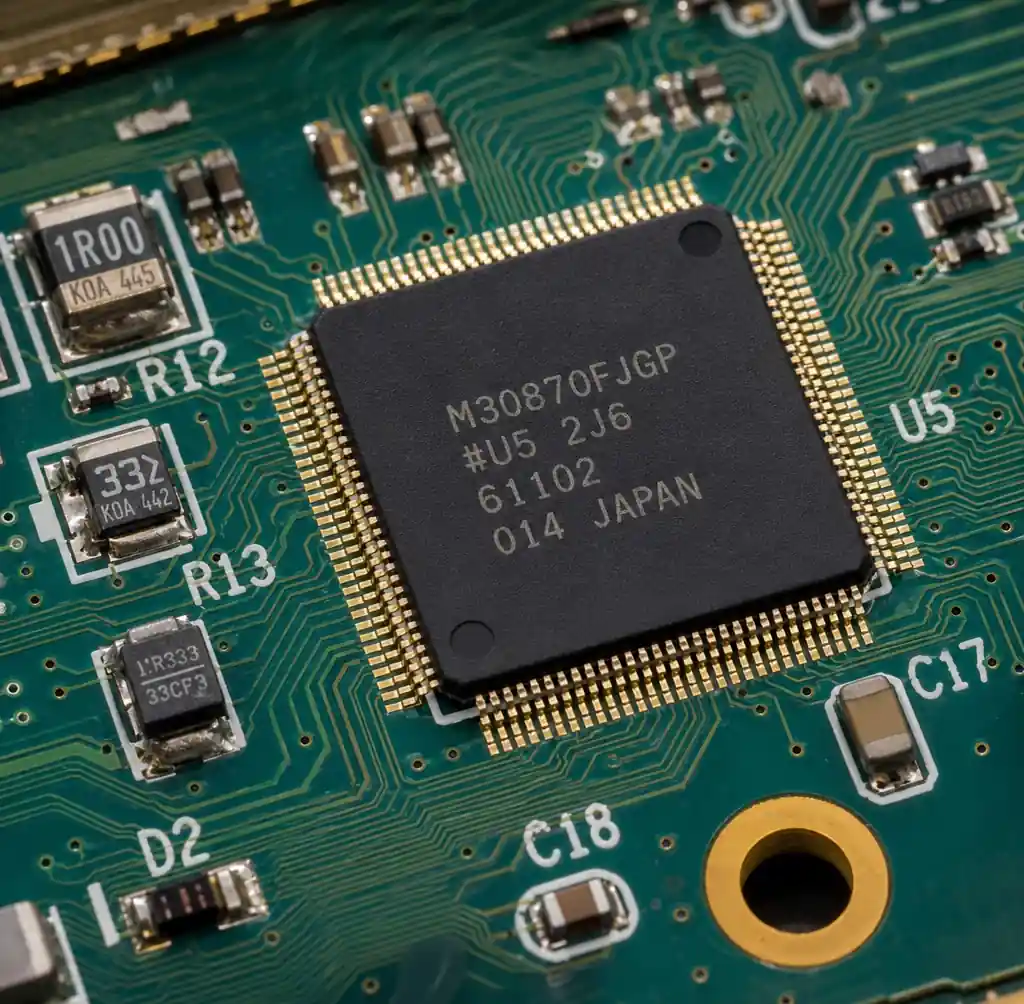
ENIG justifies its cost premium when surface flatness, shelf life, or multiple reflow cycles are critical.
When to Choose HASL
HASL remains suitable for:
- Through-hole components and connectors
- Standard SMT components with ≥0.65mm pitch
- Large passive components (0603 and larger)
- Cost-sensitive consumer products
- Industrial power supplies and converters
- Automotive electronics (non-critical functions)
HASL provides reliable solderability at the lowest metallic finish cost.
When to Choose OSP
OSP is optimal for:
- Ultra-fine-pitch components (0.3-0.4mm pitch)
- HDI PCB designs with laser-drilled microvias
- Single or dual reflow assembly processes
- Short storage-to-assembly timeframes
- Smartphones and consumer electronics
- IoT and wireless devices
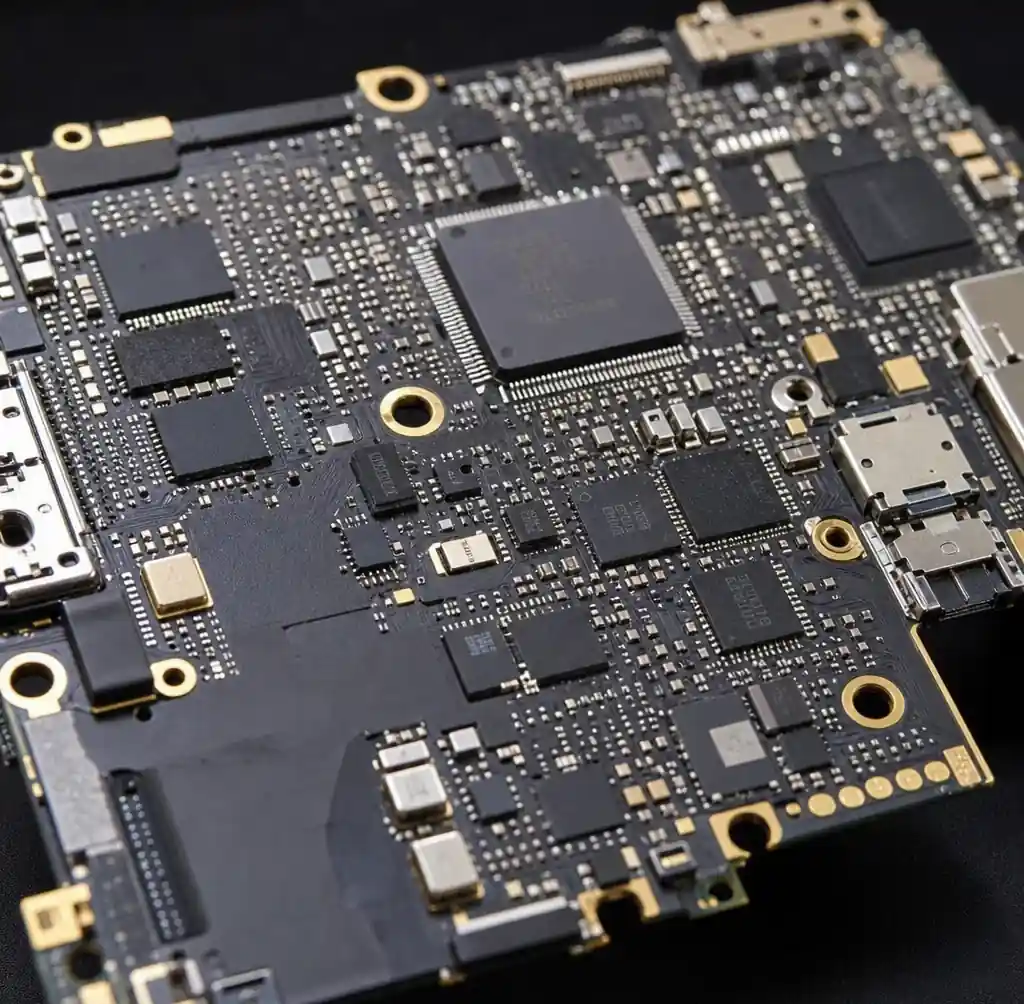
OSP provides the flattest surface at the lowest cost, ideal for high-density consumer electronics.
FAQs
Which PCB surface finish has the longest shelf life?
ENIG provides 12-24 months shelf life when vacuum-sealed with desiccant. The gold layer protects nickel from oxidation. HASL and OSP maintain solderability for 6-12 months, with OSP more sensitive to humidity.
Can OSP surface finish handle multiple reflow cycles?
OSP is designed for single or dual reflow cycles. The organic coating burns off during first reflow, exposing copper that oxidizes during subsequent exposure. ENIG is better for multiple reflow performance.
Is lead-free HASL as good as traditional tin-lead HASL?
Lead-free HASL using SAC305 provides comparable solderability but requires higher temperatures (260-270°C vs 235-245°C). Lead-free HASL oxidizes more readily, slightly reducing shelf life. Both create uneven surfaces unsuitable for fine-pitch components.
Why is ENIG more expensive than other finishes?
ENIG requires two plating processes with precise chemical control and multiple rinse steps. Nickel and gold materials add cost. ENIG processing takes longer. Heavy metal waste treatment increases costs. The premium is justified for flat surfaces, long shelf life, or multiple reflow cycles.
Which surface finish is best for fine-pitch BGAs?
ENIG and OSP both provide excellent flatness (±1-2µm) for 0.4-0.5mm pitch BGAs. OSP offers flattest surface at lower cost but limited shelf life. ENIG costs more but provides longer shelf life and multiple reflows. HASL is unsuitable due to ±10-40µm variation.
Does surface finish affect PCB assembly yield rates?
Yes. ENIG and OSP’s flat surfaces improve paste printing accuracy, reducing defects. Studies show 2-5% yield improvement with ENIG or OSP versus HASL for 0.5mm pitch assemblies. For standard pitch (≥0.65mm), all three deliver comparable yields.
Conclusion
ENIG, HASL, and OSP serve distinct requirements in PCB manufacturing. ENIG delivers superior flatness, 12+ month shelf life, and multiple reflow capability, justifying its 3-4× cost premium for high-reliability applications and fine-pitch assemblies. HASL provides economical solderability for through-hole and standard SMT components but its uneven surface limits fine-pitch compatibility. OSP offers the flattest surface at lowest cost, ideal for high-density consumer electronics with short storage-to-assembly timeframes.
Select ENIG when surface flatness and shelf life are critical. Choose HASL for cost-sensitive designs with standard component pitch. Select OSP for ultra-fine-pitch designs with controlled assembly schedules.
If you need high-quality PCB assembly with optimal surface finish selection, Andwin Circuits offers ENIG, HASL, and OSP capabilities with expert technical support. Our ISO 9001 and IATF 16949 certified facility provides controlled impedance PCB manufacturing up to 50 layers with fast delivery in 7 days for prototypes.
Contact us today for PCB manufacturing with expert surface finish recommendations, design consultation, and competitive factory-direct pricing.