Skip to content
Andwin Circuits
  • Home
  • ProductsExpand
    • HDI multilayer PCB
    • Rigid Flex PCB
    • Flex pcb
    • Special PCBExpand
      • High Frequency PCBExpand
        • Rogers RO4350B PCB
        • Rogers RO4003 pcb
        • Rogers RO3003 PCB
        • Rogers 5880 PCB
        • DICLAD 527 PCB
        • Taconic TLX series
        • Taconic TLX-8 RF PCB
        • Taconic TLX-9 RF PCB
      • High speed pcbExpand
        • Megtron 6 High Speed PCB
        • TU-872 SLK Sp High Speed
      • High TG PCBExpand
        • SHENGYI SH260 PCB
        • ISOLA 370HR PCB
        • ISOLA IS410 PCB
        • ISOLA IS420 PCB
      • Heavy copper PCB
      • Copper coin pcb
      • Copper inlay PCB
    • Metal Core PCBExpand
      • Copper core pcb
      • Aluminum PCB
      • 2 Layers Aluminum PCB
      • Direct thermal MCPCB
      • 2 Layers Direct Thermal
    • Ceramic PCBExpand
      • DPC ceramic PCB
      • DBC ceramic PCB
      • Thick film Ceramic PCB
      • Al2O3 Alumina PCB
      • AIN ALN ceramic PCB
      • IGBT Ceramic PCB
  • ServiceExpand
    • PCB Assembly
    • Quick turn PCB assembly
    • PCBA conformal coating
  • IndustryExpand
    • Telecommunication
    • IoT and Wireless
    • Industrial Control
    • Thermal management
    • Power and Energy
    • IC test board
    • Automative
    • Medical
  • CapabilityExpand
    • Rigid PCB
    • Rigid flex PCB
    • Metal core PCB
    • PCB Assembly
  • TechnologyExpand
    • Blogs
    • Via in pad
    • PCB E-test
    • PCB stack up
    • MCPCB panelization
    • Controlled impedance PCB
  • AboutExpand
    • About us
    • Certification
    • Factory Tour
  • Contact
Andwin Circuits
Home / Blogs / Printed Circuit Board Assembly – PCBA Design & PCBA

Printed Circuit Board Assembly – PCBA Design & PCBA

ByLucy May 18, 2023June 19, 2024

All Flex Solutions built their first rigid flex circuit boards in 1982 for a laser bore sight for the Apache Helicopter.
In the early 1980s, rigid flex circuit boards were used initially to solve difficult military electronics problems,

as conventional rigid boards often failed in high shock load applications like missiles,
or in extremely high vibration environments such as helicopters and fighter aircraft.

Military designers quickly realized that rigid flex circuits also helped them fit complex electronics into confined spaces,
which was useful for satellites, spacecraft, avionics, and missile guidance systems.

Rigid flex PCBs started gaining a wider market through the 1990s.
Medical device designers wanted high reliability packages in tiny formats for products such as pacemakers, defibrillators, and cochlear hearing implants.

Rigid flex PCB technology allowed for both miniaturization and improved reliability.

In 1997 All Flex committed their resources to rigid flex PCBs,
spending the following decades investing in the equipment and processes to excel in advancing this technology and delivering it to broader markets.
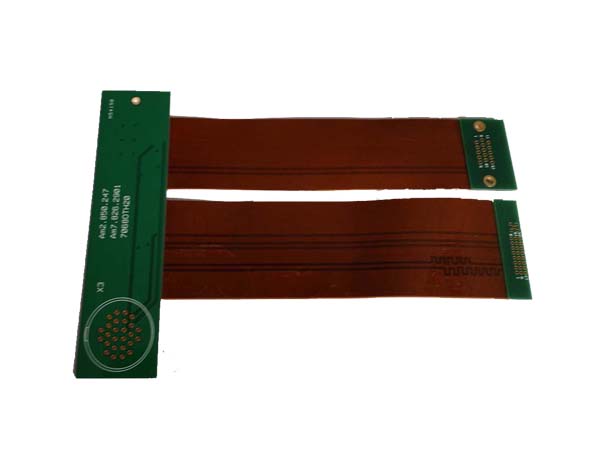
When Should You Use Rigid Flex PCBs?
  • When a designer needs a flexible solution & needs to rout components on both sides of the PCB
  • When a designer requires electronics fit the device, rather than the device conform to the electronics
  • When the electronic components & connectivity required max out space for connectors & flex cables
  • As a single-package solution for electronics with high input/output connectivity
  • As a cost-effective alternative to a combined assembly of interconnected hard boards
  • When the designer has to miniaturize their design to accommodate greater functionality
  • In weight-saving applications, such as drones, unmanned vehicles, aerospace & space applications
  • High vibration environments
  • High shock applications – where electronics will be subjected to 10,000+0 G-s
  • In never-fail electronics

GET IN TOUCH!

rigid-flex-pcb

All flex PCBs are a type of printed circuit board that is flexible and can be bent or folded to fit into tight spaces or conform to curved surfaces.
They are made of a thin, flexible substrate material such as polyimide or polyester, and have conductive traces and components mounted on them.

Flex PCBs are used in a wide range of applications, including medical devices,
aerospace and defense systems, automotive electronics, consumer electronics, and industrial control systems.

They are also used in wearable technology, IoT devices, and other applications where flexibility and durability are important.
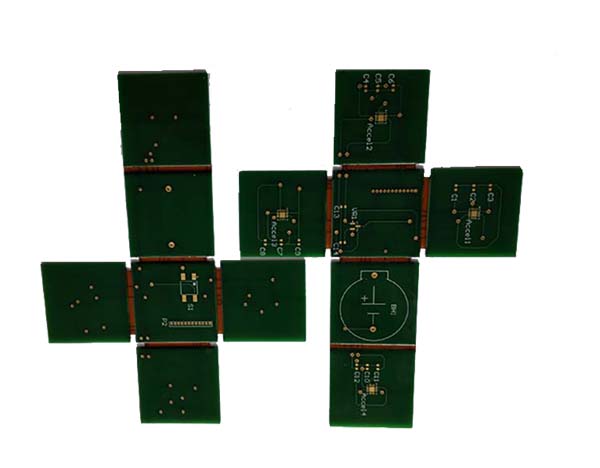
rigid flex pcb

the role of all flex pcb

The role of all flex PCBs is to provide a flexible and reliable platform for electronic components and circuits.
They offer several advantages over traditional rigid PCBs, including:

1. Space-saving:

Flex PCBs can be designed to fit into tight spaces and conform to irregular shapes, allowing for more compact and efficient electronic devices.

2. Durability:

Flex PCBs are more resistant to vibration, shock, and temperature changes than rigid PCBs, making them ideal for use in harsh environments.

3. Reliability:

Flex PCBs have fewer interconnects and solder joints than rigid PCBs, reducing the risk of failure due to mechanical stress or thermal expansion.

4. Cost-effective:

Flex PCBs can be mass-produced using automated processes, reducing manufacturing costs and improving production efficiency.

5. Design flexibility:

Flex PCBs can be designed to fit specific form factors and requirements, allowing for greater design flexibility and customization.

Overall, the role of all flex PCBs is to provide a flexible, reliable, and cost-effective platform for electronic circuits and components,
enabling the development of innovative and advanced electronic devices.

GET IN TOUCH!

Post navigation

Previous Previous
Pcb aluminium led
NextContinue
Quick turn PCB assembly-Prototype PCBA

Search

Search

Products

  • HDI Multilayer PCB
  • Rigid Flex PCB
  • Flex pcb
  • High Frequency PCB
  • High speed pcb
  • Heavy copper PCB
  • Metal Core PCB
  • Ceramic PCB

Address

Andwin Circuits Co.,Limited
Email: sales@andwinpcb.com
Tel: +86 755 2832 9394
Fax:+86 755 2992  6717
ADD:1-2F-1217,HouDeQun Industrial park,
NanTing RD NO.56,ShaJing,BaoAn,Shenzhen 518104,GuangDong,China

Products

  • HDI Multilayer PCB
  • Rigid Flex PCB
  • Flex pcb
  • High Frequency PCB
  • High speed pcb
  • Heavy copper PCB
  • Metal Core PCB
  • Ceramic PCB

Technology

  • Blogs
  • Via in pad
  • PCB E-test
  • PCB stack up
  • Metal core PCB panelization
  • Controlled impedance PCB

CERTIFICATION

Certification >>


Copyright© 2003 - 2026 Andwin | All Rights Reserved | Powered by Andwin

Scroll to top
  • Home
  • Products
    • HDI multilayer PCB
    • Rigid Flex PCB
    • Flex pcb
    • Special PCB
      • High Frequency PCB
        • Rogers RO4350B PCB
        • Rogers RO4003 pcb
        • Rogers RO3003 PCB
        • Rogers 5880 PCB
        • DICLAD 527 PCB
        • Taconic TLX series
        • Taconic TLX-8 RF PCB
        • Taconic TLX-9 RF PCB
      • High speed pcb
        • Megtron 6 High Speed PCB
        • TU-872 SLK Sp High Speed
      • High TG PCB
        • SHENGYI SH260 PCB
        • ISOLA 370HR PCB
        • ISOLA IS410 PCB
        • ISOLA IS420 PCB
      • Heavy copper PCB
      • Copper coin pcb
      • Copper inlay PCB
    • Metal Core PCB
      • Copper core pcb
      • Aluminum PCB
      • 2 Layers Aluminum PCB
      • Direct thermal MCPCB
      • 2 Layers Direct Thermal
    • Ceramic PCB
      • DPC ceramic PCB
      • DBC ceramic PCB
      • Thick film Ceramic PCB
      • Al2O3 Alumina PCB
      • AIN ALN ceramic PCB
      • IGBT Ceramic PCB
  • Service
    • PCB Assembly
    • Quick turn PCB assembly
    • PCBA conformal coating
  • Industry
    • Telecommunication
    • IoT and Wireless
    • Industrial Control
    • Thermal management
    • Power and Energy
    • IC test board
    • Automative
    • Medical
  • Capability
    • Rigid PCB
    • Rigid flex PCB
    • Metal core PCB
    • PCB Assembly
  • Technology
    • Blogs
    • Via in pad
    • PCB E-test
    • PCB stack up
    • MCPCB panelization
    • Controlled impedance PCB
  • About
    • About us
    • Certification
    • Factory Tour
  • Contact
Search