Blogs

  • Grounding points for high-digital circuit PCBs

    “Grounding” generally refers to connecting a circuit, device or system to a good conductor that serves as a reference potential point or reference potential surface, so as to establish a low-impedance channel between the circuit or system and the “ground”. The ground wire is an equipotential body that serves as the potential reference point of…

  • PCB design tips: fewer holes, fewer detours, less automation…

    1.Familiarity with factory manufacturing processes In this era of fabless IC companies, it is not surprising that many engineers are not aware of the production steps and chemical treatment processes for PCBs manufactured based on their design files. However, this lack of practical knowledge often leads novice engineers to make unnecessary and more complex design…

  • Signal integrity problems caused by poor PCB design

    1.Definition of signal integrity: Definition: Signal integrity (SI) refers to the quality of the signal on the signal line. Poor signal integrity is not caused by a single factor, but by multiple factors in board-level design. When the signal in the circuit can reach the receiving end with the required timing, duration and voltage amplitude,…

  • Buy rogers pcb material

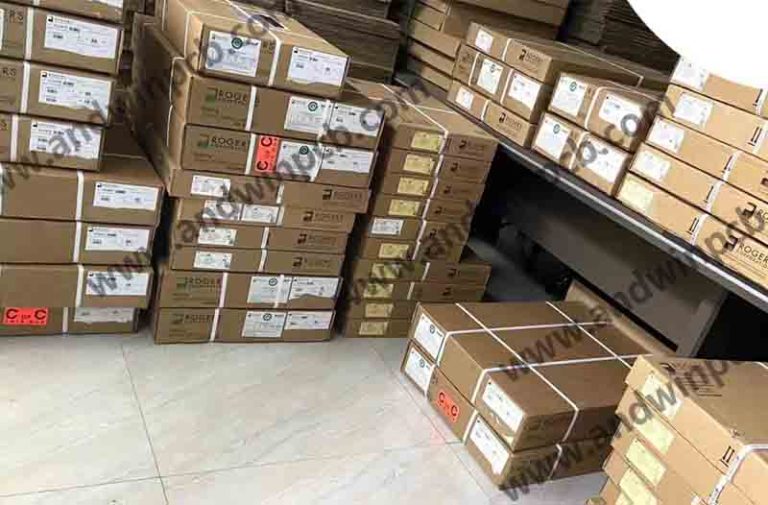
    To buy Rogers PCB material, follow these steps: 1. Determine the specific product and grade of Rogers PCB material you need for your application. This information can be found in the datasheet or by consulting with an engineer. 2. Search for electronic component suppliers and distributors that carry Rogers PCB material. Popular suppliers include Mouser…

  • SMT PCB

    SMT PCB What is SMT? Surface Mount Technology (SMT) is a new generation of electronic assembly technology. It compresses traditional electronic components into devices with a volume of only a few tens of times smaller, thus achieving high density, high reliability, miniaturization, low cost, and automated production of electronic product assembly. This miniaturized component is…

  • blind buried vias

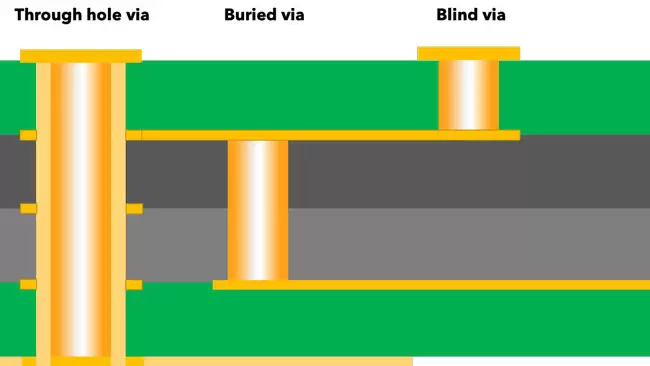
    blind buried vias 1. What are blind and buried vias? As the design of portable products is developing towards miniaturization and high density, the design difficulty of PCB is also increasing, and higher requirements are put forward for the production process of PCB. In most of the current portable products, BGA packages with a pitch…

  • circuit board construction

    1. The names of circuit boards are: Circuit board, PCB board, aluminum substrate, high-frequency board, PCB, ultra-thin circuit board, ultra-thin circuit board, printed (copper etching technology) circuit board, etc. Circuit boards make circuits miniaturized and intuitive, and play an important role in the mass production of fixed circuits and the optimization of electrical appliance layout. We divide the circuit…

  • circuit board function

    What is a functional block in a circuit board? I believe many people know about circuit boards, so what are its functions? We should start by learning which functional blocks the circuit board is divided into. When we know the functional block circuits of each part of the circuit board, and then learn the structure and working principle…

  • circuit board lines

    PCB design wiring Wiring, also known as Layout, is one of the most basic and important work skills for PCB design engineers. The quality of routing will directly affect the performance of the entire system. Most high-speed design theories must ultimately be implemented and verified through Layout. It can be seen that routing is crucial…

  • circuit board substrate

    What is a substrate? What is a substrate? A substrate is the basic material for manufacturing PCBs. When we usually say what a substrate is, we mean a copper-clad laminate. This article introduces what a substrate is, the development history of substrates, and the classification method and implementation standards of substrates. 1. What is a…

  • copper in pcb

    1. Understanding copper foil in PCBs Copper foil used in the PCB industry is more complex than you might think. Copper is both an excellent conductor and an excellent thermal conductor, making it an ideal conductor for most PCB applications. Copper foil has many other properties that are important for engineers to understand. Copper foil…

  • Comparison of single-layer and double-layer boards

    What is a single-sided PCB Single-sided PCB is the most basic circuit board in the PCB industry. As the name implies, single-sided PCB has wires on one side and plug-in parts on the other side. Single-sided PCB was widely used in various industries in the early days, but because single-sided PCB has high requirements for wiring, each…

  • rigid pcb

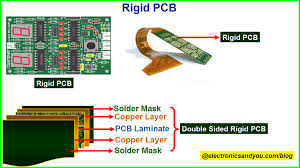
    What is a rigid PCB PCBs are further divided into rigid PCBs and flexible PCBs, and both rigid and flexible printed circuit boards (PCBs) are used to connect electronic components in a variety of consumer and non-consumer devices. As the name implies, rigid PCBs are circuit boards built on a rigid base layer that cannot bend, while…