
Skip to content
Andwin Circuits
  • Home
  • ProductsExpand
    • HDI multilayer PCB
    • Rigid Flex PCB
    • Flex pcb
    • Special PCBExpand
      • High Frequency PCBExpand
        • Rogers RO4350B PCB
        • Rogers RO4003 pcb
        • Rogers RO3003 PCB
        • Rogers 5880 PCB
        • DICLAD 527 PCB
        • Taconic TLX series
        • Taconic TLX-8 RF PCB
        • Taconic TLX-9 RF PCB
      • High speed pcbExpand
        • Megtron 6 High Speed PCB
        • TU-872 SLK Sp High Speed
      • High TG PCBExpand
        • SHENGYI SH260 PCB
        • ISOLA 370HR PCB
        • ISOLA IS410 PCB
        • ISOLA IS420 PCB
      • Heavy copper PCB
      • Copper coin pcb
      • Copper inlay PCB
    • Metal Core PCBExpand
      • Copper core pcb
      • Aluminum PCB
      • 2 Layers Aluminum PCB
      • Direct thermal MCPCB
      • 2 Layers Direct Thermal
    • Ceramic PCBExpand
      • DPC ceramic PCB
      • DBC ceramic PCB
      • Thick film Ceramic PCB
      • Al2O3 Alumina PCB
      • AIN ALN ceramic PCB
      • IGBT Ceramic PCB
  • ServiceExpand
    • PCB Assembly
    • Quick turn PCB assembly
    • PCBA conformal coating
  • IndustryExpand
    • Telecommunication
    • IoT and Wireless
    • Industrial Control
    • Thermal management
    • Power and Energy
    • IC test board
    • Automative
    • Medical
  • CapabilityExpand
    • Rigid PCB
    • Rigid flex PCB
    • Metal core PCB
    • PCB Assembly
  • TechnologyExpand
    • Blogs
    • Via in pad
    • PCB E-test
    • PCB stack up
    • MCPCB panelization
    • Controlled impedance PCB
  • AboutExpand
    • About us
    • Certification
    • Factory Tour
  • Contact
Andwin Circuits
Home / Causes of PCB welding defects

Causes of PCB welding defects

ByGrace December 11, 2024March 31, 2026

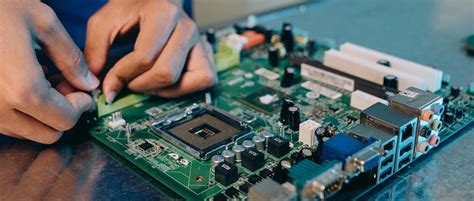
The solderability of circuit board holes affects welding quality

Poor solderability of circuit board holes will cause cold soldering defects, affect the parameters of components in the circuit, cause unstable conduction of multilayer board components and inner layer lines, and cause the entire circuit to fail. The so-called solderability is the property of the metal surface being wetted by molten solder, that is, a relatively uniform, continuous and smooth adhesion film is formed on the metal surface where the solder is located. The factors affecting the solderability of printed circuit boards are mainly:
The composition of the solder and the properties of the soldered material

Solder is an important component in the welding chemical treatment process. It is composed of chemical materials containing flux. The commonly used low-melting point eutectic metals are Sn-Pb or Sn-Pb-Ag. The impurity content must be controlled in a certain proportion to prevent the oxides generated by impurities from being dissolved by the flux. The function of the flux is to help the solder wet the surface of the circuit board to be welded by transferring heat and removing rust. White rosin and isopropyl alcohol solvents are generally used.

Welding temperature and metal plate surface cleanliness

The welding temperature and metal plate surface cleanliness will also affect the solderability. If the temperature is too high, the solder diffusion speed will be accelerated. At this time, it is highly active, which will cause the circuit board and the solder melting surface to oxidize rapidly, resulting in welding defects. The contamination of the circuit board surface will also affect the solderability and cause defects, such as tin beads, tin balls, open circuits, poor gloss, etc.

Welding defects caused by warping Circuit boards and components will warp during the welding process, and defects such as cold solder joints and short circuits will occur due to stress deformation. Warping is often caused by the temperature imbalance between the upper and lower parts of the circuit board. For large PCBs, warping will also occur due to the weight of the board itself.

Ordinary PBGA devices are about 0.5mm away from the printed circuit board. If the device on the circuit board is large, as the circuit board returns to its normal shape after cooling, the solder joints will be under stress for a long time. If the device is raised by 0.1mm, it is enough to cause cold solder joints and open circuits. The design of the circuit board affects the welding quality In terms of layout, when the size of the circuit board is too large, although the welding is easier to control, the printed lines are long, the impedance increases, the anti-noise ability decreases, and the cost increases. If it is too small, the heat dissipation decreases, the welding is difficult to control, and adjacent lines are prone to mutual interference, such as electromagnetic interference of the circuit board. Related articles: What should be paid attention to when drawing PCB from the perspective of welding. Therefore, the design of PCB board must be optimized:
Shorten the connection between high-frequency components and reduce EMI interference.

Heavy components (such as more than 20g) should be fixed with a bracket and then welded.

Heat-generating components should consider heat dissipation to prevent defects and rework caused by large ΔT on the surface of the components.

Thermistors should be kept away from heat sources.
The arrangement of components should be as parallel as possible, which is not only beautiful but also easy to weld, and suitable for mass production. The circuit board design is best in a 4:3 rectangle.

The wire width should not change suddenly to avoid discontinuity of wiring. When the circuit board is heated for a long time, the copper foil is prone to expansion and falling off. Therefore, large-area copper foil should be avoided.

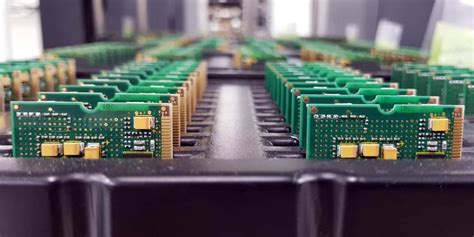
In summary, in order to ensure the overall quality of the PCB board, in the production process, it is necessary to use excellent solder, improve the solderability of the PCB board, and prevent warping and prevent defects.

Contact us for PCB quote now |
Post Tags: #Causes of PCB welding defects#pcb design

Post navigation

Previous Previous
Flying probe test to detect the electrical performance of PCB board
NextContinue
EMC and EMI filters: the balance in electronic devices

Search

Search

Products

  • HDI Multilayer PCB
  • Rigid Flex PCB
  • Flex pcb
  • High Frequency PCB
  • High speed pcb
  • Heavy copper PCB
  • Metal Core PCB
  • Ceramic PCB

Address

Andwin Circuits Co.,Limited
Email: sales@andwinpcb.com
Tel: +86 755 2832 9394
Fax:+86 755 2992  6717
ADD:1-2F-1217,HouDeQun Industrial park,
NanTing RD NO.56,ShaJing,BaoAn,Shenzhen 518104,GuangDong,China

Products

  • HDI Multilayer PCB
  • Rigid Flex PCB
  • Flex pcb
  • High Frequency PCB
  • High speed pcb
  • Heavy copper PCB
  • Metal Core PCB
  • Ceramic PCB

Technology

  • Blogs
  • Via in pad
  • PCB E-test
  • PCB stack up
  • Metal core PCB panelization
  • Controlled impedance PCB

CERTIFICATION

Certification >>


Copyright© 2003 - 2026 Andwin | All Rights Reserved | Powered by Andwin

Scroll to top
  • Home
  • Products
    • HDI multilayer PCB
    • Rigid Flex PCB
    • Flex pcb
    • Special PCB
      • High Frequency PCB
        • Rogers RO4350B PCB
        • Rogers RO4003 pcb
        • Rogers RO3003 PCB
        • Rogers 5880 PCB
        • DICLAD 527 PCB
        • Taconic TLX series
        • Taconic TLX-8 RF PCB
        • Taconic TLX-9 RF PCB
      • High speed pcb
        • Megtron 6 High Speed PCB
        • TU-872 SLK Sp High Speed
      • High TG PCB
        • SHENGYI SH260 PCB
        • ISOLA 370HR PCB
        • ISOLA IS410 PCB
        • ISOLA IS420 PCB
      • Heavy copper PCB
      • Copper coin pcb
      • Copper inlay PCB
    • Metal Core PCB
      • Copper core pcb
      • Aluminum PCB
      • 2 Layers Aluminum PCB
      • Direct thermal MCPCB
      • 2 Layers Direct Thermal
    • Ceramic PCB
      • DPC ceramic PCB
      • DBC ceramic PCB
      • Thick film Ceramic PCB
      • Al2O3 Alumina PCB
      • AIN ALN ceramic PCB
      • IGBT Ceramic PCB
  • Service
    • PCB Assembly
    • Quick turn PCB assembly
    • PCBA conformal coating
  • Industry
    • Telecommunication
    • IoT and Wireless
    • Industrial Control
    • Thermal management
    • Power and Energy
    • IC test board
    • Automative
    • Medical
  • Capability
    • Rigid PCB
    • Rigid flex PCB
    • Metal core PCB
    • PCB Assembly
  • Technology
    • Blogs
    • Via in pad
    • PCB E-test
    • PCB stack up
    • MCPCB panelization
    • Controlled impedance PCB
  • About
    • About us
    • Certification
    • Factory Tour
  • Contact
Search