
CNC Machine Design: Principles, Components, and Innovations
Introduction
Computer Numerical Control (CNC) machines have revolutionized modern manufacturing by enabling high-precision, automated machining processes. The design of CNC machines plays a crucial role in their performance, accuracy, and efficiency. This article explores the fundamental principles of CNC machine design, key components, material considerations, and recent technological advancements.
1. Fundamental Principles of CNC Machine Design
1.1 Precision and Rigidity
A well-designed CNC machine must maintain high precision while resisting vibrations and deflections. Rigidity is achieved through:
- High-Stiffness Materials: Cast iron and reinforced steel minimize deformation.
- Optimized Frame Geometry: Box-type structures and ribbed designs enhance stability.
- Damping Systems: Vibration-absorbing materials reduce chatter during machining.
1.2 Kinematic Design
The movement of CNC machines follows kinematic principles:
- Linear Motion Systems: Ball screws, linear guides, and servo motors ensure smooth motion.
- Rotary Axes: Fourth and fifth axes (A and B) allow multi-axis machining for complex geometries.
1.3 Thermal Stability
Heat generated during machining can cause thermal expansion, leading to inaccuracies. Design strategies include:
- Thermal Symmetry: Balanced heat distribution prevents warping.
- Cooling Systems: Liquid cooling and heat-resistant materials maintain stability.
2. Key Components of CNC Machines
2.1 Structural Frame
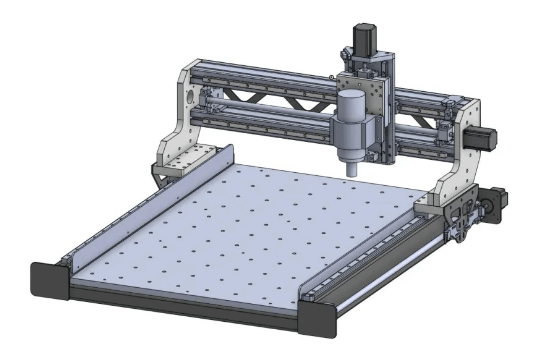
The frame provides the foundation for the machine. Common designs include:
- Gantry Style: Used in large CNC routers and mills for high stability.
- C-Frame: Common in vertical machining centers (VMCs) for compactness.
- Bridge-Type: Offers high rigidity for heavy-duty milling.
2.2 Drive Systems
- Servo Motors: Provide precise motion control with feedback loops.
- Stepper Motors: Cost-effective for simpler CNC applications.
- Ball Screws and Linear Guides: Convert rotary motion into linear movement with minimal backlash.
2.3 Spindle Assembly
The spindle rotates the cutting tool at high speeds. Critical factors include:
- Speed and Power: High-speed spindles (10,000+ RPM) for fine finishes; high-torque spindles for heavy cuts.
- Tool Changer Systems: Automatic tool changers (ATCs) improve efficiency in multi-tool operations.
2.4 Control System
The CNC controller interprets G-code and manages machine operations. Modern controllers feature:
- Closed-Loop Feedback: Ensures accuracy via encoders and sensors.
- User-Friendly Interfaces: Touchscreen panels and CAD/CAM integration.
2.5 Workholding Devices
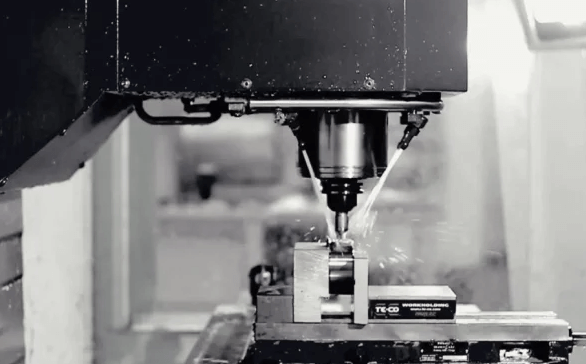
Fixtures and clamps secure the workpiece during machining. Common types:
- Vises and Clamps: For milling and drilling operations.
- Vacuum Tables: Used in CNC routers for sheet materials.
- Rotary Tables: Enable multi-sided machining.
3. Material Selection in CNC Machine Design
3.1 Frame Materials
- Cast Iron: Excellent damping properties but heavy.
- Polymer Composites: Lightweight and vibration-resistant.
- Granite: Used in ultra-precision machines for thermal stability.
3.2 Guideway and Bearing Materials
- Hardened Steel: For durability in linear guides.
- Ceramic Bearings: Reduce friction in high-speed spindles.
3.3 Coatings and Treatments
- Hard Anodizing: Improves wear resistance.
- Teflon Coatings: Reduce friction in sliding components.
4. Innovations in CNC Machine Design
4.1 Additive and Hybrid Manufacturing
Modern CNC machines integrate additive manufacturing (3D printing) with subtractive processes for complex part production.
4.2 IoT and Smart Manufacturing
- Predictive Maintenance: Sensors detect wear before failure.
- Remote Monitoring: Operators control machines via cloud-based systems.
4.3 High-Speed and Ultra-Precision Machining
- Nanotechnology CNC: Used in semiconductor and medical device manufacturing.
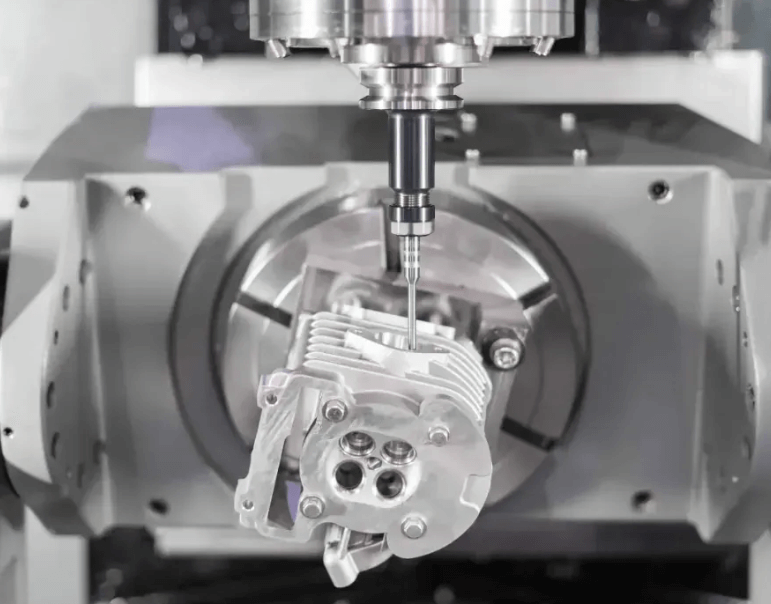
- 5-Axis Simultaneous Machining: Enables intricate aerospace and automotive components.
4.4 Sustainable Design Trends
- Energy-Efficient Motors: Reduce power consumption.
- Recyclable Materials: Eco-friendly machine construction.
5. Challenges in CNC Machine Design
5.1 Balancing Cost and Performance
High-precision components increase costs; designers must optimize for affordability without sacrificing quality.
5.2 Minimizing Vibrations and Deflections
Advanced simulation tools (FEA) help predict and mitigate structural weaknesses.
5.3 Adapting to New Materials
CNC machines must evolve to handle composites, ceramics, and high-temperature alloys.
6. Future Trends in CNC Machine Design
- AI-Driven Optimization: Machine learning improves toolpaths and reduces errors.
- Modular CNC Systems: Customizable machines for flexible production.
- Collaborative Robotics (Cobots): Human-machine collaboration for safer operations.
Conclusion
CNC machine design is a multidisciplinary field combining mechanical engineering, materials science, and advanced control systems. As manufacturing demands grow, CNC machines will continue evolving with smarter, faster, and more sustainable designs. By understanding core principles and embracing innovation, engineers can develop next-generation CNC systems that push the boundaries of precision manufacturing.