
Design and cost of custom circuit boards
Design and cost of custom circuit boards
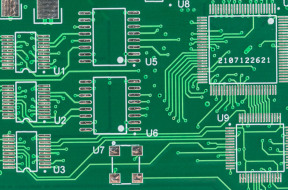
Customized circuit boards play a vital role in modern electronic devices. The design and manufacturing process is complex and sophisticated, involving multiple steps and technical links。
Detailed explanation of the design and manufacturing process of custom circuit boards
1. The design stage is the starting point of the entire process
Designers need to use professional design software to draw circuit diagrams based on customer needs and product functional requirements. This stage not only needs to consider the functionality of the circuit, but also ensure its manufacturability and reliability. Designers usually communicate with customers several times to ensure that the design solution can fully meet expectations.
2. Generate circuit board layout
Layout design requires the various components in the circuit diagram to be reasonably arranged on the circuit board while ensuring electrical performance and mechanical strength. Designers need to consider factors such as signal integrity, electromagnetic compatibility, and thermal management. By using a combination of automatic routing tools and manual adjustments, designers can optimize the layout of the circuit board to achieve the best performance and cost-effectiveness.
3. Generate production files
These files include Gerber files, drilling files, and assembly drawings, which are the basis for manufacturers to produce. Gerber files contain information about each layer of the circuit board, while drilling files describe in detail the location and size of the holes that need to be drilled on the circuit board. The assembly drawing provides the installation location and direction of the components. These documents need to be strictly checked and verified to ensure that there are no errors or omissions.
4. Manufacturing
The manufacturing process usually includes steps such as multi-layer lamination, drilling, electroplating, etching, silk screen printing and surface treatment. First, multi-layer lamination presses the layers of circuit board materials together to form a multi-layer structure. Next, the drilling step drills the required holes on the circuit board for mounting components and achieving electrical connections. The electroplating step plates a layer of conductive material on the hole wall and the line to ensure the reliability of the electrical connection.
5. Etching
The etching step removes the unnecessary copper layer and only retains the designed circuit part. The silk screen printing step prints logos and text on the circuit board for subsequent assembly and maintenance. Finally, the surface treatment step protects the circuit board, such as spraying tin, gold plating or coating an anti-oxidation layer, to improve its durability and reliability.
6. Testing and inspection
After manufacturing, the circuit board needs to undergo rigorous testing and inspection. The test includes electrical performance testing and functional testing to ensure that the circuit board can work properly. Inspection includes appearance inspection and dimensional measurement to ensure that the circuit board meets the design requirements and quality standards. Through these tests and inspections, potential problems can be discovered and corrected to ensure the quality of the final product.
In short, the design and manufacturing process of custom circuit boards is complex and delicate, requiring close cooperation between designers and manufacturers. Through scientific design, precision manufacturing and rigorous testing, high-quality custom circuit boards can be produced to meet customer needs and market requirements.
GET PCB MANUFACTURING AND ASSEMBLY QUOTE NOW!
What factors are included in the cost of custom circuit boards?
What factors are included in the cost of custom circuit boards? This is an important question that many companies must face when considering the development of electronic products.
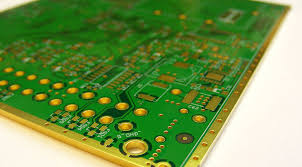
1. Material cost
First, material costs are a major component of the cost of custom circuit boards. Different types of materials, such as FR4, ceramics, aluminum substrates, etc., have significant price differences.
FR4 is the most common material and is relatively low-priced, while ceramic and aluminum substrates are more expensive due to their superior thermal conductivity and mechanical strength. In addition, the thickness and quality of the copper foil will also affect the material cost.
Although thick copper foil can carry greater current, its cost also increases accordingly.
2. Design complexity
Simple single- or double-layer circuit board designs are relatively cheap, while multi-layer circuit boards require more process steps and more complex designs, leading to higher costs.
Design complexity also includes trace density and aperture size. High-density traces and tiny apertures require more sophisticated equipment and technology, increasing manufacturing costs.
3. Manufacturing process
Different manufacturing processes, such as surface mount technology (SMT), through-hole technology (THT), etc., have different costs. Although the SMT process is highly efficient, it requires expensive equipment and high-precision operations, so the cost is high.
Although the THT process is relatively simple, it is still indispensable in some complex designs.
In addition, special processes such as blind vias, buried vias and laser drilling will also significantly increase manufacturing costs.
4.Production quantity
High-volume production often spreads fixed costs, thereby reducing the cost of a single circuit board.
In small-batch production, fixed costs cannot be effectively diluted, resulting in a higher cost for a single circuit board.
Therefore, companies need to comprehensively consider market demand and production costs when planning production to determine the optimal production batch size.
5.Quality control and testing
High-quality circuit boards need to undergo strict testing and quality control, such as electrical testing, functional testing, and environmental testing.
Not only do these tests require specialized equipment and technicians, they also require additional time and resources, increasing overall costs.
However, neglecting quality control can lead to product failures and after-sales problems, ultimately causing greater economic losses.
6. Logistics and supply chain management
The procurement of raw materials, maintenance of production equipment, and transportation and storage of finished products all require effective management and coordination.
Problems in any link may lead to increased costs. For example, untimely supply of raw materials can lead to production delays, while damage during shipping requires additional repair or remanufacturing costs.
GET PCB AND ASSEMBLY SERVICE QUOTE NOW!
To sum up, the cost of customized circuit boards is affected by many factors, including material cost, design complexity, manufacturing process, production quantity, quality control and logistics management, etc.
When companies customize circuit boards, they need to comprehensively consider these factors to maximize cost-effectiveness. Through reasonable planning and management, costs can be effectively controlled while ensuring product quality, thereby enhancing market competitiveness