
Do you know how to connect PCB boards?
First of all, we need to know that PCB boards, as a component of a complete device, basically cannot constitute an electronic product, and there must be problems with external connections.
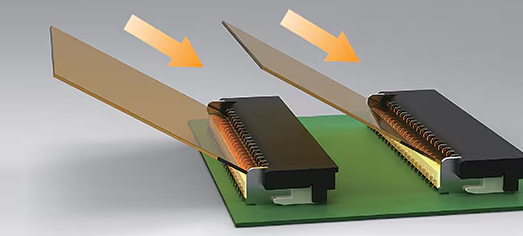
For example, electrical connections are required between PCB boards, between PCB boards and external components, and between PCB boards and equipment panels. Selecting connections that best match reliability, processability and economy is one of the important contents of printed circuit board design. There are many ways to connect to the outside, and you should flexibly choose according to different characteristics.
Interconnection methods of circuit boards 1. Welding method
The advantages of this connection method are simplicity, low cost, high reliability, and can avoid failures caused by poor contact; the disadvantages are that interchangeability and maintenance are not convenient. This method is generally suitable for situations where components have fewer external leads.
- PCB wire welding
This method does not require any connectors. You only need to use wires to directly weld the external connection points on the PCB printed board to the components or other components outside the board. For example, speakers and battery boxes in radios.
When soldering interconnected circuit boards, the following should be noted:
(1) The pads for soldering wires should be placed at the edge of the PCB as much as possible and arranged in uniform sizes to facilitate soldering and maintenance.
(2) To improve the mechanical strength of the wire connection and prevent the pads or printed wires from being pulled off due to the wire being pulled, holes should be drilled near the solder joints on the PCB to allow the wires to pass through the through holes on the soldering surface of the PCB and then inserted into the pad holes from the component surface for soldering.
(3) Arrange or bundle the wires neatly and fix them to the board with wire clips or other fasteners to prevent the wires from breaking due to movement.
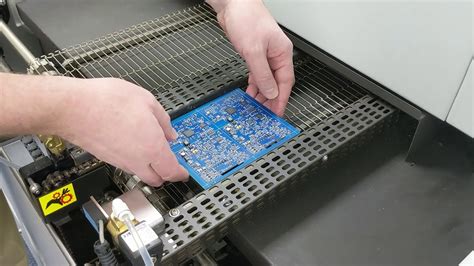
- PCB cable welding
The use of cable connections between two PCBs is both reliable and less prone to connection errors, and the relative positions of the two PCBs are not restricted. Direct soldering between printed boards is often used for connections between two printed boards at a 90-degree angle. After connection, they become an integral PCB component.
The second interconnection method of circuit boards: plug-in connection method
In more complex instruments and equipment, plug-in connection method is often used. This “building block” structure not only ensures the quality of mass production of products, reduces the cost of the system, but also provides convenience for debugging and maintenance. When the equipment fails, the maintenance personnel do not have to check to the component level (that is, check the cause of the failure and trace it back to the specific components. This work takes a considerable amount of time). As long as it is determined which board is abnormal, it can be replaced immediately, troubleshooting can be done in the shortest time, shortening downtime and improving equipment utilization. The replaced circuit board can be repaired in ample time and used as a spare part after repair.
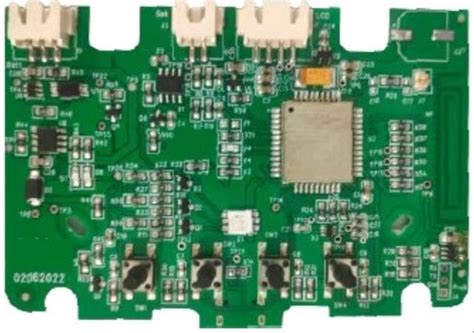
- Printed circuit board socket
In more complex instruments and equipment, this connection method is often used. This method is to make a printed plug from the edge of the PCB printed board. The plug part is designed according to the size of the socket, the number of contacts, the distance between contacts, the position of the positioning holes, etc., so that it matches the dedicated PCB printed board socket.
When making the board, the plug part needs to be gold-plated to improve wear resistance and reduce contact resistance. This method is easy to assemble, has good interchangeability and maintenance performance, and is suitable for standardized mass production. Its disadvantages are that the cost of printed boards is increased, and the manufacturing precision and process requirements of printed boards are high; the reliability is slightly poor, and poor contact is often caused by oxidation of the plug part or aging of the socket reed. In order to improve the reliability of external connection, the same lead wire is often connected in parallel through the contacts on the same side or both sides of the circuit board.
PCB printed board socket connection method is often used in products with multi-board structures. The socket and printed board or bottom board have two types: reed type and pin type.

- Standard pin connection
This method can be used for external connection of printed boards, especially in small instruments. Pin connection is often used. Two printed boards are connected by standard pins. The two printed boards are generally parallel or vertical, which is easy to achieve mass production.