
Skip to content
Andwin Circuits
  • Home
  • ProductsExpand
    • HDI multilayer PCB
    • Rigid Flex PCB
    • Flex pcb
    • Special PCBExpand
      • High Frequency PCBExpand
        • Rogers RO4350B PCB
        • Rogers RO4003 pcb
        • Rogers RO3003 PCB
        • Rogers 5880 PCB
        • DICLAD 527 PCB
        • Taconic TLX series
        • Taconic TLX-8 RF PCB
        • Taconic TLX-9 RF PCB
      • High speed pcbExpand
        • Megtron 6 High Speed PCB
        • TU-872 SLK Sp High Speed
      • High TG PCBExpand
        • SHENGYI SH260 PCB
        • ISOLA 370HR PCB
        • ISOLA IS410 PCB
        • ISOLA IS420 PCB
      • Heavy copper PCB
      • Copper coin pcb
      • Copper inlay PCB
    • Metal Core PCBExpand
      • Copper core pcb
      • Aluminum PCB
      • 2 Layers Aluminum PCB
      • Direct thermal MCPCB
      • 2 Layers Direct Thermal
    • Ceramic PCBExpand
      • DPC ceramic PCB
      • DBC ceramic PCB
      • Thick film Ceramic PCB
      • Al2O3 Alumina PCB
      • AIN ALN ceramic PCB
      • IGBT Ceramic PCB
  • ServiceExpand
    • PCB Assembly
    • Quick turn PCB assembly
    • PCBA conformal coating
  • IndustryExpand
    • Telecommunication
    • IoT and Wireless
    • Industrial Control
    • Thermal management
    • Power and Energy
    • IC test board
    • Automative
    • Medical
  • CapabilityExpand
    • Rigid PCB
    • Rigid flex PCB
    • Metal core PCB
    • PCB Assembly
  • TechnologyExpand
    • Blogs
    • Via in pad
    • PCB E-test
    • PCB stack up
    • MCPCB panelization
    • Controlled impedance PCB
  • AboutExpand
    • About us
    • Certification
    • Factory Tour
  • Contact
Andwin Circuits
Home / Electrical and non-electrical safety spacing in PCB design

Electrical and non-electrical safety spacing in PCB design

ByGrace December 19, 2024December 18, 2024

Anyone who has worked on PCB knows that there are many places in PCB design that need to consider safety spacing. Here, they are temporarily classified into two categories: one is electrical safety spacing, and the other is non-electrical safety spacing.

Electrical safety spacing

1.Spacing between wires

    In terms of the processing capabilities of mainstream PCB manufacturers, the minimum spacing between wires must not be less than 4mil. The minimum line spacing is also the distance from line to line and from line to pad. From a production perspective, the larger the better if conditions permit, and 10mil is more common.

    2.Pad aperture and pad width

      In terms of the processing capabilities of mainstream PCB manufacturers, the minimum pad aperture must not be less than 0.2mm if mechanical drilling is used, and the minimum pad aperture must not be less than 4mil if laser drilling is used. The aperture tolerance varies slightly depending on the board material, and can generally be controlled within 0.05mm, and the minimum pad width must not be less than 0.2mm.

      3.Spacing between pads

        As far as the processing capabilities of mainstream PCB manufacturers are concerned, the spacing between pads should not be less than 0.2mm.

        4.Spacing between copper and board edge

          The spacing between live copper and PCB board edge should not be less than 0.3mm. Set this spacing rule in the Design-Rules-Board outline page.

          If it is a large area of ​​copper plating, it is usually necessary to have an indentation distance from the board edge, which is generally set to 20mil. In the PCB design and manufacturing industry, generally speaking, for mechanical considerations of the finished circuit board, or to avoid curling or electrical short circuits caused by copper exposed on the board edge, engineers often indent large area copper blocks by 20mil relative to the board edge, rather than spreading the copper all the way to the board edge.

          There are many ways to deal with this copper indentation, such as drawing a keepout layer on the board edge and then setting the distance between the copper plating and the keepout. Here is a simple method, which is to set different safety distances for copper objects. For example, if the safety distance of the whole board is set to 10mil, and the copper is set to 20mil, the board edge can be retracted by 20mil, and the dead copper that may appear in the device can be removed.
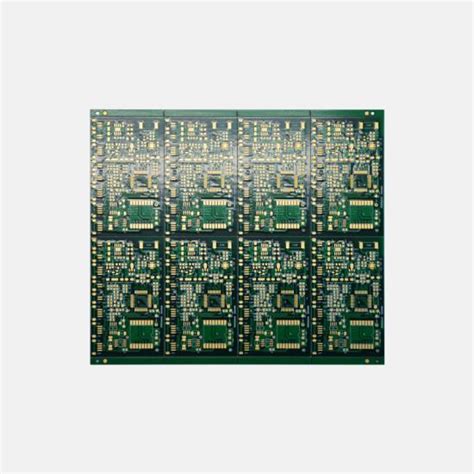
          Contact us for PCB quote now |

          Non-electrical safety distance

          1..Character width, height and spacing

            No changes can be made to the text film during processing, except that the character line width of D-CODE less than 0.22mm (8.66mil) is thickened to 0.22mm, that is, the character line width L=0.22mm (8.66mil).

            The width of the entire character W=1.0mm, the height of the entire character H=1.2mm, and the spacing between characters D=0.2mm. When the text is smaller than the above standards, the processed printing will be blurred.

            2.Via to via spacing

              The via (VIA) to via spacing (hole edge to hole edge) should preferably be greater than 8mil.

              3.Silk screen to pad distance

                Silk screen is not allowed to cover the pad. Because if the silk screen covers the pad, the silk screen will not be able to be tinned when tinning, thus affecting the installation of components. Generally, the board factory requires a spacing of 8mil. If the PCB board is really limited in area, a spacing of 4mil is barely acceptable. If the silk screen accidentally covers the pad during design, the board factory will automatically eliminate the silk screen part left on the pad during manufacturing to ensure that the pad is tinned.

                Of course, the specific situation is analyzed in detail during design. Sometimes the silk screen is deliberately made close to the pad, because when the two pads are close together, the silk screen in the middle can effectively prevent the solder connection from short-circuiting during welding, which is another matter.

                4.3D height and horizontal spacing on the machine

                  When mounting the device on the PCB, it is necessary to consider whether there will be conflicts with other mechanical structures in the horizontal direction and spatial height. Therefore, when designing, it is necessary to fully consider the adaptability between components, between the PCB finished product and the product shell, and in the spatial structure, and reserve a safe spacing for each target object to ensure that there is no conflict in space.

                  Contact us for PCB quote now |

                  Post Tags: #aluminum clad pcb#aluminum core pcb#aluminum pcb#assemble pcb

                  Post navigation

                  Previous Previous
                  PCB technology is developing well. Will you make these mistakes during the design process?
                  NextContinue
                  Efficient SMT Circuit Board Assembly Techniques and Innovations

                  Search

                  Search

                  Products

                  • HDI Multilayer PCB
                  • Rigid Flex PCB
                  • Flex pcb
                  • High Frequency PCB
                  • High speed pcb
                  • Heavy copper PCB
                  • Metal Core PCB
                  • Ceramic PCB

                  Address

                  Andwin Circuits Co.,Limited
                  Email: sales@andwinpcb.com
                  Tel: +86 755 2832 9394
                  Fax:+86 755 2992  6717
                  ADD:1-2F-1217,HouDeQun Industrial park,
                  NanTing RD NO.56,ShaJing,BaoAn,Shenzhen 518104,GuangDong,China

                  Products

                  • HDI Multilayer PCB
                  • Rigid Flex PCB
                  • Flex pcb
                  • High Frequency PCB
                  • High speed pcb
                  • Heavy copper PCB
                  • Metal Core PCB
                  • Ceramic PCB

                  Technology

                  • Blogs
                  • Via in pad
                  • PCB E-test
                  • PCB stack up
                  • Metal core PCB panelization
                  • Controlled impedance PCB

                  CERTIFICATION

                  Certification >>


                  Copyright© 2003 - 2026 Andwin | All Rights Reserved | Powered by Andwin

                  Scroll to top
                  • Home
                  • Products
                    • HDI multilayer PCB
                    • Rigid Flex PCB
                    • Flex pcb
                    • Special PCB
                      • High Frequency PCB
                        • Rogers RO4350B PCB
                        • Rogers RO4003 pcb
                        • Rogers RO3003 PCB
                        • Rogers 5880 PCB
                        • DICLAD 527 PCB
                        • Taconic TLX series
                        • Taconic TLX-8 RF PCB
                        • Taconic TLX-9 RF PCB
                      • High speed pcb
                        • Megtron 6 High Speed PCB
                        • TU-872 SLK Sp High Speed
                      • High TG PCB
                        • SHENGYI SH260 PCB
                        • ISOLA 370HR PCB
                        • ISOLA IS410 PCB
                        • ISOLA IS420 PCB
                      • Heavy copper PCB
                      • Copper coin pcb
                      • Copper inlay PCB
                    • Metal Core PCB
                      • Copper core pcb
                      • Aluminum PCB
                      • 2 Layers Aluminum PCB
                      • Direct thermal MCPCB
                      • 2 Layers Direct Thermal
                    • Ceramic PCB
                      • DPC ceramic PCB
                      • DBC ceramic PCB
                      • Thick film Ceramic PCB
                      • Al2O3 Alumina PCB
                      • AIN ALN ceramic PCB
                      • IGBT Ceramic PCB
                  • Service
                    • PCB Assembly
                    • Quick turn PCB assembly
                    • PCBA conformal coating
                  • Industry
                    • Telecommunication
                    • IoT and Wireless
                    • Industrial Control
                    • Thermal management
                    • Power and Energy
                    • IC test board
                    • Automative
                    • Medical
                  • Capability
                    • Rigid PCB
                    • Rigid flex PCB
                    • Metal core PCB
                    • PCB Assembly
                  • Technology
                    • Blogs
                    • Via in pad
                    • PCB E-test
                    • PCB stack up
                    • MCPCB panelization
                    • Controlled impedance PCB
                  • About
                    • About us
                    • Certification
                    • Factory Tour
                  • Contact
                  Search