
Glass PCB: The Future of High-Performance Electronics
Introduction
Printed Circuit Boards (PCBs) are the backbone of modern electronics, providing mechanical support and electrical connections for components. Traditional PCBs are typically made from materials like FR4 (a glass-reinforced epoxy laminate), polyimide, or ceramic. However, as electronic devices become smaller, faster, and more complex, there is a growing need for advanced PCB materials that offer superior performance.
Glass PCBs have emerged as a promising alternative, offering exceptional electrical, thermal, and mechanical properties. Unlike conventional substrates, glass provides high dimensional stability, excellent high-frequency performance, and superior thermal management. This article explores the advantages, manufacturing processes, applications, and challenges of glass PCBs, highlighting their potential to revolutionize next-generation electronics.
What is a Glass PCB?
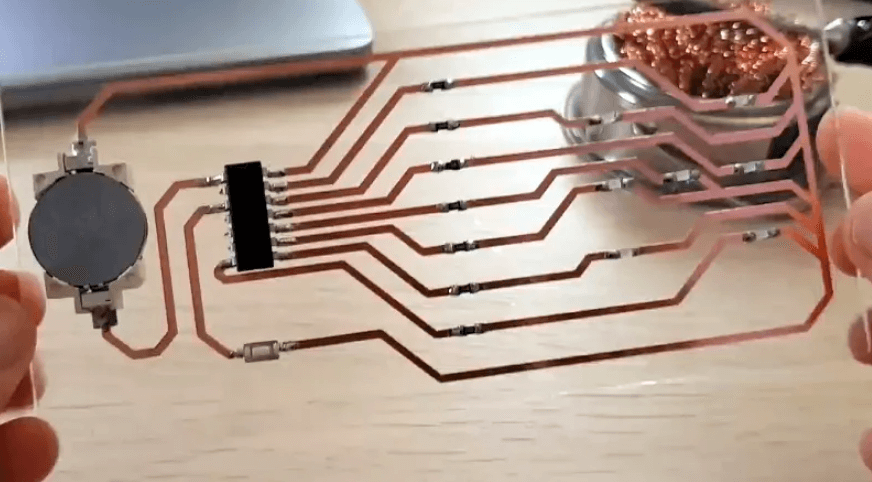
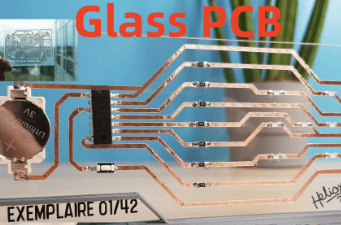
A Glass PCB is a printed circuit board that uses glass as the primary substrate material instead of traditional organic laminates like FR4. Glass offers several unique properties that make it ideal for high-performance applications:
- High thermal stability – Glass can withstand extreme temperatures without warping or degrading.
- Low dielectric loss – Ideal for high-frequency and high-speed applications.
- Excellent dimensional stability – Glass does not expand or contract significantly with temperature changes.
- Superior mechanical rigidity – Provides structural integrity for advanced packaging.
- Optical transparency – Enables applications in photonics and optoelectronics.
Glass PCBs can be made from different types of glass, including borosilicate glass, quartz, and ultra-thin flexible glass, depending on the application requirements.
Advantages of Glass PCBs
1. High-Frequency Performance
Glass has a low dielectric constant (Dk) and low dissipation factor (Df), making it ideal for high-frequency circuits (e.g., 5G, mmWave, RF applications). Unlike traditional PCBs, glass minimizes signal loss and crosstalk, ensuring better signal integrity.
2. Superior Thermal Management
Glass PCBs exhibit high thermal conductivity compared to FR4, allowing efficient heat dissipation. This is crucial for high-power electronics, LED lighting, and semiconductor packaging.
3. Dimensional Stability
Unlike organic substrates, glass does not expand or contract significantly with temperature fluctuations, ensuring stable electrical performance in harsh environments.
4. Hermetic Sealing
Glass provides an airtight and moisture-resistant barrier, making it suitable for medical implants, aerospace, and automotive electronics where reliability is critical.
5. Optical Transparency
For optoelectronic and photonic applications, transparent glass PCBs enable light transmission, facilitating integration with optical sensors, displays, and LiDAR systems.
6. Compatibility with Advanced Packaging
Glass substrates are ideal for fan-out wafer-level packaging (FOWLP), 2.5D/3D IC integration, and silicon photonics, enabling smaller, faster, and more efficient devices.
Manufacturing Process of Glass PCBs
Producing glass PCBs involves specialized techniques to ensure precision and reliability:
1. Glass Substrate Preparation
- Ultra-thin glass (50–200 µm) or thicker panels are selected based on application.
- The glass is cleaned and treated to enhance adhesion.
2. Metallization
- Sputtering or evaporation deposits a thin metal seed layer (e.g., copper, gold).
- Electroplating builds up conductive traces.
- Laser patterning or photolithography defines the circuit layout.
3. Via Formation
- Laser drilling creates microvias for interlayer connections.
- Through-glass vias (TGVs) are filled with conductive material for 3D interconnects.
4. Component Assembly
- Surface-mount technology (SMT) or chip-on-glass (COG) techniques attach components.
- Low-temperature soldering or conductive adhesives are used to avoid glass damage.
5. Encapsulation & Testing
- Protective coatings (e.g., SiO₂, polyimide) are applied.
- Electrical and thermal testing ensures reliability.
Applications of Glass PCBs
1. High-Speed & RF Electronics
- 5G/6G communications
- Millimeter-wave radar
- Satellite and aerospace systems
2. Advanced Semiconductor Packaging
- 2.5D/3D IC integration
- Heterogeneous chip integration
- Fan-out wafer-level packaging (FOWLP)
3. Optoelectronics & Photonics
- LiDAR for autonomous vehicles
- Optical transceivers
- AR/VR displays
4. Medical & Wearable Electronics
- Implantable medical devices
- Flexible biosensors
- Wearable health monitors
5. Automotive & Power Electronics
- Electric vehicle (EV) power modules
- High-brightness LED lighting
- Battery management systems (BMS)
Challenges & Future Outlook
Despite their advantages, glass PCBs face several challenges:
- Fragility – Glass is brittle and requires careful handling.
- High manufacturing cost – Precision processing increases production expenses.
- Limited flexibility – Only ultra-thin glass can bend, restricting some applications.
However, ongoing research aims to overcome these limitations:
- Flexible glass (e.g., Corning Willow Glass) enables bendable electronics.
- Hybrid glass-organic PCBs combine benefits of both materials.
- Advanced laser processing reduces fabrication costs.
As demand for high-performance, miniaturized electronics grows, glass PCBs are expected to play a crucial role in next-generation computing, telecommunications, and IoT devices.
Conclusion
Glass PCBs represent a breakthrough in electronic packaging, offering unmatched high-frequency performance, thermal stability, and reliability. While challenges remain, advancements in material science and manufacturing techniques are paving the way for widespread adoption in 5G, AI, automotive, and medical electronics.
As the industry shifts toward smaller, faster, and more efficient devices, glass PCBs are poised to become a key enabler of future technologies, revolutionizing how we design and build electronic systems.