
How to Solve PCB Negative Film Deformation Issues
Introduction
Printed Circuit Board (PCB) manufacturing relies heavily on precise imaging processes, where negative films play a critical role in pattern transfer. Negative film deformation represents one of the most persistent challenges in PCB production, potentially causing misalignment, short circuits, or open circuits in the final product. This technical paper examines the root causes of negative film deformation and provides comprehensive solutions to mitigate this problem throughout the PCB manufacturing workflow.
Understanding Negative Film Deformation
Negative film deformation refers to dimensional changes in the photographic film used to transfer circuit patterns onto copper-clad laminates. These changes can manifest as:
- Linear expansion or shrinkage
- Localized distortions
- Non-uniform dimensional changes across the film
- Warping or curling of the film substrate
Even minor deformations (as little as 0.05%) can cause significant registration problems in high-density interconnect (HDI) boards with fine-line geometries.
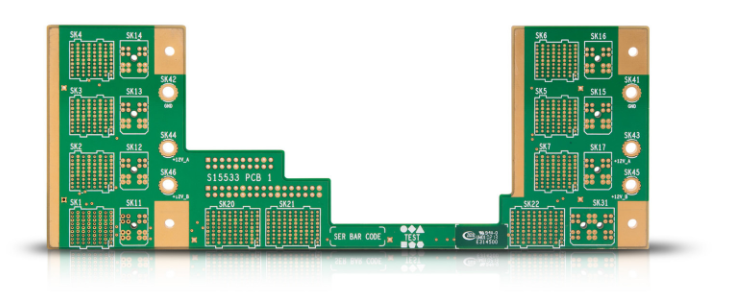
Primary Causes of Negative Film Deformation
1. Environmental Factors
Humidity Effects:
Photographic films typically use polyester bases (such as PET) that absorb moisture. A 1% change in moisture content can cause approximately 0.006% dimensional change. In high-humidity environments (above 60% RH), films may expand; in dry conditions (below 35% RH), they may shrink.
Temperature Fluctuations:
Polyester films have a coefficient of thermal expansion around 17 ppm/°C. A 5°C temperature change can induce 0.0085% dimensional change. Rapid temperature variations exacerbate the problem.
2. Material Characteristics
Film Base Properties:
Standard PET films exhibit higher dimensional instability compared to dimensionally stable polyester (DSP) films. DSP films may cost 20-30% more but offer superior stability (≤0.01% dimensional change under normal conditions).
Emulsion Characteristics:
Silver halide emulsions can shrink during processing, with typical shrinkage rates of 0.02-0.05% after development and fixing.
3. Handling and Storage Issues
Mechanical Stress:
Improper winding tension (above 2 N/cm²) can induce permanent deformation. Rolling films tighter than a 75mm core diameter increases stress.
Storage Conditions:
Vertical storage without proper support can cause creep deformation over time. Films stored horizontally under weight may develop flatness issues.
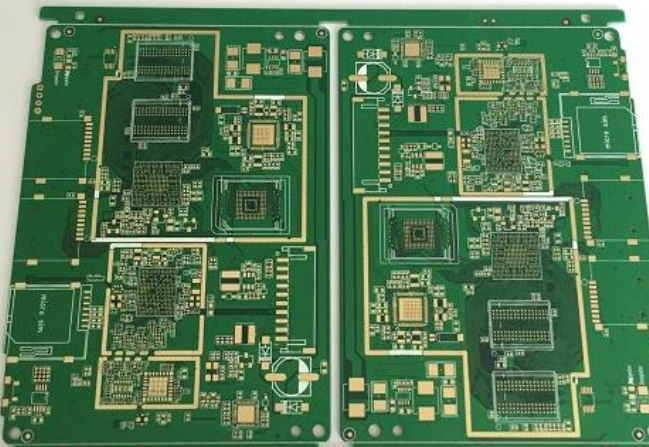
Comprehensive Solutions for Negative Film Deformation
1. Environmental Control Measures
Climate-Controlled Production Areas:
Maintain constant temperature (20±1°C) and humidity (50±5% RH) in film handling areas. Use industrial-grade HVAC systems with ±0.5°C precision.
Film Acclimatization:
Allow films to stabilize for 24 hours in production environment before use. For critical applications, extend to 48 hours with the protective liner removed.
Localized Environmental Control:
Implement micro-environments for critical processes:
- Exposure units: 20±0.5°C, 50±2% RH
- Inspection stations: 20±1°C, 50±3% RH
2. Material Selection and Treatment
Advanced Film Substrates:
- DSP films with <0.005% dimensional change
- Glass substrate films for critical layers (0.001% stability)
- Liquid photopolymer films for direct imaging alternatives
Pre-Shrinkage Processing:
Implement pre-baking protocols (60°C for 30 minutes) to remove residual stresses. For silver halide films, use stabilized processing chemistry with pH buffers.
3. Process Optimization
Tension Control in Handling:
- Unwinding tension: 1.5-2 N/cm²
- Transport tension: 1-1.5 N/cm²
- Rewinding tension: 0.8-1.2 N/cm²
Registration System Enhancements:
- Implement multi-point optical registration (minimum 3-point)
- Use adaptive scaling algorithms that compensate for measured deformation
- Employ real-time deformation mapping with >500 dpi resolution scanners
Exposure Process Adjustments:
- Step-and-repeat exposure with local alignment for large panels
- Dynamic focus systems to accommodate film warpage
- UV wavelength optimization (365nm vs 405nm) for better penetration
4. Handling and Storage Protocols
Proper Storage Conditions:
- Temperature: 20±2°C
- Humidity: 45-55% RH
- Vertical storage with <10 films per hanger
- Horizontal storage with <25 films stacked
Handling Procedures:
- Use edge-contact handling only
- Minimum bend radius of 50mm
- Cleanroom gloves (class 1000 or better)
- Anti-static measures (1-10 megohm surface resistivity)
5. Measurement and Compensation Techniques
Advanced Metrology:
- Laser interferometry (0.1μm resolution)
- Grid distortion analysis with <5μm error
- Thermal imaging for stress mapping
Compensation Strategies:
- CAD-level scaling (X/Y independent)
- Localized stretch algorithms
- Predictive deformation modeling based on historical data
Emerging Technologies and Future Directions
1. Direct Imaging Systems
Laser direct imaging (LDI) eliminates film-related deformation by:
- Achieving <5μm registration accuracy
- Enabling dynamic compensation (up to 500ppm adjustability)
- Reducing process steps by 3-5 operations
2. Smart Films with Embedded Sensors
Development of films containing:
- Nanoscale strain gauges
- Moisture-sensitive indicators
- Temperature-responsive markers
3. Advanced Materials
- Graphene-enhanced substrates with near-zero CTE
- Metamaterials with tunable thermal properties
- Self-correcting films using shape-memory polymers
Implementation Roadmap
Short-term (0-6 months)
- Implement environmental monitoring
- Establish film handling protocols
- Train staff on proper storage procedures
Medium-term (6-18 months)
- Upgrade to DSP films for critical layers
- Install tension-controlled film handlers
- Implement basic compensation software
Long-term (18-36 months)
- Transition to partial LDI implementation
- Deploy advanced metrology systems
- Integrate AI-based deformation prediction
Conclusion
PCB negative film deformation presents a multifaceted challenge requiring comprehensive solutions across materials, processes, and environmental controls. By implementing the strategies outlined in this paper—from basic environmental stabilization to advanced compensation techniques—manufacturers can achieve significant improvements in registration accuracy and yield. The most effective approach combines immediate procedural improvements with strategic investments in advanced technologies, particularly direct imaging systems that ultimately eliminate film-based deformation issues entirely. As PCB geometries continue to shrink, addressing negative film deformation will remain critical for maintaining manufacturing precision and product reliability.