
Industrial PCB Production: Processes, Technologies, and Trends
Introduction
Printed Circuit Boards (PCBs) are the backbone of modern electronics, serving as the foundation for nearly all electronic devices, from consumer gadgets to industrial machinery. Industrial PCB production involves a series of complex and precise manufacturing processes designed to ensure reliability, durability, and high performance in demanding environments. This article explores the key stages of industrial PCB production, advanced manufacturing technologies, quality control measures, and emerging trends in the industry.
1. The Industrial PCB Manufacturing Process
Industrial PCB production follows a structured workflow to transform raw materials into functional circuit boards. The major steps include:
1.1 Design and Prototyping
Before manufacturing begins, PCB designs are created using Computer-Aided Design (CAD) software. Engineers define the circuit layout, component placement, and routing while adhering to industry standards (e.g., IPC-6012). Prototyping allows for testing and validation before full-scale production.
1.2 Material Selection
Industrial PCBs require high-quality substrates, typically:
- FR-4 (Flame Retardant-4): A common glass-reinforced epoxy laminate.
- High-Frequency Laminates (e.g., Rogers, Teflon): Used in RF and microwave applications.
- Metal Core PCBs: For better heat dissipation in power electronics.
1.3 PCB Fabrication
The fabrication process involves several critical steps:
1.3.1 Imaging and Etching
- A photoresist layer is applied to the copper-clad laminate.
- UV light exposes the desired circuit pattern, and chemical etching removes excess copper.
1.3.2 Drilling and Plating
- Precision CNC machines drill holes for vias and component leads.
- Electroless copper plating creates conductive pathways between layers.
1.3.3 Layer Stackup and Lamination
- Multilayer PCBs are assembled by stacking and laminating layers under high pressure and temperature.
1.3.4 Solder Mask and Silkscreen Application
- A solder mask (usually green) is applied to prevent short circuits.
- Silkscreen printing adds labels and component identifiers.
1.4 Surface Finishing
To protect copper traces and improve solderability, surface finishes such as:
- HASL (Hot Air Solder Leveling)
- ENIG (Electroless Nickel Immersion Gold)
- OSP (Organic Solderability Preservative)
are applied.
1.5 Component Assembly
Industrial PCBs undergo either:
- Through-Hole Technology (THT): Components are inserted into drilled holes and soldered.
- Surface Mount Technology (SMT): Automated pick-and-place machines mount components directly onto pads.
1.6 Testing and Inspection
Quality assurance is critical in industrial PCB production. Common tests include:
- Automated Optical Inspection (AOI)
- In-Circuit Testing (ICT)
- Functional Testing
2. Advanced Manufacturing Technologies
2.1 High-Density Interconnect (HDI) PCBs
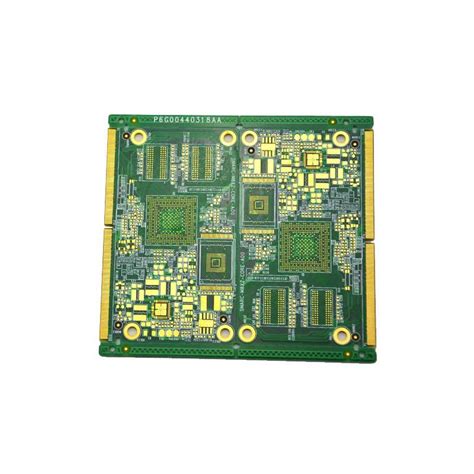
HDI technology allows for finer traces and smaller vias, enabling compact and high-performance PCBs for aerospace, medical, and IoT applications.
2.2 Flexible and Rigid-Flex PCBs
Flexible PCBs use polyimide substrates, making them ideal for wearable electronics and automotive applications.
2.3 Additive Manufacturing (3D Printing)
Emerging 3D printing techniques enable rapid prototyping and complex PCB geometries.
2.4 Industry 4.0 and Smart Factories
Automation, IoT-enabled machines, and AI-driven analytics optimize production efficiency and defect detection.
3. Quality Control and Standards
Industrial PCBs must comply with stringent standards:
- IPC-A-600: Acceptability of Printed Boards
- IPC-6012: Qualification and Performance Specification for Rigid PCBs
- ISO 9001: Quality Management Systems
4. Emerging Trends in Industrial PCB Production
4.1 Miniaturization and High-Speed Designs
Demand for smaller, faster PCBs drives innovations in materials and manufacturing techniques.
4.2 Sustainable Manufacturing
Eco-friendly materials (halogen-free laminates) and lead-free soldering processes are gaining traction.
4.3 AI and Machine Learning in PCB Testing
AI-powered defect detection systems improve accuracy and reduce production delays.
4.4 5G and IoT-Driven Demand
The expansion of 5G networks and IoT devices requires advanced PCBs with high-frequency capabilities.
Conclusion
Industrial PCB production is a sophisticated and evolving field that plays a crucial role in modern electronics. From design and material selection to advanced manufacturing and quality control, each step ensures the reliability and performance of PCBs in harsh industrial environments. As technology advances, trends like HDI, flexible PCBs, and smart manufacturing will continue to shape the future of the industry.
By staying ahead of these developments, manufacturers can meet the growing demands of industries such as automotive, aerospace, and telecommunications while maintaining high standards of quality and efficiency.