
Skip to content
Andwin Circuits
  • Home
  • ProductsExpand
    • HDI multilayer PCB
    • Rigid Flex PCB
    • Flex pcb
    • Special PCBExpand
      • High Frequency PCBExpand
        • Rogers RO4350B PCB
        • Rogers RO4003 pcb
        • Rogers RO3003 PCB
        • Rogers 5880 PCB
        • DICLAD 527 PCB
        • Taconic TLX series
        • Taconic TLX-8 RF PCB
        • Taconic TLX-9 RF PCB
      • High speed pcbExpand
        • Megtron 6 High Speed PCB
        • TU-872 SLK Sp High Speed
      • High TG PCBExpand
        • SHENGYI SH260 PCB
        • ISOLA 370HR PCB
        • ISOLA IS410 PCB
        • ISOLA IS420 PCB
      • Heavy copper PCB
      • Copper coin pcb
      • Copper inlay PCB
    • Metal Core PCBExpand
      • Copper core pcb
      • Aluminum PCB
      • 2 Layers Aluminum PCB
      • Direct thermal MCPCB
      • 2 Layers Direct Thermal
    • Ceramic PCBExpand
      • DPC ceramic PCB
      • DBC ceramic PCB
      • Thick film Ceramic PCB
      • Al2O3 Alumina PCB
      • AIN ALN ceramic PCB
      • IGBT Ceramic PCB
  • ServiceExpand
    • PCB Assembly
    • Quick turn PCB assembly
    • PCBA conformal coating
  • IndustryExpand
    • Telecommunication
    • IoT and Wireless
    • Industrial Control
    • Thermal management
    • Power and Energy
    • IC test board
    • Automative
    • Medical
  • CapabilityExpand
    • Rigid PCB
    • Rigid flex PCB
    • Metal core PCB
    • PCB Assembly
  • TechnologyExpand
    • Blogs
    • Via in pad
    • PCB E-test
    • PCB stack up
    • MCPCB panelization
    • Controlled impedance PCB
  • AboutExpand
    • About us
    • Certification
    • Factory Tour
  • Contact
Andwin Circuits
Home / Methods and techniques for PCB board dissection

Methods and techniques for PCB board dissection

ByGrace January 11, 2025January 10, 2025

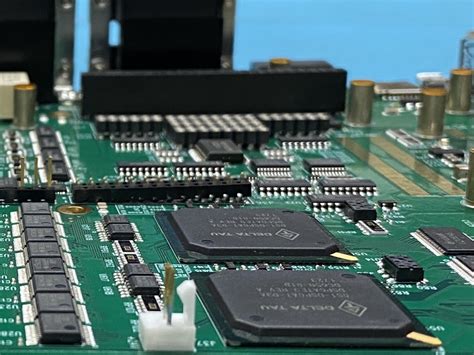
PCB board dissection is an important part of PCB design. However, since it involves sandpaper grinding (a harmful type of work) and line drawing (a simple repetitive labor), many designers are reluctant to do this work. Even many designers think that PCB board dissection is not a technical job, and junior designers can do this job with a little training. This concept is somewhat universal, but like many jobs, there are still some skills in PCB board dissection. If designers master these skills, they can save a lot of time and greatly reduce the workload. Let’s talk about this knowledge in detail below.

Concept of PCB board dissection

PCB board dissection refers to the process of obtaining the schematic diagram and board diagram (PCB diagram) based on the original PCB board. Its purpose is to carry out later development. Later development includes installing components, deep testing, modifying circuits, etc. Because it does not belong to the scope of PCB board dissection and is related to it, it is only introduced and no longer detailed.
Contact us for PCB quote now |

Process of PCB board dissection

  1. Remove the components on the original board.
  2. Scan the original board to obtain the graphic file.
  3. Grind off the surface layer to get the middle layer.
  4. Scan the middle layer to get the graphic file.
  5. Repeat steps 2-4 until all layers are processed.
  6. Use special software to convert the graphic file into an electrical relationship file—PCB diagram. If there is suitable software, the designer only needs to trace the graphic once.
  7. Check and verify to complete the design.

PCB board dissection skills

PCB board dissection, especially multi-layer PCB board dissection, is a time-consuming and laborious task, which includes a lot of repetitive labor. Designers must have enough patience and care, otherwise it is very easy to make mistakes. The key to doing a good job of dissecting PCB board design is to use suitable software instead of manual repetitive work, which is time-saving and accurate.

1.A scanner must be used during the dissection process.

    Many designers are accustomed to drawing lines directly on PCB design systems such as PROTEL, PADSOR or CAD. This habit is very bad. The scanned graphic file is both the basis for conversion into PCB files and the basis for later inspection. Using a scanner can greatly reduce the difficulty and intensity of labor. It is no exaggeration to say that if the scanner can be fully utilized, even people without design experience can complete the PCB board profiling work.

    2.Single-direction grinding.

      In order to pursue speed, some designers choose two-way grinding (that is, grinding the board layer from the front and back surfaces to the middle layer). In fact, this is very wrong. Because the two-way grinding board is very easy to wear through, causing damage to other layers, the result can be imagined. The outer layer of the PCB board is the hardest due to the process and copper foil, pads, etc., and the middle layer is the softest. Therefore, the problem is more serious when it comes to the middle layer, and it is often impossible to grind. In addition, the PCB boards produced by various manufacturers have different materials, hardness, and elasticity, which makes it difficult to grind accurately.

      3.Choose excellent conversion software.

        Converting the scanned graphic file to a PCB file is the key to the entire work. With a good conversion file. Designers only need to “copy the cat and draw the tiger” and trace the graphic once to complete the work. EDA2000 is recommended here, which is really convenient.

        Contact us for PCB quote now |
        Post Tags: #12 layer pcb stackup#4 layer pcb#aluminum clad pcb#aluminum core pcb#aluminum pcb#assemble pcb

        Post navigation

        Previous Previous
        Understanding BGA PCB Assembly: A Comprehensive Guide
        NextContinue
        Methods and techniques for PCB board dissection

        Search

        Search

        Products

        • HDI Multilayer PCB
        • Rigid Flex PCB
        • Flex pcb
        • High Frequency PCB
        • High speed pcb
        • Heavy copper PCB
        • Metal Core PCB
        • Ceramic PCB

        Address

        Andwin Circuits Co.,Limited
        Email: sales@andwinpcb.com
        Tel: +86 755 2832 9394
        Fax:+86 755 2992  6717
        ADD:1-2F-1217,HouDeQun Industrial park,
        NanTing RD NO.56,ShaJing,BaoAn,Shenzhen 518104,GuangDong,China

        Products

        • HDI Multilayer PCB
        • Rigid Flex PCB
        • Flex pcb
        • High Frequency PCB
        • High speed pcb
        • Heavy copper PCB
        • Metal Core PCB
        • Ceramic PCB

        Technology

        • Blogs
        • Via in pad
        • PCB E-test
        • PCB stack up
        • Metal core PCB panelization
        • Controlled impedance PCB

        CERTIFICATION

        Certification >>


        Copyright© 2003 - 2026 Andwin | All Rights Reserved | Powered by Andwin

        Scroll to top
        • Home
        • Products
          • HDI multilayer PCB
          • Rigid Flex PCB
          • Flex pcb
          • Special PCB
            • High Frequency PCB
              • Rogers RO4350B PCB
              • Rogers RO4003 pcb
              • Rogers RO3003 PCB
              • Rogers 5880 PCB
              • DICLAD 527 PCB
              • Taconic TLX series
              • Taconic TLX-8 RF PCB
              • Taconic TLX-9 RF PCB
            • High speed pcb
              • Megtron 6 High Speed PCB
              • TU-872 SLK Sp High Speed
            • High TG PCB
              • SHENGYI SH260 PCB
              • ISOLA 370HR PCB
              • ISOLA IS410 PCB
              • ISOLA IS420 PCB
            • Heavy copper PCB
            • Copper coin pcb
            • Copper inlay PCB
          • Metal Core PCB
            • Copper core pcb
            • Aluminum PCB
            • 2 Layers Aluminum PCB
            • Direct thermal MCPCB
            • 2 Layers Direct Thermal
          • Ceramic PCB
            • DPC ceramic PCB
            • DBC ceramic PCB
            • Thick film Ceramic PCB
            • Al2O3 Alumina PCB
            • AIN ALN ceramic PCB
            • IGBT Ceramic PCB
        • Service
          • PCB Assembly
          • Quick turn PCB assembly
          • PCBA conformal coating
        • Industry
          • Telecommunication
          • IoT and Wireless
          • Industrial Control
          • Thermal management
          • Power and Energy
          • IC test board
          • Automative
          • Medical
        • Capability
          • Rigid PCB
          • Rigid flex PCB
          • Metal core PCB
          • PCB Assembly
        • Technology
          • Blogs
          • Via in pad
          • PCB E-test
          • PCB stack up
          • MCPCB panelization
          • Controlled impedance PCB
        • About
          • About us
          • Certification
          • Factory Tour
        • Contact
        Search