
PCB COB Soft Packaging: Technology, Advantages, and Applications
Abstract
This paper provides a comprehensive overview of Chip-on-Board (COB) soft packaging technology for printed circuit boards (PCBs). The article examines the fundamental principles of COB technology, differentiates between traditional packaging methods and soft packaging approaches, and analyzes the key advantages of COB soft packaging in modern electronics. The manufacturing process is detailed step-by-step, followed by an exploration of current applications across various industries. The paper concludes with a discussion of emerging trends and future developments in COB soft packaging technology.
1. Introduction to COB Technology
Chip-on-Board (COB) technology represents a significant advancement in electronic packaging, where semiconductor chips are mounted directly onto printed circuit boards rather than using traditional pre-packaged components. This approach eliminates the need for individual chip packaging, resulting in more compact, efficient, and cost-effective electronic assemblies.
COB soft packaging refers to a specific implementation where the chip attachment and encapsulation processes utilize flexible or compliant materials that offer mechanical stress relief and improved reliability compared to rigid packaging methods. This technology has gained prominence in applications requiring miniaturization, flexibility, and enhanced thermal performance.
The evolution of COB technology has progressed through several generations:
- First-generation COB (1980s): Basic chip attachment with wire bonding
- Second-generation COB (1990s): Improved encapsulation materials
- Modern COB soft packaging (2000s-present): Advanced flexible encapsulants and high-density interconnects
2. COB Soft Packaging vs. Traditional Packaging Methods
2.1 Conventional Packaging Approaches
Traditional IC packaging involves:
- Individual chip packaging (DIP, SOP, QFP, BGA, etc.)
- Discrete components mounted on PCBs
- Clearly visible interconnections and components
2.2 COB Soft Packaging Characteristics
COB soft packaging differs fundamentally through:
- Direct die attachment to substrate
- Wire bonding or flip-chip interconnections
- Application of soft encapsulant materials (typically silicone-based)
- Compliant interface between chip and board
2.3 Comparative Advantages
COB soft packaging offers several benefits over conventional methods:
| Feature | Traditional Packaging | COB Soft Packaging |
|---|---|---|
| Size | Larger footprint | Compact form factor |
| Weight | Heavier | Lighter |
| Thermal Path | Longer | Shorter |
| Mechanical Stress | Concentrated at leads | Distributed |
| Reliability | Moderate | Enhanced |
| Cost | Higher for small batches | Lower at scale |
3. Key Advantages of COB Soft Packaging
3.1 Miniaturization Capabilities
COB soft packaging enables unprecedented size reduction by:
- Eliminating bulky package housings
- Reducing interconnect distances
- Allowing three-dimensional assembly configurations
- Supporting high-density component placement
3.2 Enhanced Thermal Performance
The thermal management benefits include:
- Direct heat conduction paths from die to substrate
- High thermal conductivity encapsulants (up to 3 W/mK)
- Reduced thermal interface materials
- Lower junction temperatures (typically 10-15°C improvement)
3.3 Improved Reliability
Reliability enhancements stem from:
- Reduced solder joint failures (no package-to-board interconnects)
- Compliant materials absorbing mechanical stresses
- Protection from environmental factors (moisture, contaminants)
- Lower coefficient of thermal expansion (CTE) mismatch issues
3.4 Cost Efficiency
Economic advantages include:
- Elimination of individual packaging costs
- Reduced material usage
- Simplified assembly processes
- Lower inventory requirements (bare die vs. packaged components)
4. COB Soft Packaging Manufacturing Process
4.1 Substrate Preparation
- Selection of appropriate PCB material (FR-4, polyimide, ceramic)
- Application of bonding pads and circuit traces
- Surface treatment for improved adhesion
4.2 Die Attachment
- Precision placement of bare dies using pick-and-place equipment
- Application of conductive adhesives or eutectic bonding
- Alignment accuracy typically within ±15μm
4.3 Interconnection Methods
Wire Bonding:
- Gold or aluminum wire (25-50μm diameter)
- Ultrasonic or thermosonic bonding
- Bond pitch down to 40μm
Flip Chip:
- Solder bump or conductive adhesive interconnects
- Fine pitch capabilities (<100μm)
- Self-alignment during reflow
4.4 Encapsulation Process
- Dispensing of soft encapsulant (typically silicone or modified epoxy)
- Controlled curing process (UV or thermal)
- Thickness control (usually 0.1-0.5mm above chip surface)
- Potting or glob-top application methods
4.5 Quality Control and Testing
- Automated optical inspection (AOI)
- Electrical testing (continuity, functionality)
- Environmental stress screening
- Reliability testing (thermal cycling, humidity exposure)
5. Materials for COB Soft Packaging
5.1 Encapsulant Materials
Key requirements for soft encapsulants:
- Low modulus of elasticity (<1GPa)
- High thermal conductivity
- Excellent adhesion to various surfaces
- Low ionic impurity content
- Resistance to environmental factors
Common material systems:
- Silicone-based compounds
- Flexible epoxies
- Polyimide gels
- Urethane-based materials
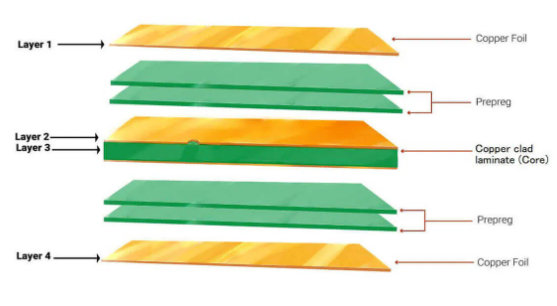
5.2 Substrate Materials
- Standard FR-4 for cost-sensitive applications
- High-frequency laminates (Rogers, PTFE-based)
- Flexible substrates (polyimide, PET)
- Ceramic substrates for high-power applications
5.3 Die Attach Materials
- Electrically conductive adhesives (silver-filled)
- Thermally conductive adhesives
- Eutectic alloys (Au-Si, Au-Sn)
- Solder pastes for flip-chip applications
6. Applications of COB Soft Packaging
6.1 Consumer Electronics
- Smartphones and tablets (camera modules, display drivers)
- Wearable devices (flexible sensors, health monitors)
- IoT devices (compact sensor nodes)
6.2 Automotive Electronics
- LED lighting systems (headlamps, interior lighting)
- Sensor modules (parking assist, environmental sensing)
- Control units (engine management, infotainment)
6.3 Industrial Applications
- Motor drives and power electronics
- Industrial sensors and actuators
- Harsh environment electronics
6.4 Medical Devices
- Implantable electronics
- Diagnostic equipment
- Wearable medical monitors
6.5 Aerospace and Defense
- Avionics systems
- Satellite electronics
- Ruggedized communication equipment
7. Challenges and Solutions in COB Soft Packaging
7.1 Technical Challenges
- Die protection during handling and assembly
- Precision requirements for die placement
- Moisture resistance of soft encapsulants
- Long-term material stability
- Rework difficulties
7.2 Manufacturing Challenges
- Yield optimization in high-volume production
- Process control for consistent encapsulation
- Automation of delicate assembly steps
- Testing limitations with encapsulated dies
7.3 Emerging Solutions
- Advanced die handling technologies
- Improved material formulations
- In-process monitoring systems
- Non-destructive testing methods
- Reworkable encapsulant materials
8. Future Trends in COB Soft Packaging
8.1 Advanced Interconnect Technologies
- Fine-pitch copper pillar bumps
- Anisotropic conductive films
- Nanowire interconnects
8.2 Material Innovations
- Self-healing encapsulants
- Phase-change thermal interface materials
- Graphene-enhanced composites
8.3 Integration with Other Technologies
- Combination with flexible hybrid electronics
- Embedded component integration
- 3D packaging approaches
8.4 Industry 4.0 Adaptation
- AI-assisted process optimization
- Digital twin applications
- Smart manufacturing integration
9. Conclusion
COB soft packaging technology has established itself as a critical enabler for modern electronic systems requiring miniaturization, reliability, and cost efficiency. The unique combination of direct chip attachment and compliant encapsulation materials provides distinct advantages over conventional packaging approaches across numerous applications.
As electronic devices continue to evolve toward smaller form factors, increased functionality, and greater environmental resilience, COB soft packaging is poised to play an even more significant role. Ongoing advancements in materials, processes, and integration techniques promise to further expand the capabilities and applications of this versatile packaging technology.
The future of COB soft packaging lies in its ability to adapt to emerging challenges such as higher power densities, finer feature sizes, and more demanding operating environments while maintaining cost-effectiveness and manufacturing scalability. As these developments progress, COB soft packaging will remain at the forefront of electronic packaging innovation.