
Skip to content
Andwin Circuits
  • Home
  • ProductsExpand
    • HDI multilayer PCB
    • Rigid Flex PCB
    • Flex pcb
    • Special PCBExpand
      • High Frequency PCBExpand
        • Rogers RO4350B PCB
        • Rogers RO4003 pcb
        • Rogers RO3003 PCB
        • Rogers 5880 PCB
        • DICLAD 527 PCB
        • Taconic TLX series
        • Taconic TLX-8 RF PCB
        • Taconic TLX-9 RF PCB
      • High speed pcbExpand
        • Megtron 6 High Speed PCB
        • TU-872 SLK Sp High Speed
      • High TG PCBExpand
        • SHENGYI SH260 PCB
        • ISOLA 370HR PCB
        • ISOLA IS410 PCB
        • ISOLA IS420 PCB
      • Heavy copper PCB
      • Copper coin pcb
      • Copper inlay PCB
    • Metal Core PCBExpand
      • Copper core pcb
      • Aluminum PCB
      • 2 Layers Aluminum PCB
      • Direct thermal MCPCB
      • 2 Layers Direct Thermal
    • Ceramic PCBExpand
      • DPC ceramic PCB
      • DBC ceramic PCB
      • Thick film Ceramic PCB
      • Al2O3 Alumina PCB
      • AIN ALN ceramic PCB
      • IGBT Ceramic PCB
  • ServiceExpand
    • PCB Assembly
    • Quick turn PCB assembly
    • PCBA conformal coating
  • IndustryExpand
    • Telecommunication
    • IoT and Wireless
    • Industrial Control
    • Thermal management
    • Power and Energy
    • IC test board
    • Automative
    • Medical
  • CapabilityExpand
    • Rigid PCB
    • Rigid flex PCB
    • Metal core PCB
    • PCB Assembly
  • TechnologyExpand
    • Blogs
    • Via in pad
    • PCB E-test
    • PCB stack up
    • MCPCB panelization
    • Controlled impedance PCB
  • AboutExpand
    • About us
    • Certification
    • Factory Tour
  • Contact
Andwin Circuits
Home / PCB Routing Techniques: A Comprehensive Guide

PCB Routing Techniques: A Comprehensive Guide

ByGrace June 16, 2025June 16, 2025

Introduction

Printed Circuit Board (PCB) design is a critical aspect of electronic product development, and routing (or布线) plays a pivotal role in ensuring signal integrity, power distribution, and electromagnetic compatibility (EMC). Proper routing techniques can significantly impact the performance, reliability, and manufacturability of a PCB. This article explores the most common PCB routing methods, their advantages, and best practices for implementation.

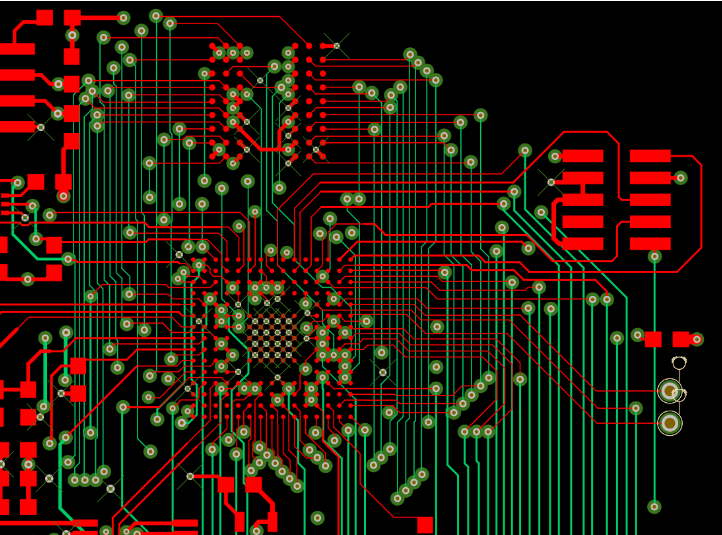
1. Manual Routing

Manual routing involves the designer manually placing traces between components based on design requirements. While time-consuming, it offers the highest level of control.

Advantages:

  • Precision: Critical signals (e.g., high-speed or RF traces) can be optimized for impedance and length matching.
  • Flexibility: Designers can avoid obstacles like vias, pads, and other components effectively.

Disadvantages:

  • Time-consuming: Large designs require extensive effort.
  • Human error risk: Incorrect routing may lead to signal integrity issues.

Best Practices:

  • Use grid snapping to maintain consistency.
  • Prioritize critical signals (clocks, differential pairs) first.
  • Minimize right-angle turns to avoid impedance discontinuities.
Contact us for PCB quote now |

2. Autorouting

Autorouting uses software algorithms to automatically connect traces based on predefined rules.

Advantages:

  • Faster for complex designs: Reduces manual effort in dense layouts.
  • Rule-driven: Follows design constraints (e.g., clearance, trace width).

Disadvantages:

  • Suboptimal paths: May not account for high-speed or EMI considerations.
  • Limited intelligence: Requires post-route manual adjustments.

Best Practices:

  • Define strict design rules (e.g., differential pair spacing).
  • Use partial autorouting for non-critical signals.
  • Review and manually optimize critical sections.

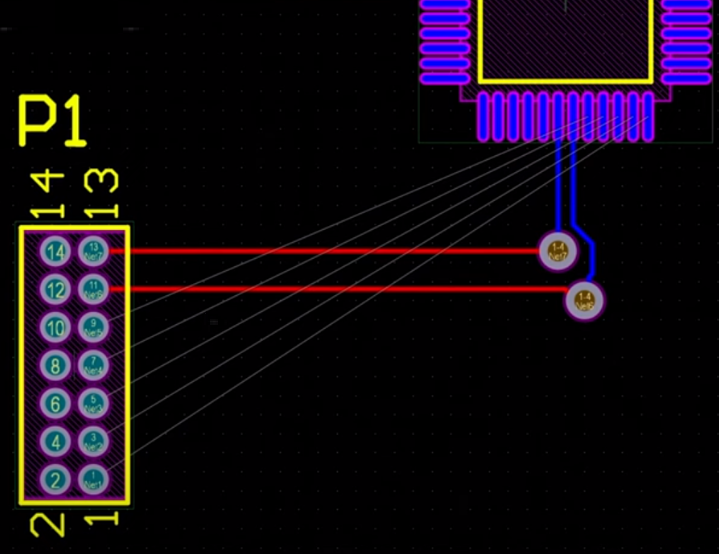
3. Differential Pair Routing

Used for high-speed signals (e.g., USB, HDMI, PCIe), differential pairs consist of two traces carrying equal and opposite signals to reduce noise.

Advantages:

  • Noise immunity: Common-mode noise is canceled out.
  • Improved signal integrity: Minimizes crosstalk and EMI.

Best Practices:

  • Maintain consistent spacing and length matching (tolerance <5 mil).
  • Route symmetrically to avoid phase mismatches.
  • Avoid splitting pairs with vias or obstacles.

4. Length Matching (Tuning)

Ensures signals arrive simultaneously by adjusting trace lengths (critical for parallel buses like DDR).

Techniques:

  • Serpentine routing: Adds meanders to increase length.
  • Delay tuning: Adjusts trace lengths post-layout.

Best Practices:

  • Match lengths within tolerance (e.g., ±50 mil for DDR).
  • Avoid sharp bends to prevent impedance changes.
Contact us for PCB quote now |

5. Power Plane Routing

Instead of traces, power is distributed through dedicated copper layers (planes).

Advantages:

  • Low impedance: Provides stable voltage delivery.
  • Thermal dissipation: Reduces heat buildup.

Best Practices:

  • Use multiple vias for low-resistance connections.
  • Avoid splits in high-current paths.

6. High-Speed Routing

High-speed signals (e.g., GHz-range clocks) require controlled impedance and minimal discontinuities.

Techniques:

  • Microstrip/stripline: Embedded traces for impedance control.
  • Via optimization: Use back-drilling or blind vias to reduce stubs.

Best Practices:

  • Keep traces short and direct.
  • Minimize vias and layer transitions.

7. Mixed-Signal Routing

Separates analog and digital signals to prevent interference.

Best Practices:

  • Partition ground planes (but avoid splits).
  • Route analog traces away from digital noise sources.

Conclusion

Choosing the right routing technique depends on the design requirements. Manual routing offers precision, while autorouting speeds up the process. High-speed, differential, and power routing require specialized approaches. By following best practices, designers can optimize PCB performance and reliability.

This guide covers essential PCB routing methods—implementing them effectively ensures robust, high-performance circuit designs.

Contact us for PCB quote now |
Post Tags: #aluminum clad pcb#aluminum core pcb#aluminum pcb#pcb routing techniques

Post navigation

Previous Previous
How Much Do You Know About PCB Aging Testing?
NextContinue
The Precision and Functionality Required for High-Density Interconnect (HDI) PCBs

Search

Search

Products

  • HDI Multilayer PCB
  • Rigid Flex PCB
  • Flex pcb
  • High Frequency PCB
  • High speed pcb
  • Heavy copper PCB
  • Metal Core PCB
  • Ceramic PCB

Address

Andwin Circuits Co.,Limited
Email: sales@andwinpcb.com
Tel: +86 755 2832 9394
Fax:+86 755 2992  6717
ADD:1-2F-1217,HouDeQun Industrial park,
NanTing RD NO.56,ShaJing,BaoAn,Shenzhen 518104,GuangDong,China

Products

  • HDI Multilayer PCB
  • Rigid Flex PCB
  • Flex pcb
  • High Frequency PCB
  • High speed pcb
  • Heavy copper PCB
  • Metal Core PCB
  • Ceramic PCB

Technology

  • Blogs
  • Via in pad
  • PCB E-test
  • PCB stack up
  • Metal core PCB panelization
  • Controlled impedance PCB

CERTIFICATION

Certification >>


Copyright© 2003 - 2026 Andwin | All Rights Reserved | Powered by Andwin

Scroll to top
  • Home
  • Products
    • HDI multilayer PCB
    • Rigid Flex PCB
    • Flex pcb
    • Special PCB
      • High Frequency PCB
        • Rogers RO4350B PCB
        • Rogers RO4003 pcb
        • Rogers RO3003 PCB
        • Rogers 5880 PCB
        • DICLAD 527 PCB
        • Taconic TLX series
        • Taconic TLX-8 RF PCB
        • Taconic TLX-9 RF PCB
      • High speed pcb
        • Megtron 6 High Speed PCB
        • TU-872 SLK Sp High Speed
      • High TG PCB
        • SHENGYI SH260 PCB
        • ISOLA 370HR PCB
        • ISOLA IS410 PCB
        • ISOLA IS420 PCB
      • Heavy copper PCB
      • Copper coin pcb
      • Copper inlay PCB
    • Metal Core PCB
      • Copper core pcb
      • Aluminum PCB
      • 2 Layers Aluminum PCB
      • Direct thermal MCPCB
      • 2 Layers Direct Thermal
    • Ceramic PCB
      • DPC ceramic PCB
      • DBC ceramic PCB
      • Thick film Ceramic PCB
      • Al2O3 Alumina PCB
      • AIN ALN ceramic PCB
      • IGBT Ceramic PCB
  • Service
    • PCB Assembly
    • Quick turn PCB assembly
    • PCBA conformal coating
  • Industry
    • Telecommunication
    • IoT and Wireless
    • Industrial Control
    • Thermal management
    • Power and Energy
    • IC test board
    • Automative
    • Medical
  • Capability
    • Rigid PCB
    • Rigid flex PCB
    • Metal core PCB
    • PCB Assembly
  • Technology
    • Blogs
    • Via in pad
    • PCB E-test
    • PCB stack up
    • MCPCB panelization
    • Controlled impedance PCB
  • About
    • About us
    • Certification
    • Factory Tour
  • Contact
Search