
Skip to content
Andwin Circuits
  • Home
  • ProductsExpand
    • HDI multilayer PCB
    • Rigid Flex PCB
    • Flex pcb
    • Special PCBExpand
      • High Frequency PCBExpand
        • Rogers RO4350B PCB
        • Rogers RO4003 pcb
        • Rogers RO3003 PCB
        • Rogers 5880 PCB
        • DICLAD 527 PCB
        • Taconic TLX series
        • Taconic TLX-8 RF PCB
        • Taconic TLX-9 RF PCB
      • High speed pcbExpand
        • Megtron 6 High Speed PCB
        • TU-872 SLK Sp High Speed
      • High TG PCBExpand
        • SHENGYI SH260 PCB
        • ISOLA 370HR PCB
        • ISOLA IS410 PCB
        • ISOLA IS420 PCB
      • Heavy copper PCB
      • Copper coin pcb
      • Copper inlay PCB
    • Metal Core PCBExpand
      • Copper core pcb
      • Aluminum PCB
      • 2 Layers Aluminum PCB
      • Direct thermal MCPCB
      • 2 Layers Direct Thermal
    • Ceramic PCBExpand
      • DPC ceramic PCB
      • DBC ceramic PCB
      • Thick film Ceramic PCB
      • Al2O3 Alumina PCB
      • AIN ALN ceramic PCB
      • IGBT Ceramic PCB
  • ServiceExpand
    • PCB Assembly
    • Quick turn PCB assembly
    • PCBA conformal coating
  • IndustryExpand
    • Telecommunication
    • IoT and Wireless
    • Industrial Control
    • Thermal management
    • Power and Energy
    • IC test board
    • Automative
    • Medical
  • CapabilityExpand
    • Rigid PCB
    • Rigid flex PCB
    • Metal core PCB
    • PCB Assembly
  • TechnologyExpand
    • Blogs
    • Via in pad
    • PCB E-test
    • PCB stack up
    • MCPCB panelization
    • Controlled impedance PCB
  • AboutExpand
    • About us
    • Certification
    • Factory Tour
  • Contact
Andwin Circuits
Home / Potting PCB: A Comprehensive Guide to Protecting Printed Circuit Boards

Potting PCB: A Comprehensive Guide to Protecting Printed Circuit Boards

ByGrace April 22, 2025April 21, 2025

Introduction

Printed Circuit Boards (PCBs) are the backbone of modern electronics, found in everything from consumer gadgets to industrial machinery. However, PCBs are often exposed to harsh environments, including moisture, dust, chemicals, and mechanical stress, which can lead to failure. Potting is a widely used technique to protect PCBs by encapsulating them in a protective material.

This article explores the process of potting PCBs, the materials used, benefits, challenges, and best practices for effective potting.

1. What is PCB Potting?

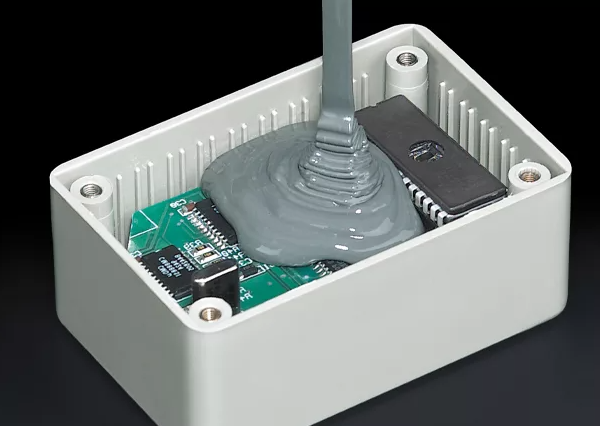
Potting involves filling an electronic assembly (such as a PCB) with a liquid compound that hardens into a solid protective layer. This process shields the PCB from:

  • Moisture and corrosion
  • Dust and contaminants
  • Vibration and mechanical shock
  • Chemical exposure
  • Thermal stress

Potting is commonly used in automotive, aerospace, marine, and industrial electronics, where reliability is critical.

2. Potting Materials

The choice of potting material depends on the application requirements. The most common types are:

A. Epoxy Resins

  • Pros: High mechanical strength, excellent chemical resistance, good adhesion.
  • Cons: Can be brittle, may generate heat during curing.
  • Applications: Industrial controls, power electronics.

B. Polyurethane (PU)

  • Pros: Flexible, good moisture resistance, absorbs vibrations.
  • Cons: Lower thermal resistance than epoxy.
  • Applications: Automotive sensors, outdoor electronics.

C. Silicone

  • Pros: Extreme temperature resistance (-50°C to 200°C), flexible, UV resistant.
  • Cons: Expensive, lower mechanical strength.
  • Applications: High-temperature environments, LED lighting.

D. Acrylics

  • Pros: Fast curing, reworkable, good electrical insulation.
  • Cons: Lower chemical resistance.
  • Applications: Consumer electronics, prototypes.
Contact us for PCB quote now |

3. The Potting Process

Step 1: PCB Preparation

  • Clean the PCB to remove dust, flux residues, and moisture.
  • Apply conformal coating (if needed) for additional protection.

Step 2: Selecting the Potting Compound

  • Choose based on thermal, mechanical, and environmental requirements.

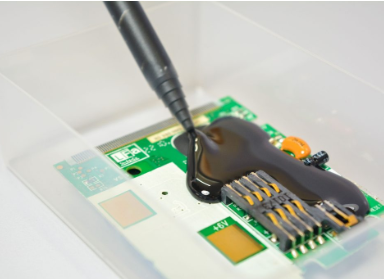
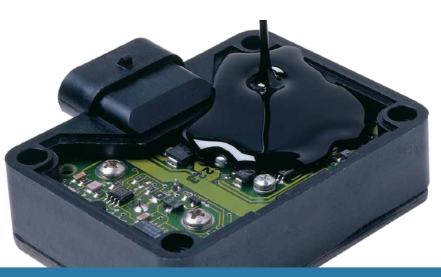
Step 3: Encapsulation

  • Place the PCB in a mold or enclosure.
  • Pour or inject the potting compound carefully to avoid air bubbles.

Step 4: Curing

  • Allow the material to cure at room temperature or with heat acceleration.

Step 5: Inspection & Testing

  • Check for voids, cracks, or incomplete coverage.
  • Perform electrical and environmental testing.
Contact us for PCB quote now |

4. Benefits of Potting PCBs

✅ Enhanced Durability – Protects against physical damage.
✅ Improved Thermal Management – Some compounds dissipate heat effectively.
✅ Electrical Insulation – Prevents short circuits.
✅ Chemical & Moisture Resistance – Ideal for harsh environments.
✅ Vibration Damping – Critical for automotive and aerospace applications.

5. Challenges & Considerations

A. Air Entrapment

  • Bubbles can weaken protection. Vacuum potting helps eliminate trapped air.

B. Thermal Expansion Mismatch

  • Different coefficients of expansion can stress components.

C. Rework Difficulty

  • Once potted, repairs become challenging (except with acrylics).

D. Cost

  • High-performance materials (e.g., silicone) can be expensive.

6. Best Practices for Effective Potting

✔ Use Degassing for Bubble-Free Potting
✔ Select the Right Material for the Environment
✔ Ensure Proper Mixing of Two-Part Compounds
✔ Control Curing Conditions (Temperature & Humidity)
✔ Test Small Batches Before Full Production

7. Applications of Potting in Electronics

  • Automotive: ECU modules, sensors.
  • Aerospace: Avionics, satellite electronics.
  • Marine: Navigation systems, underwater devices.
  • Industrial: Motor controllers, power supplies.
  • Renewable Energy: Solar inverters, wind turbine controls.
Contact us for PCB quote now |

Conclusion

Potting PCBs is a critical process for ensuring long-term reliability in demanding environments. By selecting the right material, following best practices, and addressing potential challenges, manufacturers can enhance the durability and performance of electronic assemblies.

As technology advances, new potting materials and techniques (such as 3D-printed encapsulation) are emerging, offering even better protection for next-generation electronics.

Contact us for PCB quote now |

Post Tags: #aluminum clad pcb#aluminum core pcb#aluminum pcb#assemble pcb#potting pcb

Post navigation

Previous Previous
The Comprehensive Guide to PCB Hot Plates: Principles, Applications, and Best Practices
NextContinue
Protel PCB: A Comprehensive Guide to Design and Implementation

Search

Search

Products

  • HDI Multilayer PCB
  • Rigid Flex PCB
  • Flex pcb
  • High Frequency PCB
  • High speed pcb
  • Heavy copper PCB
  • Metal Core PCB
  • Ceramic PCB

Address

Andwin Circuits Co.,Limited
Email: sales@andwinpcb.com
Tel: +86 755 2832 9394
Fax:+86 755 2992  6717
ADD:1-2F-1217,HouDeQun Industrial park,
NanTing RD NO.56,ShaJing,BaoAn,Shenzhen 518104,GuangDong,China

Products

  • HDI Multilayer PCB
  • Rigid Flex PCB
  • Flex pcb
  • High Frequency PCB
  • High speed pcb
  • Heavy copper PCB
  • Metal Core PCB
  • Ceramic PCB

Technology

  • Blogs
  • Via in pad
  • PCB E-test
  • PCB stack up
  • Metal core PCB panelization
  • Controlled impedance PCB

CERTIFICATION

Certification >>


Copyright© 2003 - 2026 Andwin | All Rights Reserved | Powered by Andwin

Scroll to top
  • Home
  • Products
    • HDI multilayer PCB
    • Rigid Flex PCB
    • Flex pcb
    • Special PCB
      • High Frequency PCB
        • Rogers RO4350B PCB
        • Rogers RO4003 pcb
        • Rogers RO3003 PCB
        • Rogers 5880 PCB
        • DICLAD 527 PCB
        • Taconic TLX series
        • Taconic TLX-8 RF PCB
        • Taconic TLX-9 RF PCB
      • High speed pcb
        • Megtron 6 High Speed PCB
        • TU-872 SLK Sp High Speed
      • High TG PCB
        • SHENGYI SH260 PCB
        • ISOLA 370HR PCB
        • ISOLA IS410 PCB
        • ISOLA IS420 PCB
      • Heavy copper PCB
      • Copper coin pcb
      • Copper inlay PCB
    • Metal Core PCB
      • Copper core pcb
      • Aluminum PCB
      • 2 Layers Aluminum PCB
      • Direct thermal MCPCB
      • 2 Layers Direct Thermal
    • Ceramic PCB
      • DPC ceramic PCB
      • DBC ceramic PCB
      • Thick film Ceramic PCB
      • Al2O3 Alumina PCB
      • AIN ALN ceramic PCB
      • IGBT Ceramic PCB
  • Service
    • PCB Assembly
    • Quick turn PCB assembly
    • PCBA conformal coating
  • Industry
    • Telecommunication
    • IoT and Wireless
    • Industrial Control
    • Thermal management
    • Power and Energy
    • IC test board
    • Automative
    • Medical
  • Capability
    • Rigid PCB
    • Rigid flex PCB
    • Metal core PCB
    • PCB Assembly
  • Technology
    • Blogs
    • Via in pad
    • PCB E-test
    • PCB stack up
    • MCPCB panelization
    • Controlled impedance PCB
  • About
    • About us
    • Certification
    • Factory Tour
  • Contact
Search