
Quick Turn PCB Assembly: How to Get Prototypes in 3-5 Days
A prototype that lands on your bench in 3 days instead of 3 weeks does not just save time. It collapses your entire iteration loop. Three revision cycles at standard lead times can burn six to nine weeks, while quick turn assembly can compress the same three cycles into under two weeks.
But here is what most fast-turn pages will not tell you: the 3-5 day clock is not what you think it is. This guide explains how quick turn PCB assembly actually works, what really controls the schedule, and how to design and package your project so the timeline holds.
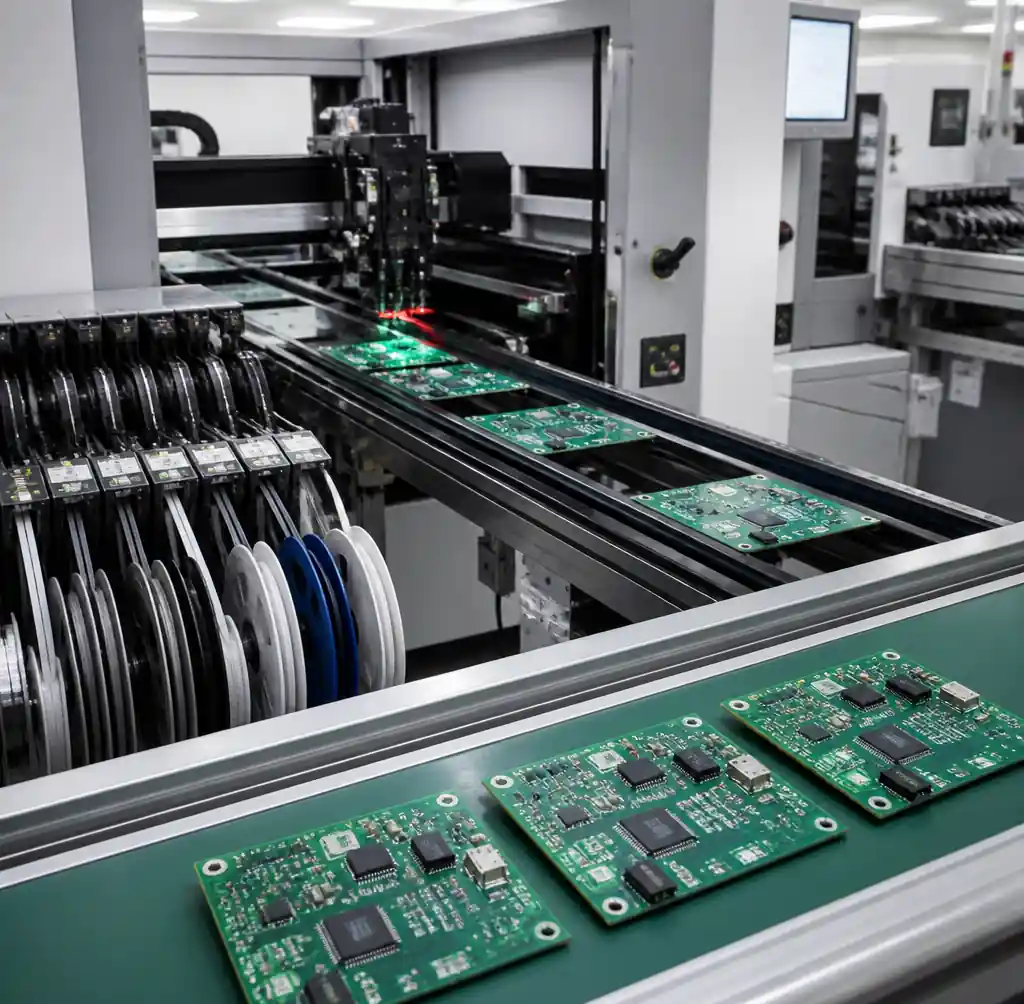
What “3-5 Days” Actually Means
The biggest misconception is that a 24-hour or 3-day quote covers a finished, tested board. It rarely does. A 24-hour turn almost always means bare-board fabrication only, on a simple stackup with in-stock laminate. A populated, inspected PCB assembly runs on a different clock.
Two more details decide whether your 3-5 days is real. First, the clock usually starts after engineering review and DFM approval, not at checkout. Incomplete files mean the clock never starts. Second, shipping and customs sit outside the quoted turn. An offshore build finished in 5 days can still take 3-7 business days in transit.
The Quick Turn Process, Day by Day
Speed comes from running steps in parallel, not from rushing any single one. A competent house prepares components and stencils while the bare board is still being etched, so fabrication and assembly setup overlap instead of stacking.
| Stage | Typical Window | What Happens |
|---|---|---|
| File check + DFM | Before the clock | Gerber/BOM review, engineering questions |
| Fabrication | Day 1-2 | Etch, drill, finish (2-6 layer FR-4) |
| Kitting + stencil | Parallel | Parts staged, stencil cut |
| Assembly | Day 2-4 | Paste print, pick-and-place, reflow |
| Inspection + test | Day 4-5 | AOI, X-ray for BGA, first-article |
Notice that DFM sits before the clock starts. That review is where most schedules quietly slip, so treat clean files as your first deadline.
Design for a Fast Turnaround
Your design choices set the ceiling on how fast any assembler can move. The fast lane exists only for standard specs.
- Keep layer count low. A 2-6 layer standard board with a common surface finish moves fastest, since every extra process step adds hours.
- Prefer single-sided assembly where possible, so one reflow pass covers the board.
- Minimize unique part numbers and avoid ultra-fine packages like 0201 unless you truly need them. Fewer feeders mean faster line setup.
- Design to in-stock, standard parts. Non-stock components stall everything else.
Exotic anything breaks the fast lane. HDI, rigid-flex, controlled impedance, Rogers laminate, or fine-pitch BGA all push you into longer windows because they add fabrication and inspection steps. Confirm your layer stackup early so it does not surprise the fab mid-build.
Component Sourcing: The Real Bottleneck
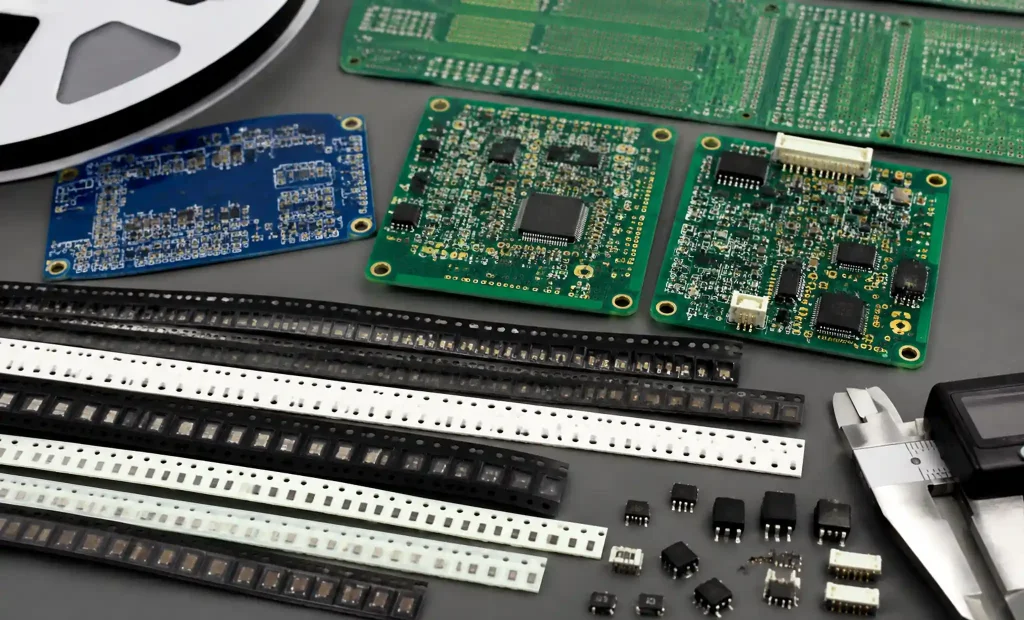
On a quick-turn build, the parts, not the labor, decide your lead time. In-stock components process immediately, while a single out-of-stock or long-lead item can add 5-15 days or more.
This is not the 2021 shortage talking. Component lead times climbed again through 2025 and 2026. MCUs sat around 13-14 weeks in 2025, and AI-driven parts stretched far longer. The bottleneck has shifted decisively from the assembly line to procurement, which changes how you should plan.
| Sourcing Model | Who Buys Parts | Best For |
|---|---|---|
| Turnkey | Assembler sources all | Fastest, least coordination |
| Consigned | You supply the full kit | Full control, you own shortage risk |
| Partial turnkey | Assembler buys common parts, you supply critical | Balanced quick-turn compromise |
The practical fix that protects your schedule is to approve alternates. Never lock a commodity passive to a single manufacturer part number. Mark do-not-populate parts clearly and specify second sources, so the line does not stop to ask when one part runs short.
Data Package and Communication
The most common cause of delay is not the board. It is an incomplete or mismatched data package that triggers engineering questions and pauses the clock. Send a complete, single-revision package the first time.
- Fabrication data: Gerber plus NC drill, or a single IPC-2581 or ODB++ file that carries stackup and netlist together.
- A clean BOM with valid manufacturer part numbers, reference designators, approved alternates, and DNPs marked.
- Pick-and-place (centroid) file with XY position, rotation, and board side.
- Assembly drawing, fab notes, and the stackup for multilayer boards.
Confirm every file comes from the same design revision, and answer engineering questions fast. Across time zones, a slow reply can cost a full day. State your target IPC-A-610 class up front too, because assuming Class 3 late in a build adds inspection time and cost.
Cost vs Speed: When Quick Turn Is Worth It
Standard assembly optimizes cost by batching orders and maximizing line use. Quick turn dedicates resources and runs parallel workflows, and that dedication is what the premium buys. Expedite premiums commonly run from roughly 20-30% for mild expedites up to 100% or more for the fastest 24-48 hour tiers.
| Factor | Quick Turn | Standard |
|---|---|---|
| Lead time | 3-5 days | 2-4 weeks |
| Cost | 20-100%+ premium | Baseline |
| Best quantity | 1-50 (prototype) | Volume production |
| Best phase | Iteration, firefighting | Frozen design, ramp |
Quick turn is a prototyping and firefighting tool, not a production strategy. It earns its premium when engineer idle time or a missed demo, trade show, or funding milestone costs more than the expedite fee. Once the design freezes and volume ramps, revert to batched standard lead times. For cost planning at scale, see our China PCB assembly guide.
FAQs
Does a 3-day quote include assembly and testing?
Often not. Confirm whether the turn covers bare-board fabrication, assembly, or both, and whether the clock starts at order or at file approval.
What is the fastest realistic turnaround for an assembled prototype?
For a simple rigid board with all parts in stock, 3-5 days end to end is achievable, plus shipping. Complex or exotic boards take longer.
Why did my quick-turn order slip?
Almost always a component shortage or an incomplete data package. One out-of-stock part or a revision mismatch can stall the whole build.
Can I get impedance control or HDI on a quick turn?
Sometimes, but these add process steps and usually extend the timeline. Standard 2-6 layer boards hit the fast lane most reliably.
How do I keep costs down while staying fast?
Design to in-stock parts, keep layer count low, minimize unique components, and send clean, complete files to avoid engineering questions.
Conclusion
Getting a prototype in 3-5 days is less about paying for speed and more about removing friction. The board itself is rarely the bottleneck. Incomplete data packages, single-source BOMs, and out-of-stock parts are what break the schedule, so design to standard specs, approve alternates, and send a complete single-revision package the first time.
Andwin Circuits offers quick turn PCB assembly with parallel fabrication and assembly, in-house E-test, and IPC-A-610 workmanship, backed by assembly capabilities and manufacturing up to 50 layers. Contact us today for fast-turn PCBA and factory-direct pricing.